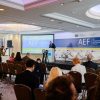
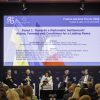
On November 4, 2026, the New Europe Center organized the 5th EU Accession Exchange Forum in Kyiv – the key expert platform for all candidate countries for membership of the EU.
The Forum`s task is to exchange lessons learned in the process of accession talks and develop recommendations on how to make the EU enlargement process more effective.
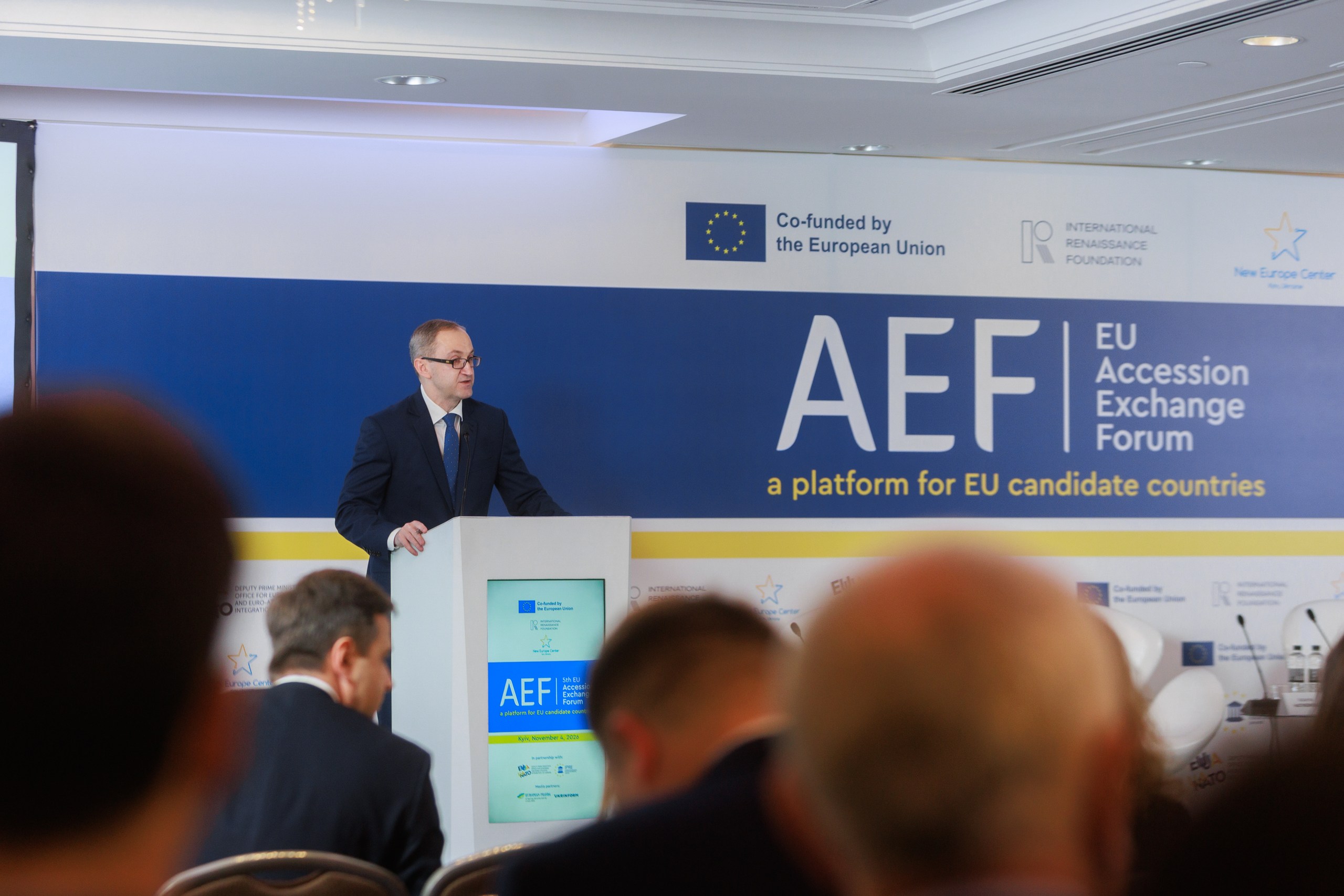
“Our task is to find ways for candidate countries and EU member states to understand one another better and work to make each other stronger. Together, we need to identify the most convincing arguments demonstrating why an enlarged European Union is in everyone’s interest – both those already inside the EU and those still seeking to join“, Sergiy Solodkyy, Director of the New Europe Center, addressed to the participants at the opening of the Forum.
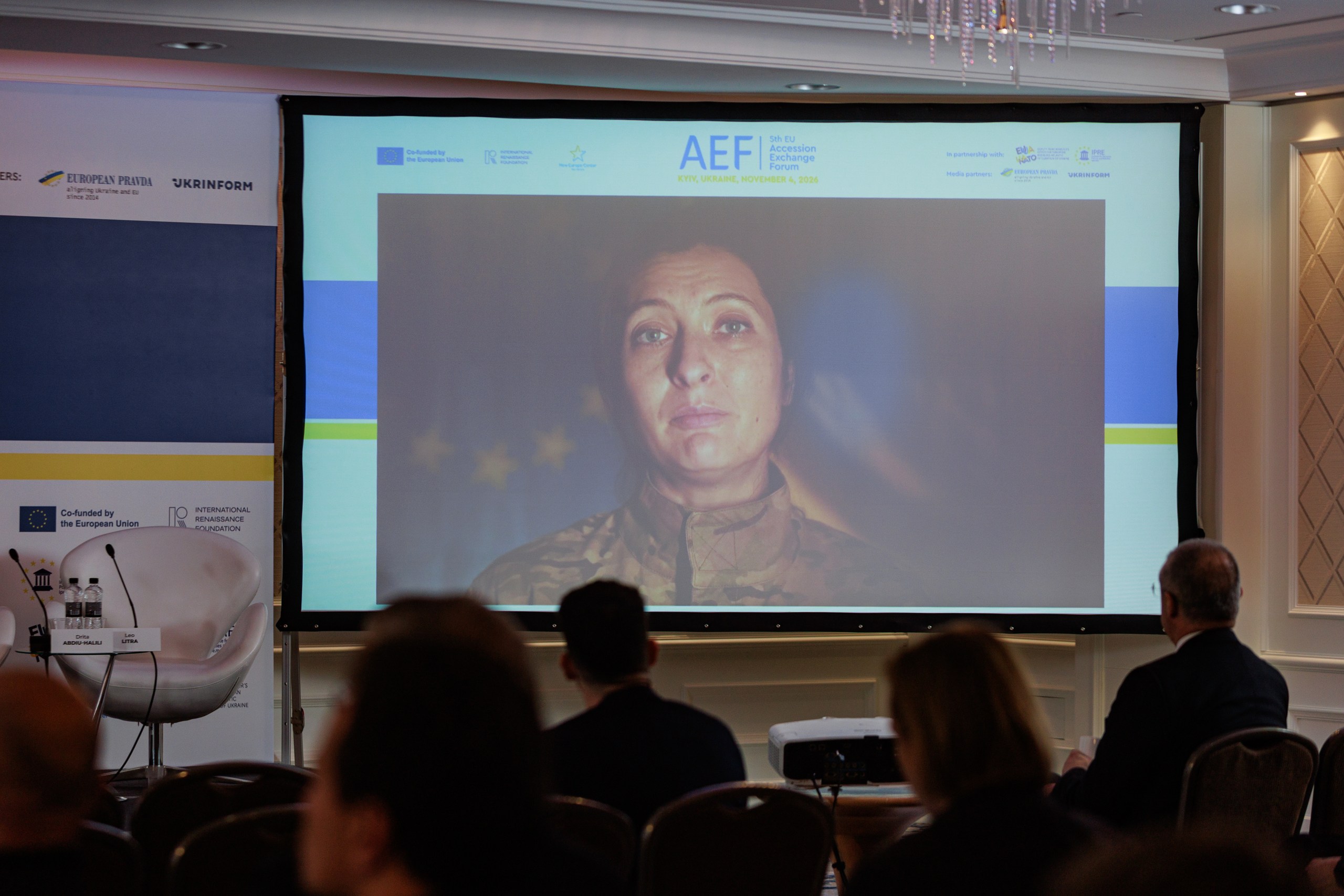
Kateryna Zarembo, Chair of Supervisory Board, New Europe Center, Member of the Armed Forces of Ukraine, called on Ukrainian and EU policymakers to use the time bought by Ukrainian defenders’ sacrifices wisely, fulfil their responsibilities in advancing Ukraine’s European integration, and have the courage to make the necessary decisions despite political pressure. “If you are a Ukrainian policymaker, do what is required for Ukraine’s European integration. Do it diligently and as well as you can. If you are a European Union policymaker, have the courage to take decisions, the decisions which you feel and you know are right, even despite the pressure the political opposition parties in your country and the pressure which Russia and its allies put on you”, Kateryna Zarembo urged in her video address.
The discussion panels were devoted to the following issues:
- how make a new impulse for EU enlargement;
- how the accession of new members could shape EU policies;
- what the costs of enlargement are and what the cost of non-enlargement would be for Europe’s security;
- what Ukrainian and EU citizens should know about the mutual benefits of enlargement and how to address common misperceptions.
Over 100 participants took part in the 5th Forum, including heads and representatives of embassies, high-ranking officials and leading experts from both EU-candidates and EU-members states.
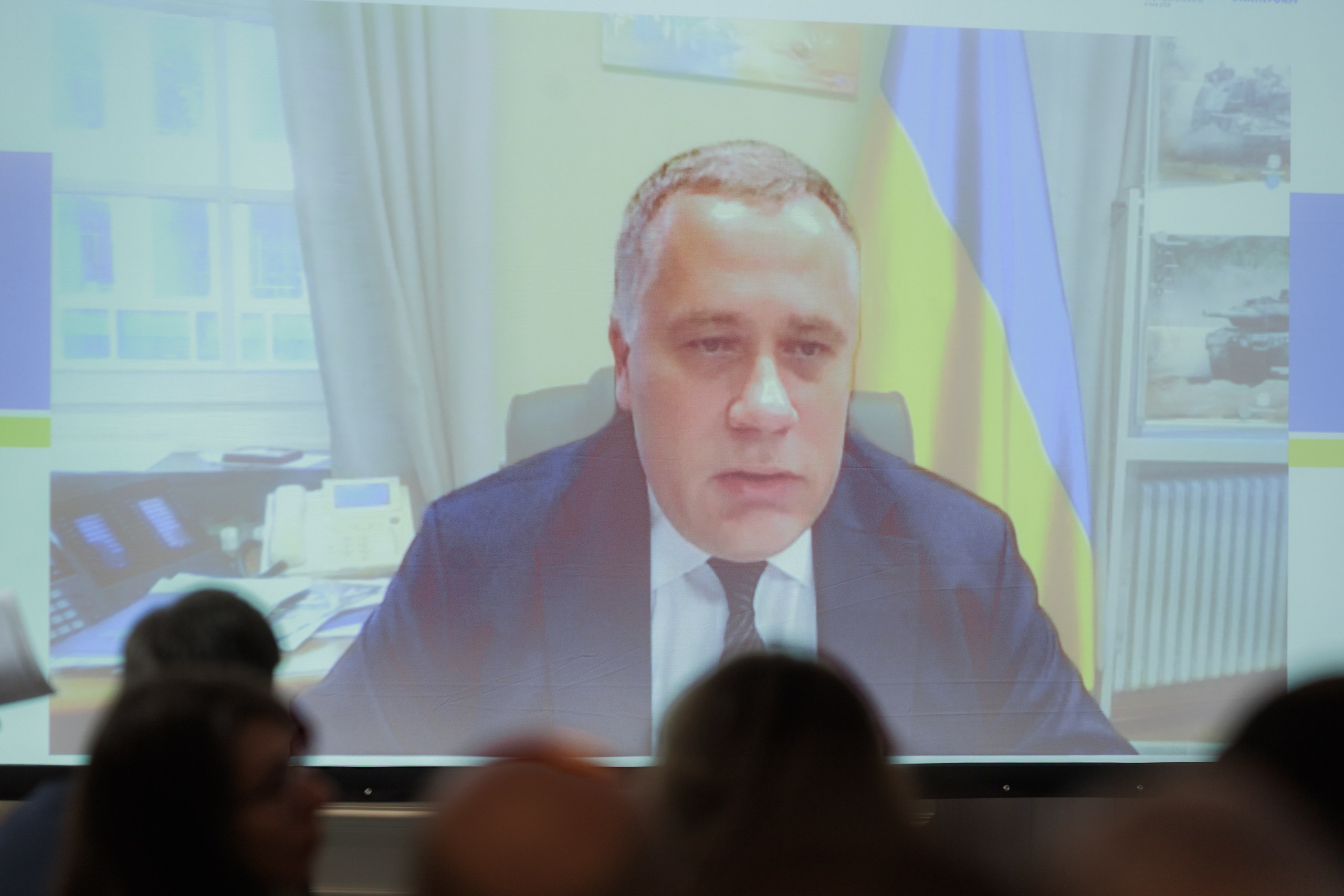
Ihor Zhovkva, Deputy Head of the Office of the President of Ukraine, highlighted the strategic importance of EU enlargement, calling for a balance between the merit-based approach and geopolitical considerations, and urging the EU to accelerate the process. “Ukraine has realistic ambitions and high expectations from 2027. Kyiv is working closely with the European Commission to achieve a positive IBAR by March; for this purpose we established a Task Force, which meets every few days to coordinate Ukraine’s progress within the Fundamentals cluster. Ukraine is looking forward to working closely to close maximum negotiation clusters by the end of 2027”, Ihor Zhovkva explained. “We are not going to compromise on our path to Europe. It is irreversible. The EU path is about our resilience and future. Here I want to come to the issue of peace. The EU integration is one of the strongest and most commonly accepted elements in security guarantees. And it seems that the EU holds a bunch of cards to force Russia finally to peace. Through sanctions, financial support and providing weapons for Ukraine. We hope the EU will play all of them. Russia understands this and invests a lot to divide Europe and undermine the EU support for Ukraine. But I know the EU commitment to Ukraine is as irreversible as ours to the EU”, summed up the speaker.
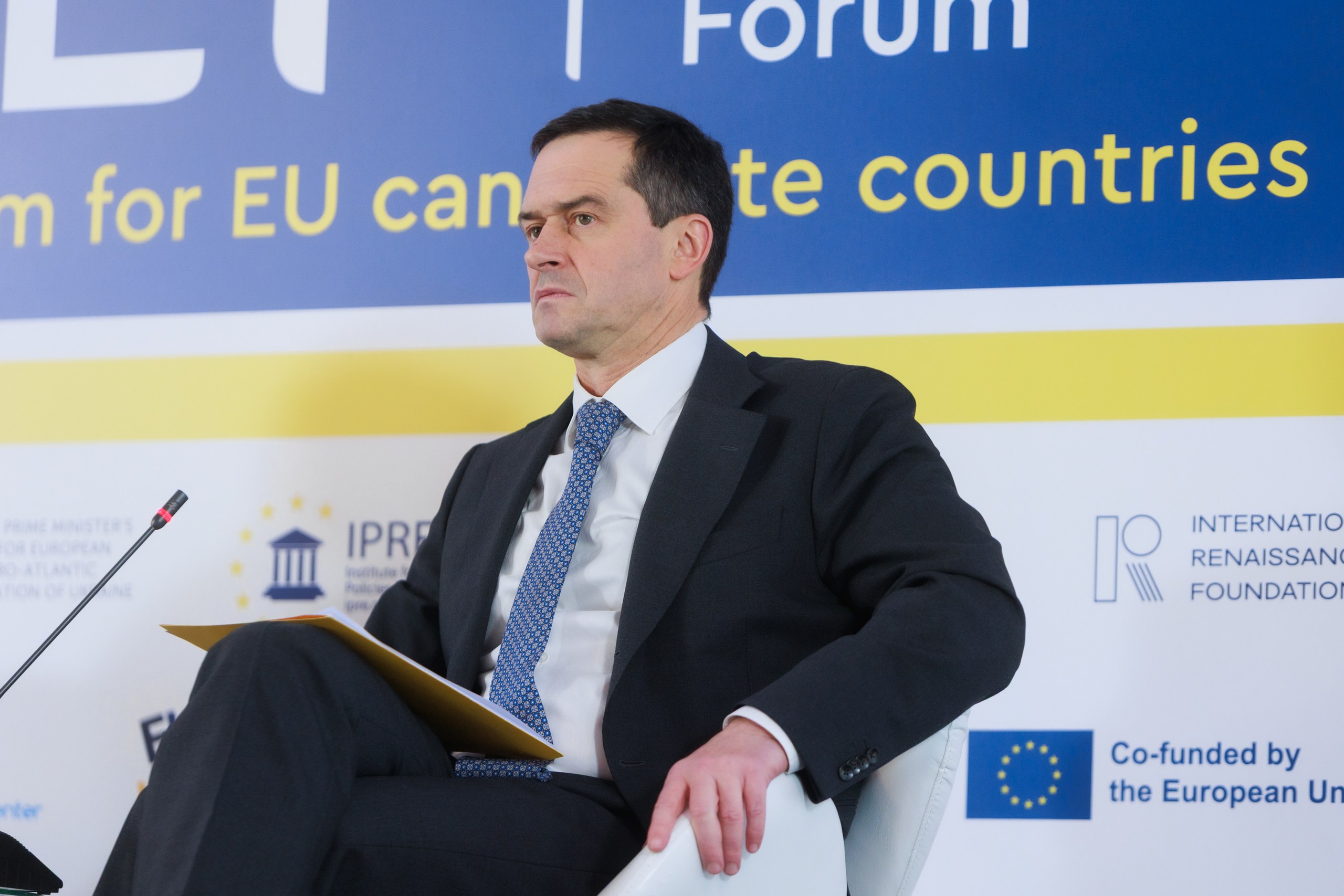
Vsevolod Chentsov, Deputy Prime Minister for European and Euro-Atlantic Integration of Ukraine, outlined Ukraine’s progress in EU accession negotiations despite the challenges of wartime, highlighting reforms achieved, priorities for closing negotiation chapters in 2027, and the importance of closer cooperation with the European Commission and the Ukrainian Parliament to meet interim benchmark. “Ukraine is among the frontrunners, but its progress cannot be assessed through a mechanical comparison with other candidates. Ministers and ministries are busy with the defence of the country and with mitigating the consequences of daily attacks. At the same time, they must pursue European integration, because we are pushing them with the interim benchmarks legislation, and this is physically hard. I want our colleagues in Brussels and the major media to understand this and to avoid a mechanical approach to accession in the case of Ukraine”, Vsevolod Chentsov stressed.
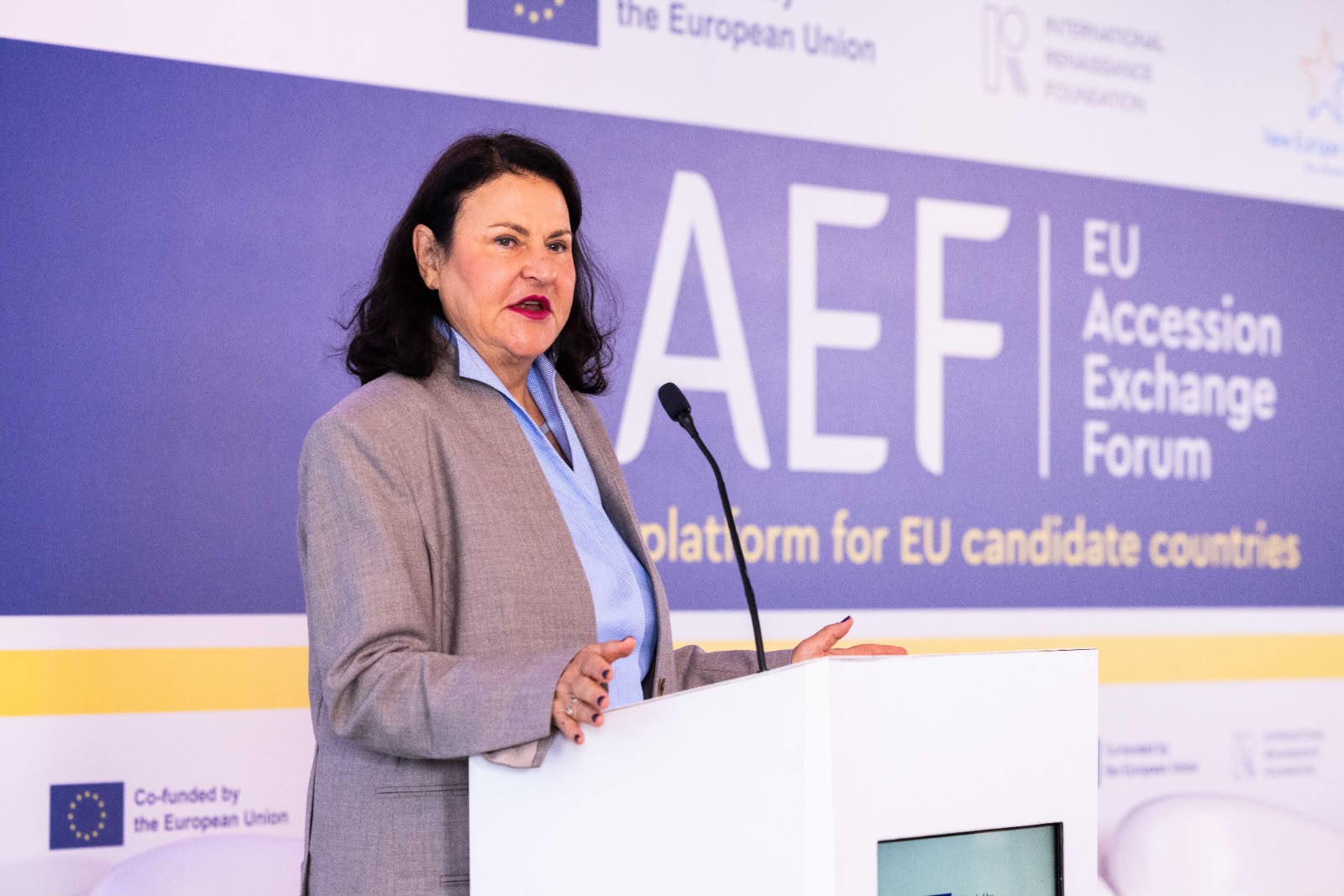
Katarina Mathernova, Ambassador of the European Union in Ukraine, emphasized that Ukraine remains one of the four frontrunners in the EU accession process, with no backsliding despite the challenges of Russia’s war. She stressed that EU integration requires a whole-of-society effort and called for stronger communication of Ukraine’s reform progress to counter Russian disinformation and negative narratives. “Be selfish in a sense. Concentrate on what needs to happen in Ukraine and how it is communicated. Future enlargement is bureaucratically embedded. It is happening. It is going to take place. Moldova is very much on track and has made very big progress. Montenegro, which has been at this game for a lot longer, got mobilized over the last couple of years and has really made big progress. Albania has been making progress, and Ukraine has been making progress. But the forces of perceptions, narratives and disinformation are such that Ukraine is fighting an uphill battle in the public’s mind”, the Ambassador urged.
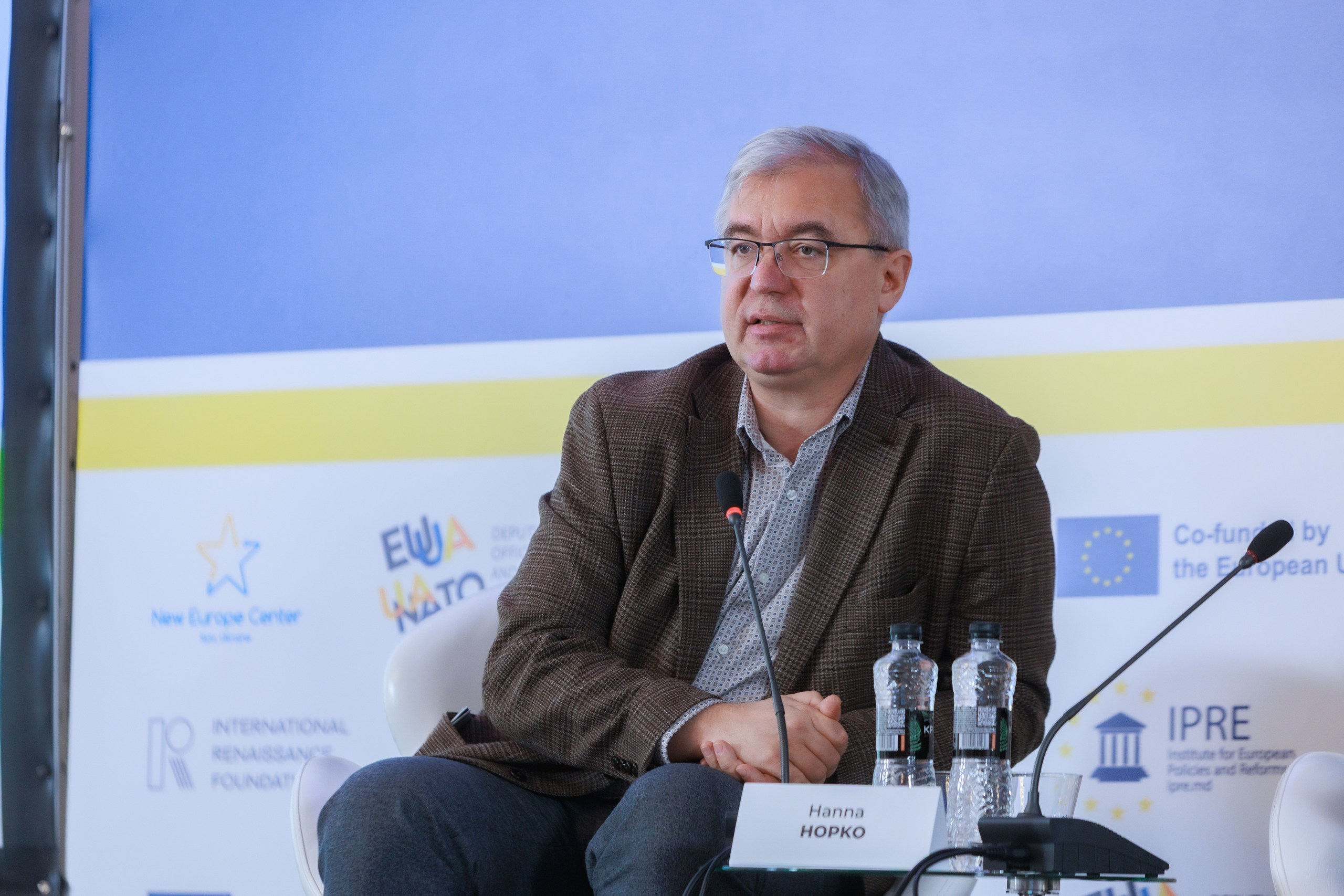
Oleksandr Sushko, Executive Director, International Renaissance Foundation, stressed in his about the importance of making Ukraine’s EU accession a whole-of-society process, actively engaging citizens, local communities, businesses and civil society, while stressing the need to seize current windows of opportunity and avoid treating enlargement as a zero-sum competition between candidate countries. “The big idea is how to make Ukraine’s EU accession closer to society, and how to ensure that Ukrainian society is the owner of the process. This is not a high-level bureaucratic process or just an adoption of laws or a discussion on clusters. This is a big endeavor where Ukrainian society is the major driving force. The energy that fuels this process is visible especially at decisive moments of Ukrainian history, at our Maidans and in today’s resistance to Russian aggression. All these things clearly demonstrate the commitment of the entire Ukrainian society to the idea of Ukraine’s European belonging”, Oleksandr Sushko noted.
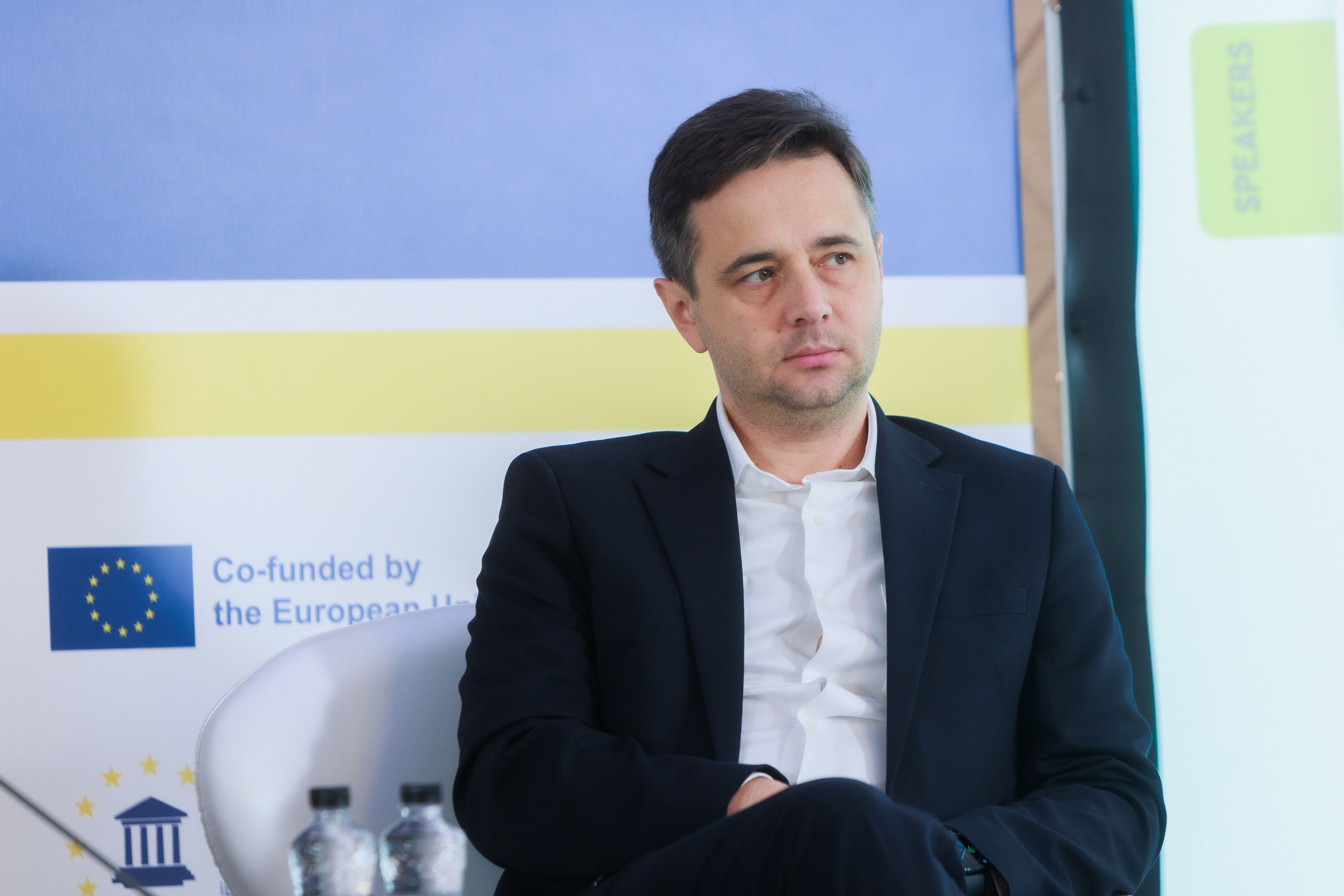
Leo Litra, Senior Fellow, New Europe Center; Senior Policy Fellow, ECFR, discussed the shifting challenges to EU enlargement, highlighting the need to address both misconceptions and legitimate concerns, particularly regarding Ukraine’s agricultural sector, while building public support for further enlargement across EU member states. “We have two groups of problems: myths and real problems. Both have a very strong amplifier, and that amplifier is Russia, but also other stakeholders who are playing against this. We need to debunk the myths, but not be too defensive because this does not create a positive agenda. With real problems, and for Ukraine it’s certainly going to be agriculture, we have to offer answers. We need to address these fears much earlier, because if you address a fear early, it becomes a concern. If you leave it, then it becomes a veto in the internal debate”, Leo Litra emphasized.
Stay tuned. Soon we will publish the most interesting messages of the 4th EU Accession Exchange Forum.
You may watch the full recording of the Forum below.
The EU Accession Exchange Forum is organized by the New Europe Center in partnership with the Office of the Deputy Prime Minister for European and Euro-Atlantic Integration of Ukraine, the International Renaissance Foundation, and the Institute for European Policies and Reforms (Republic of Moldova), with Ukrinform and European Pravda serving as media partners. The EU Accession Exchange Forum is taking place with EU support, within the EU-funded “Whole-of-Society Accession” project implemented by the International Renaissance Foundation.