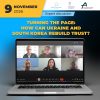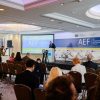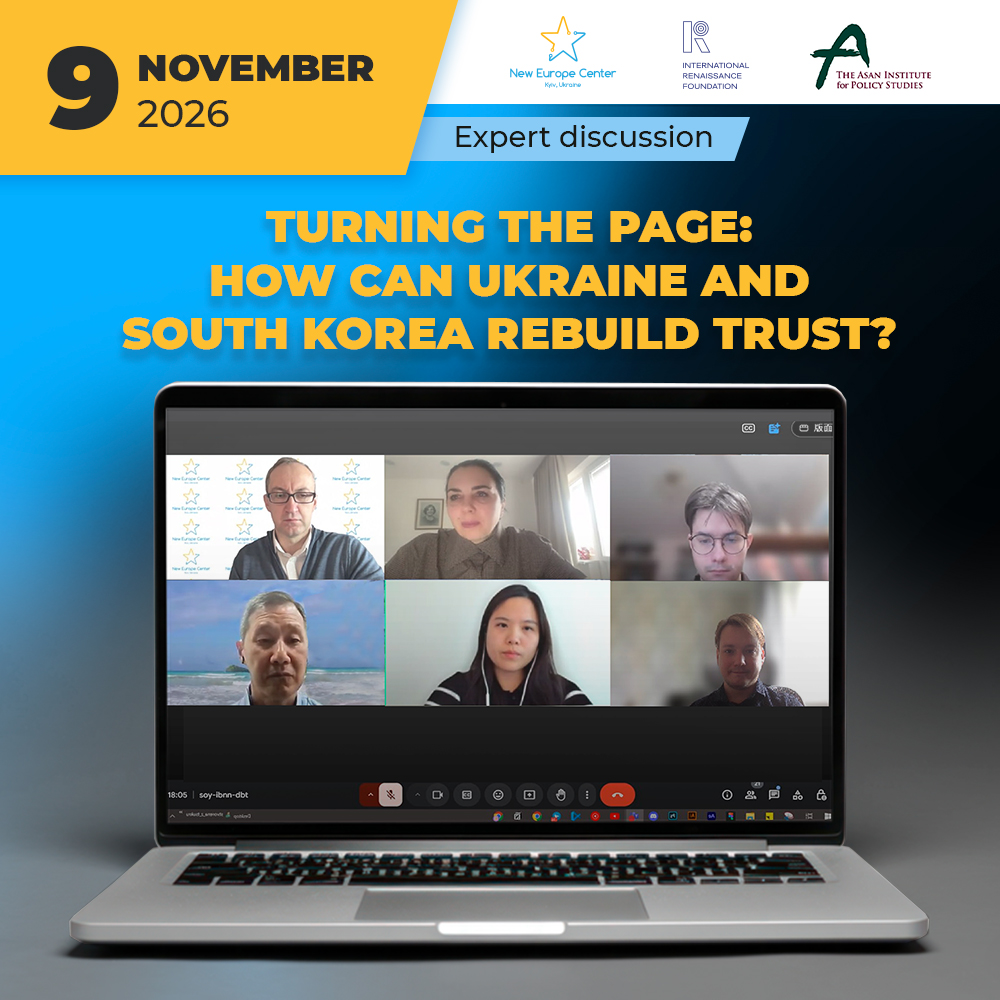
On November 9, 2026, experts from the New Europe Center (Ukraine) and the Asan Institute for Policy Studies (Republic of Korea) held an online expert discussion “Turning the Page: How Can Ukraine and South Korea Rebuild Trust?”
Participants examined the causes of diplomatic tensions between Ukraine and the Republic of Korea and discussed possible ways to resolve them. Particular attention was paid to practical steps that could be taken, as well as the role of civil society and expert communities in rebuilding mutual trust and laying the groundwork for stronger bilateral cooperation.
Nataliya Butyrska, Senior Fellow at the New Europe Center, noted: “Ukraine and the Republic of Korea have been close partners for many years. We share not only common values but also face common security threats. North Korea’s involvement in Russia’s war against Ukraine has clearly demonstrated how closely our security is interconnected – not only between Ukraine and South Korea, but also, more broadly, between Europe and the Korean Peninsula. This is why it is essential to move beyond the current differences and focus our joint efforts on restoring trust, deepening strategic dialogue, and strengthening cooperation to address our shared challenges”.
The New Europe Center sincerely thanks all Ukrainian and Korean speakers for their valuable insights and contributions to this timely and meaningful discussion.
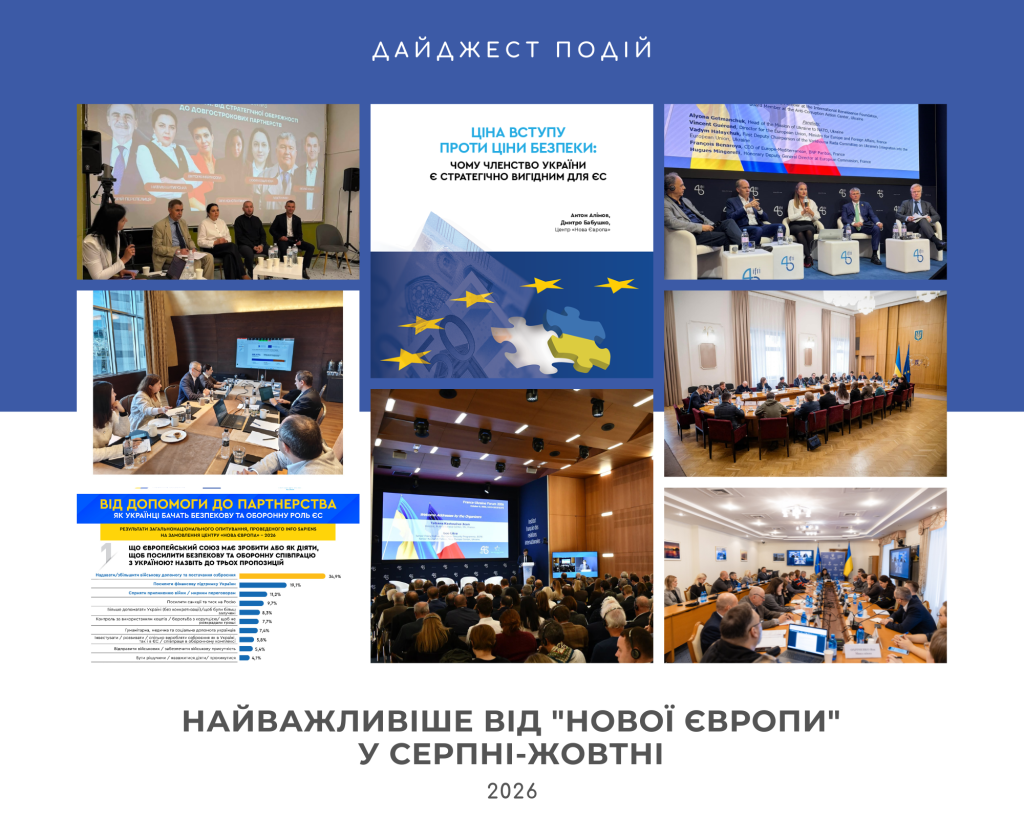
The New Europe Center has been actively working to strengthen Ukraine’s partnerships with key democratic actors in Asia. As part of these efforts, the think tank conducted advocacy visits to Seoul and Taibei in March 2026, organized the Sixth Ukraine–Japan Forum, and published a range of analytical materials.
The Asan Institute for Policy Studies is one of South Korea’s leading think tanks, based in Seoul, dedicated to fostering policy-oriented research and promoting dialogue on global and regional security, democracy, and international cooperation.
The online briefing is organized by the New Europe Center (Kyiv, Ukraine) in partnership with the Asan Institute for Policy Studies (South Korea) and supported by the International Renaissance Foundation (Kyiv, Ukraine).