Read PDF-version here.
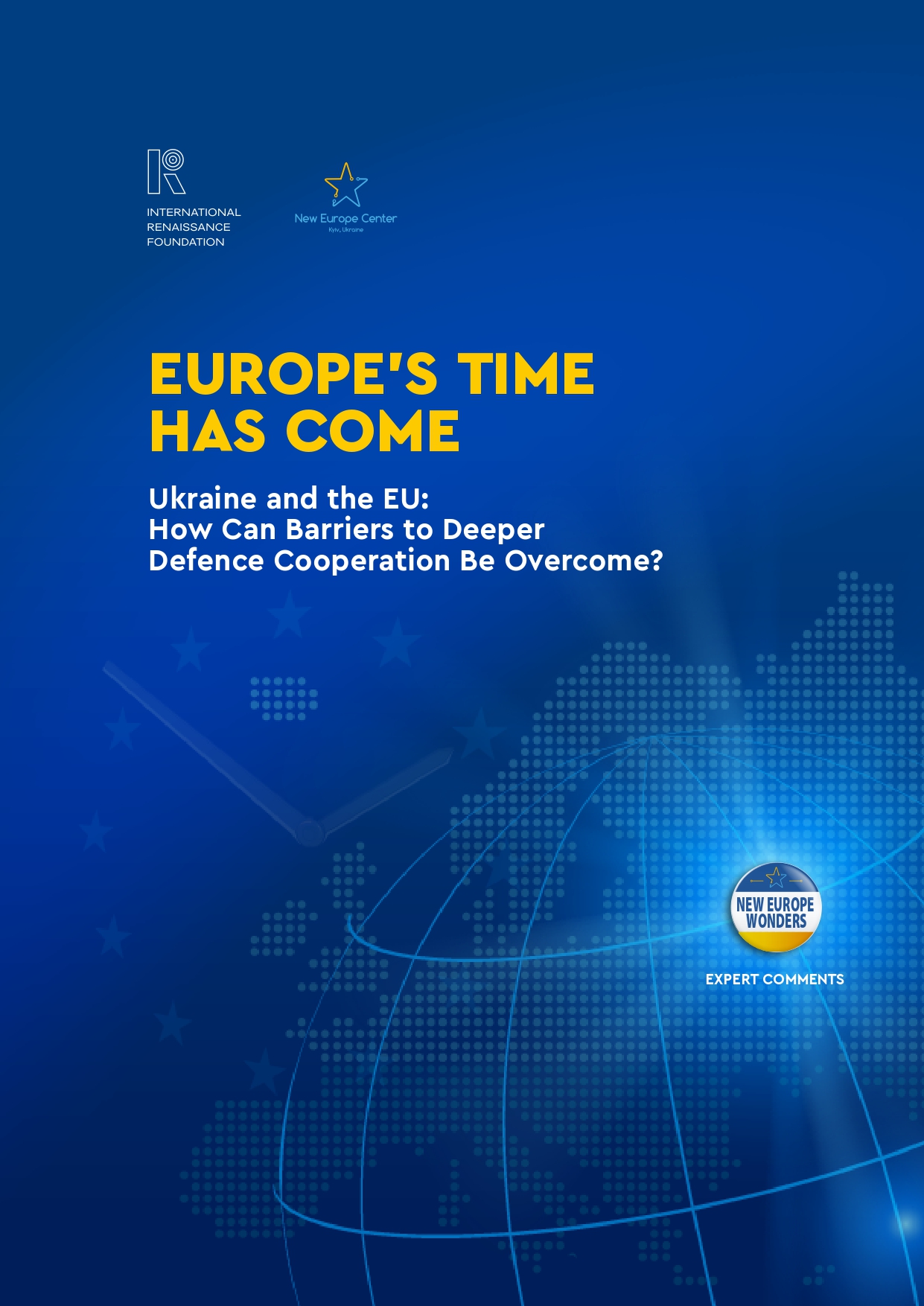
Russia’s full-scale war against Ukraine has made the need for Europe to strengthen its own defence capabilities and provide long-term support to Ukraine increasingly urgent. Against the backdrop of changes in US policy, European countries are having to assume greater responsibility for the continent’s security, including the provision of critical weapons to Ukraine. Addressing shortages of such weapons requires increased defence production and closer cooperation with Ukraine, which can offer its European partners unique battlefield experience, innovative technologies and practical expertise. For its part, the EU has the financial resources and industrial capacity to scale up joint production. However, regulatory barriers, a lack of predictable long-term funding and disagreements among member states continue to hinder the realisation of this potential. An additional challenge lies in reconciling the need to respond rapidly to Ukraine’s evolving battlefield requirements with Europe’s long-term strategic defence planning. Under these circumstances, the question is how to transform military support for Ukraine into a sustainable partnership that strengthens the security of both sides. The New Europe Center asked leading European and Ukrainian experts: What should Ukraine and the EU do (together or separately) to ensure that defence and security cooperation can bridge the existing gaps?
Key Takeaways:
- Defence cooperation between Ukraine and the EU must evolve from an assistance-based model into a genuine partnership. Ukraine brings unique battlefield experience, technologies and innovations, while Europe has the financial resources and industrial capacity to scale up joint production.
- Deeper defence-industrial integration requires the removal of regulatory barriers. Aligning standards, procurement procedures and certification requirements, along with establishing clear rules for protecting intellectual property and sharing battlefield data, should form the basis of joint projects.
- European defence cooperation requires long-term, predictable funding. Existing initiatives such as SAFE and EDIP provide a foundation for cooperation, but without multi-year contracts and financial commitments, the expansion of joint production will remain limited.
- Europe must assume greater responsibility for military support to Ukraine amid shifts in US policy. Using frozen Russian assets could cover a substantial share of Ukraine’s defence needs, while purchases of US weapons through the PURL mechanism will remain necessary.
- Funding alone will not resolve shortages of critical weapons. Europe must not only expand defence production but also develop the technological infrastructure for intelligence, communications, artificial intelligence and robotics to enable faster adaptation of weapons to changing battlefield conditions.
- Ukraine must become an active participant in shaping the new European security architecture. Given the divisions within the EU, flexible cooperation formats, including JEF and NB8, may play an increasingly important role, and Ukraine should engage with them actively.
- Domestic reforms and the fight against corruption remain essential to maintaining the trust of European partners. Ukraine’s military capabilities and contribution to European security cannot substitute for meeting the rule of law and good governance requirements necessary for EU accession.
- The EU should increase direct funding for arms production in Ukraine and develop mechanisms for rapid procurement. This would help reduce costs, avoid delivery delays and respond more quickly to evolving battlefield needs.
Francois Heisbourg, Senior Advisor for Europe, International Institute for Strategic Studies (IISS), France
The single most urgent and possibly decisive decision by the EU to Ukraine’s military needs by deploying Russian central bank assets currently frozen under the supervision of EUROCLEAR in Brussels. These funds, at some 200 billion euro would readily cover the ongoing defence spending gap and cover Ukrainian arms acquisition needs beyond 2027. Once taken, such a decision would also have the advantage of not being readily reversible by pro –Putin forces after forthcoming elections notably in France and Italy. Using Russian funds also counters the populist narrative that aid to Ukraine places an open-ended burden on European taxpayers now that the US is no longer providing military funding.
The politically most important action by Ukraine is to visibly sustain the work of its anti-corruption institutions. Nothing is more damaging in terms of European support for Ukraine in general and its EU accession in particular than credible allegations of public corruption in Ukrainian government agencies dependent on European funding.
There is a joint interest in sharing battlefield data and intellectual property rights between Ukrainian and European defence industries and military staff. That discussion is already underway and some agreements are in force. The more the better.
Susan Stewart, Senior Fellow in the Eastern Europe and Eurasia Research Division, German Institute for International and Security Affairs (SWP)
In the context of Russia’s aggression against Ukraine the EU has become a more important actor in the defence and security realm. This is particularly true in the areas of procurement and defence industrial cooperation. Thus deepened Ukrainian involvement in these spheres, through the SAFE programme but also in terms of jointly creating additional opportunities to “buy European”, will contribute to a more established form of cooperation. However, due to the ongoing differences among member states, it is not likely that the EU will be able to become a major security actor any time soon, if at all. It is more probable that some of the ad hoc and mini-lateral formats that have recently emerged or gained traction (JEF, the NB8, the E3/E5, the Coalition of the Willing) will end up being crucial for a new European security architecture. It may be based on some existing NATO structures, but may not be identical with NATO, depending on which role the US plays going forward. It is thus very important for Ukraine to engage with these various formats as extensively as possible, in order to promote its ideas concerning European security and defence and to position itself to play a key role in any forthcoming structures. Conversely, the countries involved in these formats should seek to engage Ukraine more intensively, since Ukrainians are currently providing the most significant contribution to European security and are well-placed to continue doing so in terms of both expertise and battlefield experience.
Carsten Sondergaard, Ambassador of Denmark to NATO (2010-2014)
The United States has changed its policy on a fundamental issue. “The hour of Europe” has once again occurred. What are the options? Let me mention four points.
First, Europe will have to produce and deliver more weapons and military equipment to Ukraine. Financial assistance to Ukraine is next in line.
Second, Europe will still have to buy American equipment through the so-called PURL-mechanism and send it to Ukraine. Some countries are critical about that. Keep in mind that the United States produces weapons and equipment which the Europeans cannot and will not do for the foreseeable future. Ukraine needs it.
Third, Europe will have to continue to develop joint ventures with Ukrainian companies. There are initiatives under way. It takes time to implement them, but at some point, there will be a ketchup effect.
Fourth, Europe cannot rely on external private actors to provide capabilities critical to conduct modern warfare. Hence, we should redouble our joint efforts to be able to stand on our own feet.
Doable? The answer is yes.
It is of course necessary to mobilize the financial capital. The amount necessary is nothing comparable to the amount the EU countries mobilized during the Covid.
Bottom line: It’s just a question about political will.
Gustav Gressel, Security and Defence Expert, Associated Senior Fellow, European Council on Foreign Affairs, Germany
“If you buy cheap, you buy twice” is a German proverb reminding people to carefully think about purchasing decisions, instead of just falling for the lure of the cheapest price. The same can be said about defence and the support for Ukraine, where Europe decided to go cheap in 2022, entrusting not only political leadership but also the defence-industrial effort to support Ukraine to the United States. The Trump administration’s change of course made that decision expensive both in financial and political terms.
The $27bn budget gap in Ukraine is not the only problem. For key enablers – particularly air defence interceptors, air-to air ammunition – there is nothing to buy left. Expansion of industrial production in Europe has snoozed till 2025, and lead time to increase production for many of these systems is long. Offset strategies through the production of cheap drones have become more challenging, as intercepting jet-powered Russian drones or circumventing Starlink satellite communication systems is more demanding and hence increases the price-tag and sophistication of the next generation of both defensive and offensive drones. Europe needs to build the overarching eco-system of intelligence (particularly electronic intelligence), communication, space, computing, artificial-intelligence and robotics that enable the fast production, adaptation, further development, and then sovereign application of mass-produced cheaper munitions.
Also Russian strikes on some Ukrainian defence-industrial sites illustrate the limits of what kind of production can be done on site in Ukraine (where price is cheaper and feedback-loops are shorter, and which not. On paper, this calls for a deeper integration between the European and Ukrainian defence sector. Europe uses its industrial and financial resources to scale and provide enablers, Ukrainians provide the rapid adaptation close to the front lines.
But that is on paper. In practice only Germany and the Nordic-Baltic countries committed substantial financial assets to build these defence-industrial relationships. Correspondingly, support for Ukraine is increasingly subject to petty fights amongst Europeans, as some states argue the return of investment will only benefit a few members. While such petty-fights are hard to avoid and – unfortunately – deeply European, they do not solve the imponderability of European defence modernisation and souvereignisation. Merz “reverse Orban” blackmail to block the EU budget unless assistance to Ukraine is integrated into the seven year financial programme of the EU may not seem elegant, but is the right leverage applied to break the blockade.
Leo Litra, Senior Research Fellow, New Europe Center; Senior Policy Fellow, European Council on Foreign Relations (ECFR), Ukraine
We need to stop treating this as aid and start treating it as a partnership.
Ukraine and the EU should buy and produce more together. It is the most practical way to tie our industries into one. But it only works if the legal side catches up. Procurement rules, standards and certification have to be aligned, otherwise every joint project gets stuck in paperwork. Many EU programmes were written before the full-scale invasion and only adjusted later, so Ukraine still takes part through exceptions. One quick fix would be a fast track for certifying systems that have proven themselves in real combat.
We also need to think beyond 2027. The White Paper on Readiness 2030, SAFE and EDIP point in the right direction, but the money still comes one budget cycle at a time, while building a production line takes years. Without multi-year contracts, joint projects will stay at the pilot stage.
And we should be clear about what Ukraine brings to the table. Our know-how and our battlefield data are our currency. The technology is Ukrainian, the engineers are Ukrainian, and the testing happens at the front. Where it makes sense, production can move to European soil, safe from Russian missiles. This is already happening in the UK, Germany and Denmark. But then this know-how must be protected. Without clear rules on intellectual property and combat data, no company will share its best ideas.
The same goes for exports. What we build together should be exported under joint rules and joint scrutiny. Ukraine also has homework here: the export ban has been lifted on paper, but in reality the system still doesn’t work, and it has to change.
Finally, Ukraine should help write the rules, not only follow them. NATO already lets Ukrainian companies compete in its tenders. The EU can do at least as much. Ukraine’s message to Europe should not be “help us”, but “we can help you work together”.
Tadeusz Iwanski, Head of Department for Belarus, Ukraine and Moldova, Centre for Eastern Studies (OSW), Poland
Ukraine and the EU have all tools for mutual strengthening of defence capacities and deterrence potential. It is no secret that the main strength of the Ukrainian army lies in the modern knowledge and know-how it has acquired directly in combat conditions in the field of the development and operational use of multi-domain unmanned systems, as well as its ability to adapt quickly to changing conditions on the battlefield.
Europe, which needs to make up for the time lost in rearmament during the “end of history” period, still has in her possession modern technologies and capital that are much needed for scaling up the production. Both sides need each other and both have complementary capabilities.
Such cooperation has already taken place: Ukraine develops a Drone Deals initiative, and a number of European countries produce weapons, mostly UAVs, based on Ukrainian experience and with the European funds. Then these weapons are sent to Ukraine to fight Russia, as well as stock up European arsenals.
It should be noted, however, that Ukrainian capabilities and know-how won’t become a currency that can allow Kyiv to buy membership in the EU. Enlargement of the European Union is a separate part of work, which involves harmonisation of legislation with acquis communautaire, as well as structural reforms, especially in terms of good governance and rule of law – meaning “Fundamentals” cluster.
Ukraine’s attempts to secure a fast-track route to membership as a form of so-called security guarantees under the US 28-point peace plan have failed. Similarly, attempts to convince key European players that Ukraine’s million-strong army, its experience and combat capabilities constitute such a significant contribution to the continent’s security that this negates the need for the reforms required for EU accession have also been unsuccessful.
The EU does not have consensus on such a deal. Apart from strengthening the security potential of the European Union, Ukraine’s membership also constitutes some challenges. It means not only security – Russia, unfortunately, will not disappear – but also about import of negative practices, in particular corruption and pathological fusion of authority and business.
New scandals within the President’s inner circle, which have been ongoing since last November, the growth of organised crime and the pathological entanglement of law enforcement agencies with criminal circles are not helping this process. A positive sign is the willingness and determination of independent anti-corruption bodies to tackle these issues. However, this is not enough. This is confirmed, in particular, by this year’s European Commission report on the state of Ukraine’s preparations for EU accession.
All in all, cooperation in defence is not a separate issue. It corresponds to both parties’ interest, however, lack of internal reforms in Ukraine lowers the level of trust, thus limits the scale and potential of such cooperation.
Jakub Janda, Director, European Values Center for Security Policy (EVC), Czechia
What should be done?
First, institutionalize multi-year defense financing. The EU should establish predictable, ring-fenced funding cycles and fully repurpose frozen Russian sovereign assets directly for military procurement, decoupling Ukraine’s frontline support from vulnerable domestic election cycles.
Second, direct procurement & joint production. Following initiatives like the Czech artillery procurement model, Brussels must fund Ukraine’s domestic arms manufacturing directly. Producing drones, electronic warfare, and ammunition inside Ukraine cuts costs, bypasses Western procurement bottlenecks, and quickly meets changing battlefield needs.
Third, streamline coalition formats, rather than relying on slow consensus within EU-wide frameworks, agile coalitions of willing frontline allies should lead execution, leveraging EU funding instruments to buy off-the-shelf systems globally.
Aligning budgets with joint production and immediate, flexible procurement ensures deterrence survives shifting European political tides.
This document was prepared with the support of the International Renaissance Foundation. The material reflects the position of the authors and does not necessarily coincide with the position of the International Renaissance Foundation.