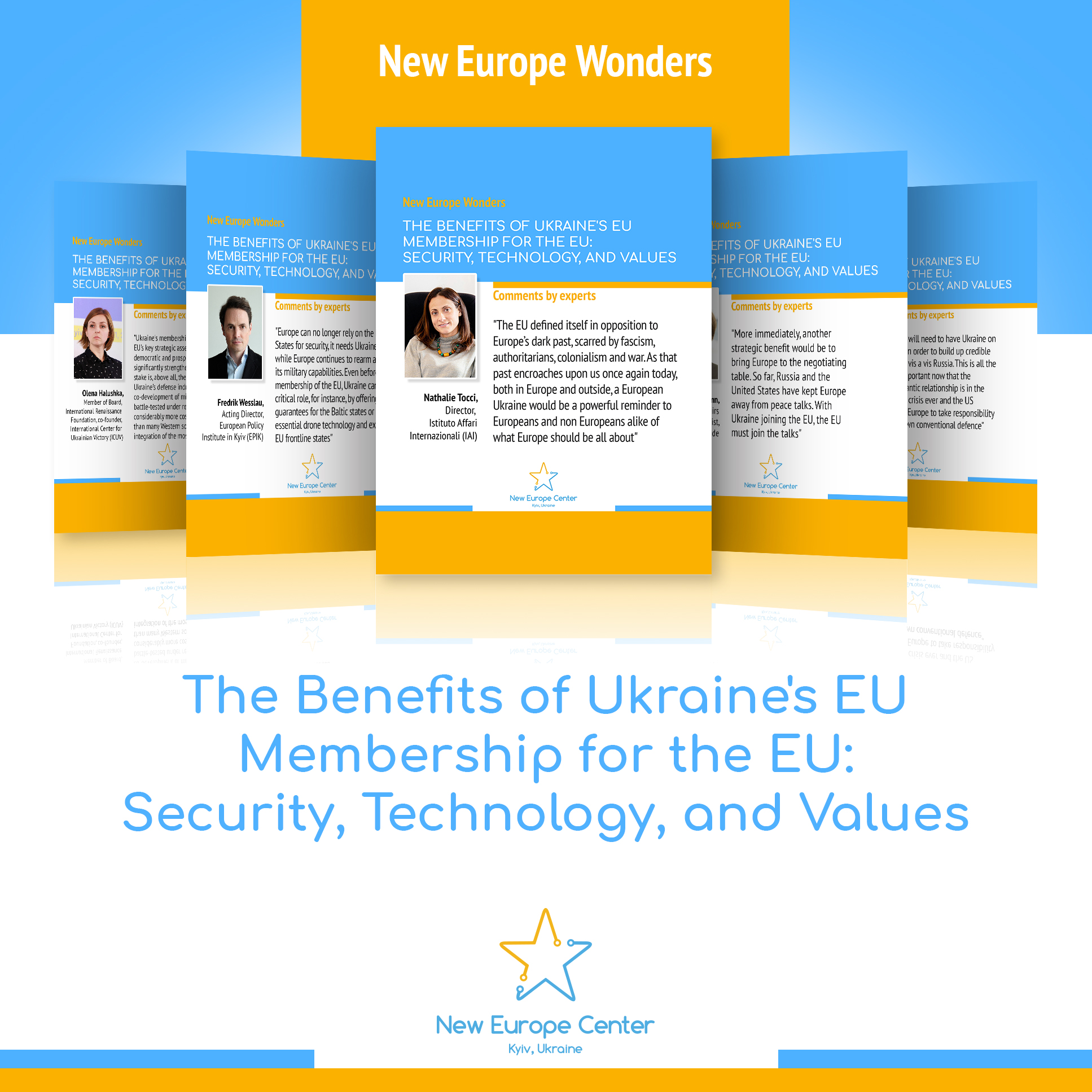
Ukraine’s aspirations for EU membership are well known, yet the discussion remains largely one-sided. Much of the public and even political discourse focuses on the obligations and conditions Ukraine must fulfill – while far less attention is paid to the concrete benefits that Ukraine’s accession would bring to the member states themselves. Among the most obvious is combat experience and a battle-hardened army: no EU country today possesses the practical knowledge of modern warfare that Ukraine has acquired. But the military dimension is only part of the picture. That is why the New Europe Centre turned to leading experts with a key question: What concrete benefits would Ukraine’s EU accession bring to member states and the European Union?
Key Takeaways:
- Ukraine’s EU membership is a strategic asset, not an act of charity. As the transatlantic bond weakens and pressure from Russia, China, and Trump-era United States intensifies, the EU can no longer rely solely on soft power and American security guarantees. Ukraine’s integration is a response to new geopolitical realities and a condition for the Union’s survival as a global actor.
- Ukraine is Europe’s most critical security resource. The largest land force in Europe – 800,000 battle-hardened troops – combined with cutting-edge drone technology and air defence expertise makes Ukraine an indispensable partner in rebuilding European defence, particularly as the EU is only beginning to restore its own military capabilities.
- Ukraine’s technological and innovation potential strengthens the EU’s strategic autonomy. Military technologies, battle-tested in real war conditions, demonstrate high effectiveness and affordability, making them a valuable asset for enhancing the EU’s defence capabilities.
- Ukraine’s agricultural and economic potential reinforces the Union’s resilience. Despite competition with certain member states’ farming sectors, Ukraine’s powerful agricultural base significantly expands the EU’s overall agricultural capacity and strengthens its food security and independence.
- Ukraine’s accession will accelerate long-overdue institutional reforms within the EU. Enlargement requires updating the Common Agricultural Policy, voting and decision-making mechanisms in foreign and security policy, and the broader budgetary architecture – reforms long postponed but now rendered inevitable by the prospect of enlargement.
- Ukraine’s strategic value does not waive membership requirements – but it obligates the EU to act as a partner. Ukraine must meet the accession criteria. Yet recognizing that Ukraine’s integration serves the Union’s own interests obligates the EU to actively support this process: accelerating it, applying transitional arrangements where appropriate, and making necessary adjustments to its own mechanisms.
- Ukraine’s societal resilience and crisis management experience enrich Europe’s approach to civil preparedness. Real-world experience of societal mobilisation under armed conflict, bottom-up citizen self-organisation, and effective cooperation with state institutions offer a valuable model for strengthening civil resilience across the EU.
- Ukraine’s EU membership will return Europe to the negotiating table. Russia and the United States have effectively sidelined the EU from the peace process. Ukraine’s accession will transform the EU from a bystander into a full participant in any negotiations over Ukraine’s future and the security of the continent.
- Identity and values: Ukraine as a living proof of European ideals. A democratic Ukraine that fights for human rights, rule of law, and human dignity against authoritarian aggression is the clearest demonstration of what the EU was built to protect. Its membership would send a powerful message – that united Europe remains a meaningful and resilient project.
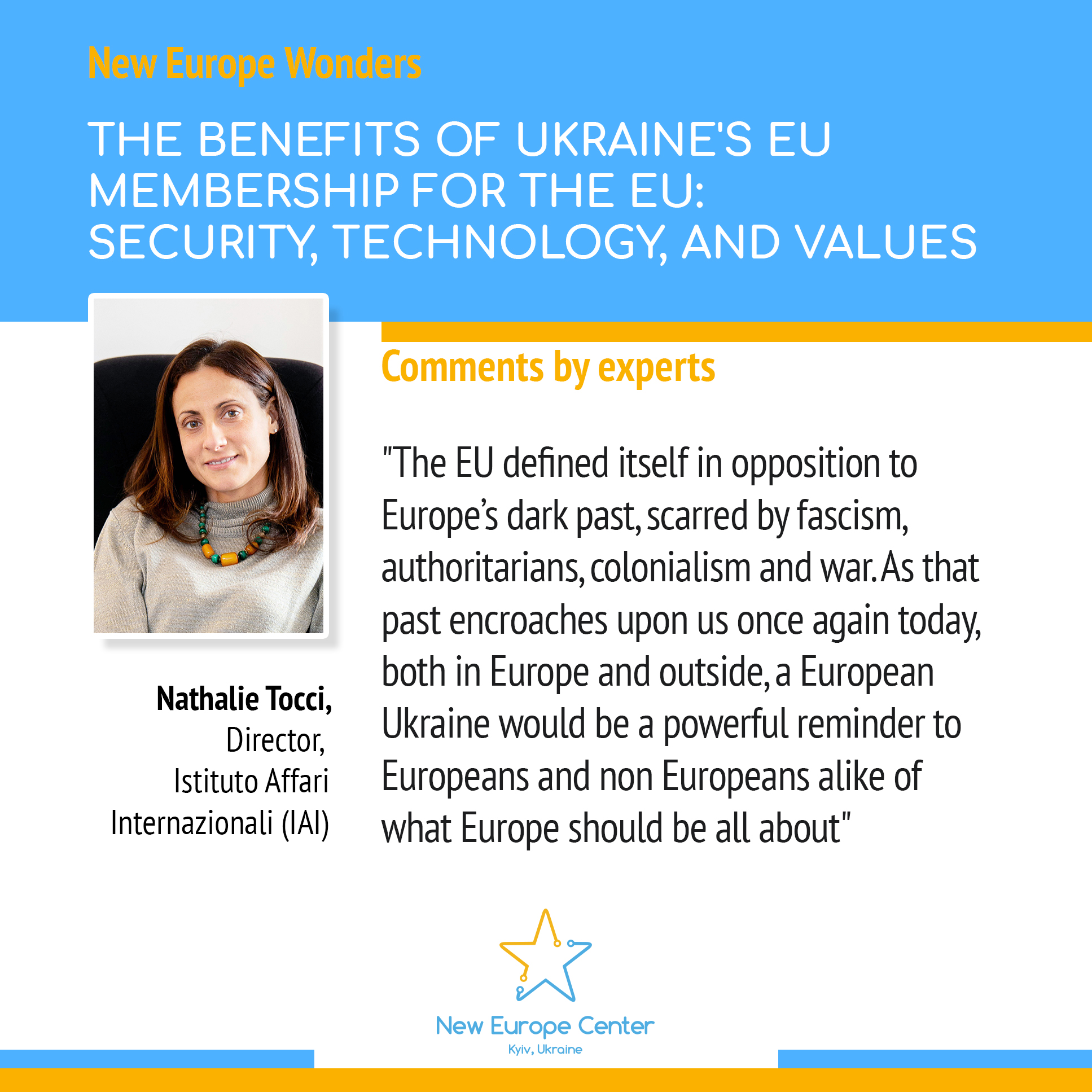
Nathalie Tocci, Director, Istituto Affari Internazionali (IAI), Italy
The membership of Ukraine in the EU is of huge strategic value, in both material and above all ideational terms. Seen through a material lens, it is clear that a large, dynamic and resourceful country like Ukraine brought to the heart of Europe would bring great military, economic, technological and societal gains to the EU. As testament to this is the way in which notwithstanding and against the backdrop of a devastating invasion by Russia, Ukrainians have not only stood firm, but they have done so while developing competences and capacities especially in the military-technological domain. Ukraine within the EU would contribute to Europe’s creativity, resilience, security, development and prosperity. Ukraine outside it would raise the spectre that precisely all these resources would end up in Moscow’s hands. But even more important than the material gains, are the benefits that Ukraine’s membership would contribute to Europe’s identity. The EU defined itself in opposition to Europe’s dark past, scarred by fascism, authoritarians, colonialism and war. As that past encroaches upon us once again today, both in Europe and outside, a European Ukraine would be a powerful reminder to Europeans and non Europeans alike of what Europe should be all about.
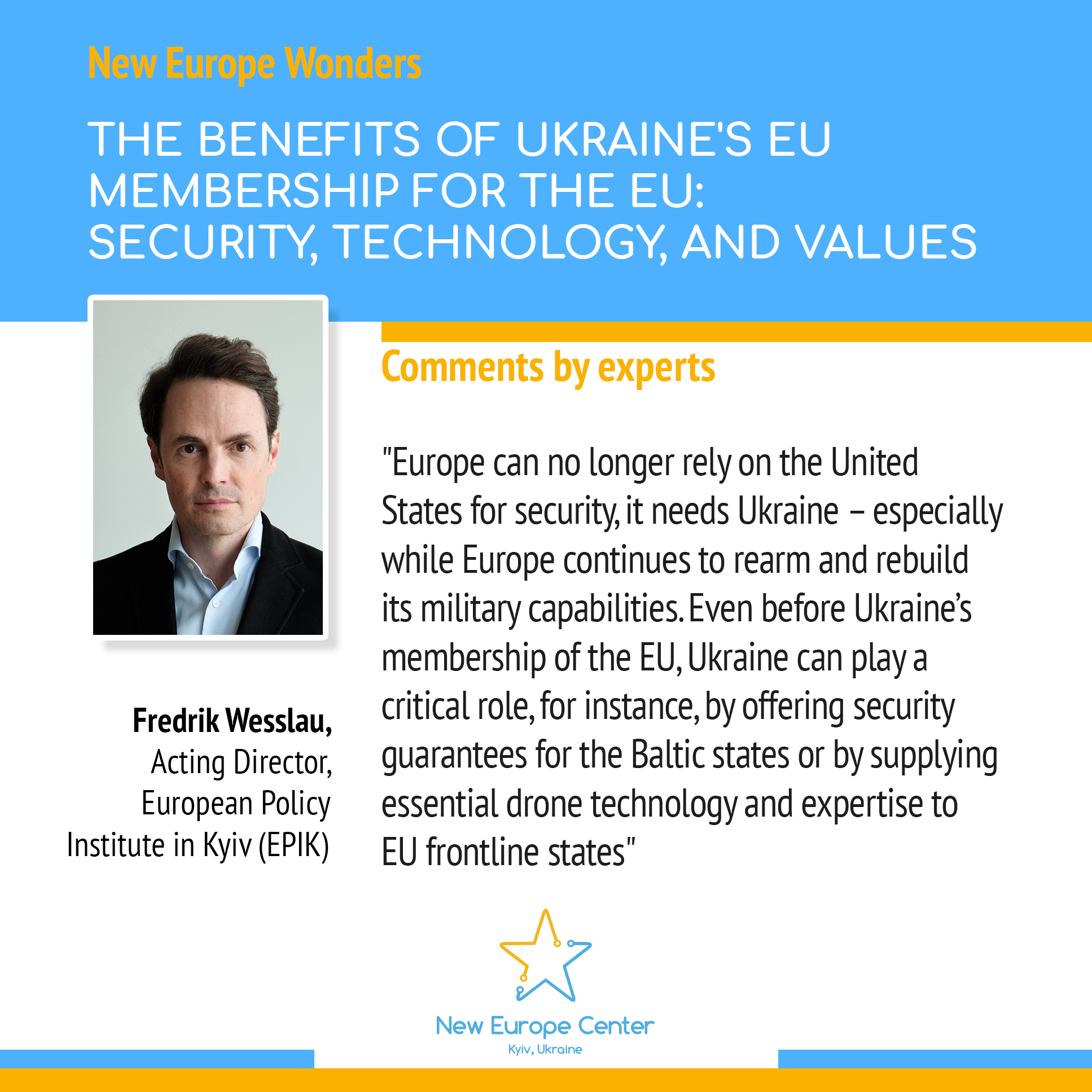
Fredrik Wesslau, Acting Director, European Policy Institute in Kyiv (EPIK), Ukraine
Ukraine’s accession to the EU is not an act of charity – but rather a matter of political survival for the EU in a world shaped by Trump, Putin, and Xi. In a contested international environment, the EU can no longer rely on soft power and American security guarantees. It must strengthen its capacity to defend itself as well as project power abroad – Ukraine is central to that effort.
Ukraine’s most immediate contribution to the EU would be in security and defence. It possesses the largest land force in Europe – a battle-tested army of 800,000 – and knows how to use European weapons better than European troops do. It is on the forefront of drone miltech and modern air defence. While Ukraine still depends on European weapons and ammunition to sustain the war effort, Ukraine is rapidly emerging as a key provider of security for Europe.
And Europe is in dire need of Ukraine’s capabilities and experience. As Europe can no longer rely on the United States for security, it needs Ukraine – especially while Europe continues to rearm and rebuild its military capabilities. Even before Ukraine’s membership of the EU, Ukraine can play a critical role, for instance, by offering security guarantees for the Baltic states or by supplying essential drone technology and expertise to EU frontline states.
In our brave new world, Ukraine would not just be a beneficiary of EU accession – but a major asset.
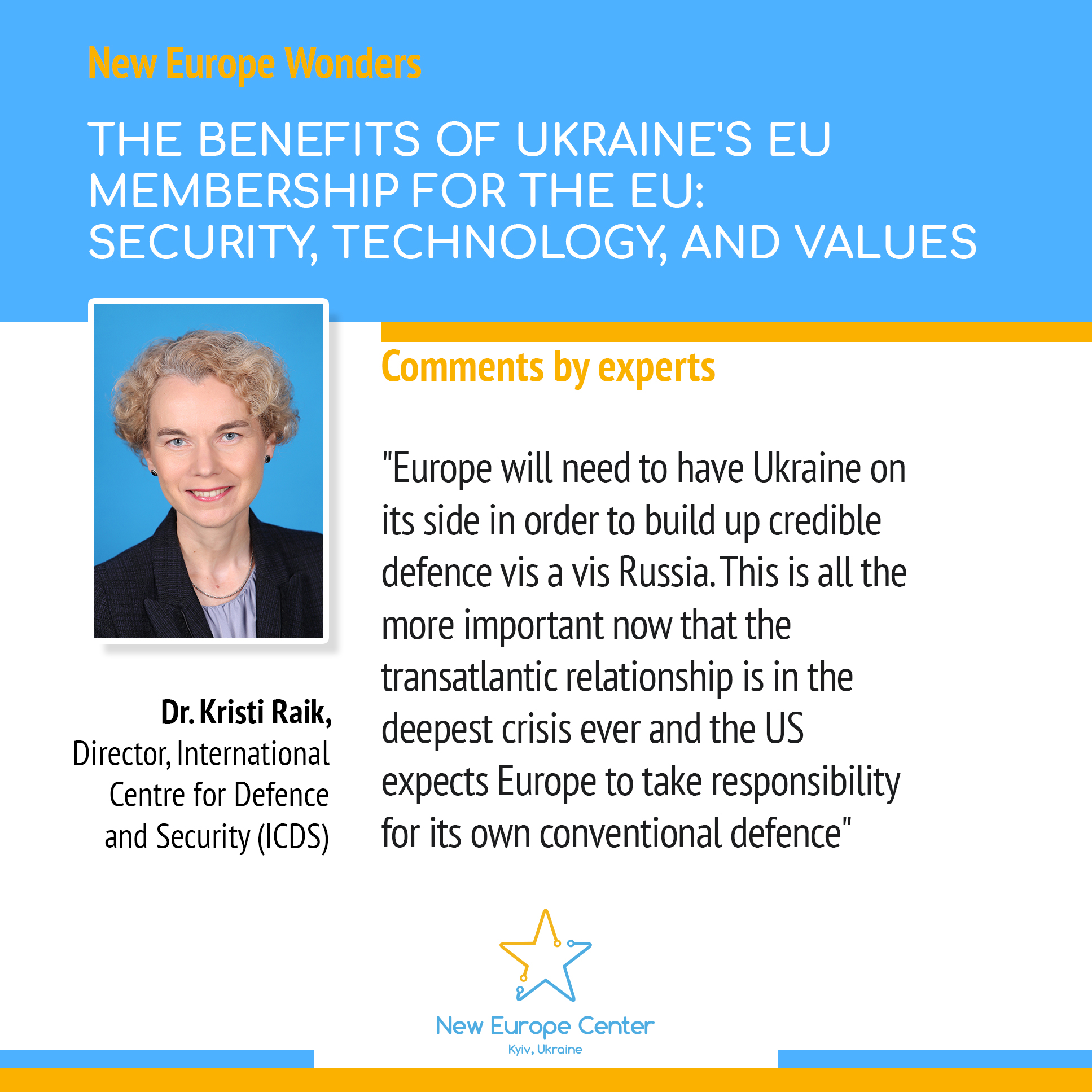
Kristi Raik, Director, International Centre for Defence and Security (ICDS), Estonia
Europe has a strong interest in integrating Ukraine to the EU, which is indeed not sufficiently acknowledged. First and foremost, Europe will need to have Ukraine on its side in order to build up credible defence vis a vis Russia. This is all the more important now that the transatlantic relationship is in the deepest crisis ever and the US expects Europe to take responsibility for its own conventional defence. Ukraine can obviously make an indispensable contribution thanks to its combat-experienced army and strong and innovative military industry. (Ideally, Ukraine would also join NATO, which is in many ways an easier process than joining the EU, but politically impossible during the current US administration. This makes the EU’s role even more significant.)
There are also other potential benefits for the EU, such as a boost to economic growth and geopolitical weight of the Union. Furthermore, Ukraine’s large agricultural sector is mainly seen as a threat to agricultural production in current member states, but it should also be seen as a contribution to food security in the EU.
Highlighting the benefits does not mean that Ukraine should not meet the conditions for membership. However, it is in the EU’s interest to assist and accelerate the process as much as possible, use transition periods and make adjustments to the EU system where necessary.
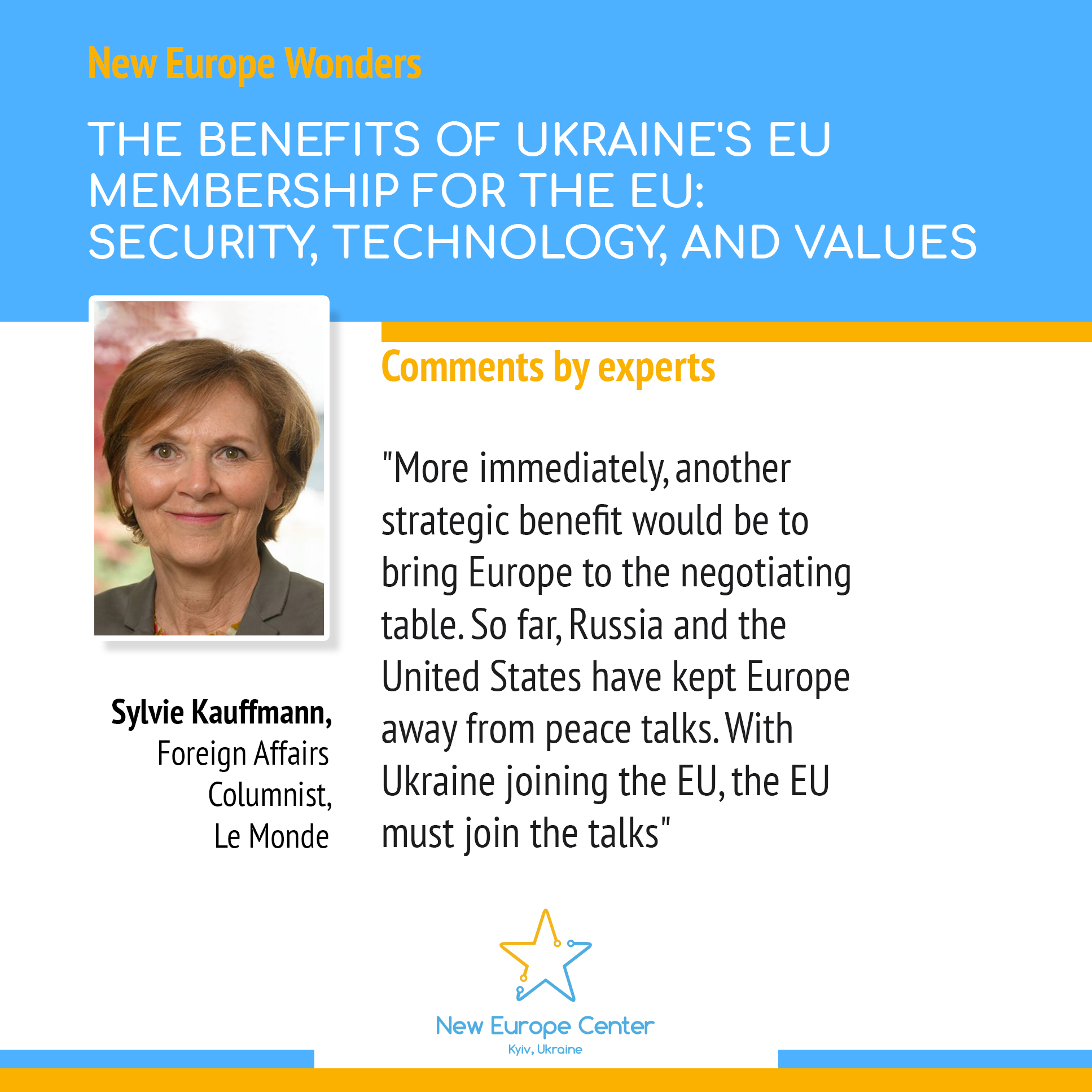
Sylvie Kauffmann, Foreign Affairs Columnist, Le Monde, France
The obvious benefits that the European Union will derive from Ukraine’s accession relate to the field of defense and security. Strategically, having Ukraine inside the EU rather than in the grey zone on its periphery will make the bloc larger and stronger in its confrontation with Russia.
It will also bring benefits in the industrial sector; as member states scale up their rearmament effort, deeper industrial cooperation, integrating Ukraine’s experience and technological advance, will be fruitful. This would give a new impulse to the goal of an integrated European market for defense procurement.
More immediately, another strategic benefit would be to bring Europe to the negotiating table. So far, Russia and the United States have kept Europe away from peace talks. With Ukraine joining the EU, the EU must join the talks.
In the field of digitalization, of renewable energy and of critical raw materials, Ukraine has assets which would strengthen the EU’s sovereignty and green agendas.
The scale of Ukraine’s reconstruction effort will also present important opportunities for European businesses, particularly those in the construction sector.
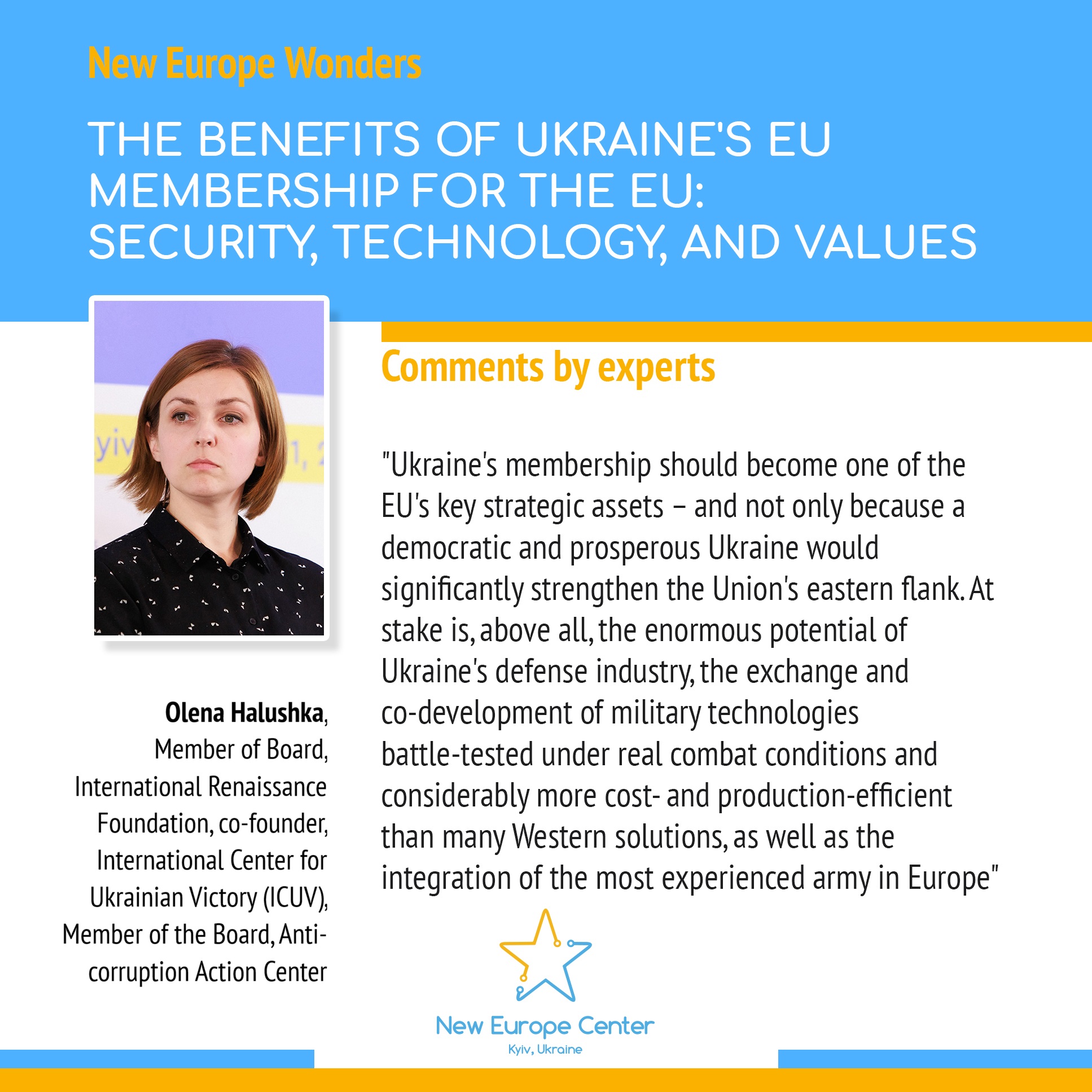
Olena Halushka, Member of Board, International Renaissance Foundation, co-founder, International Center for Ukrainian Victory (ICUV), Member of the Board, Anti-corruption Action Center, Ukraine
With the de-prioritization of Europe in U.S. foreign policy and growing uncertainty surrounding American commitments to NATO, the European Union is increasingly reimagining itself not merely as a political and economic bloc, but as a security and defense alliance that recognizes Russian aggression as a direct threat.
In this context, Ukraine’s membership should become one of the EU’s key strategic assets – and not only because a democratic and prosperous Ukraine would significantly strengthen the Union’s eastern flank. At stake is, above all, the enormous potential of Ukraine’s defense industry, the exchange and co-development of military technologies battle-tested under real combat conditions and considerably more cost- and production-efficient than many Western solutions, as well as the integration of the most experienced army in Europe.
Equally important is the role of Ukrainian society in defending European values – democracy, human rights, the rule of law, and human dignity – against Russian aggression. At the same time, Ukraine is already implementing innovative solutions in anti-corruption and rule-of-law enforcement, including open competitive recruitment for senior positions with the involvement of international experts, as well as maximum transparency and digitalization. This experience could complement reform roadmaps for future EU candidate countries.
It is for these reasons that, in my view, Ukraine’s EU membership should not be regarded purely as the political or economic integration of yet another candidate country, but first and foremost as an investment in the shared security of both Ukraine and the Union.
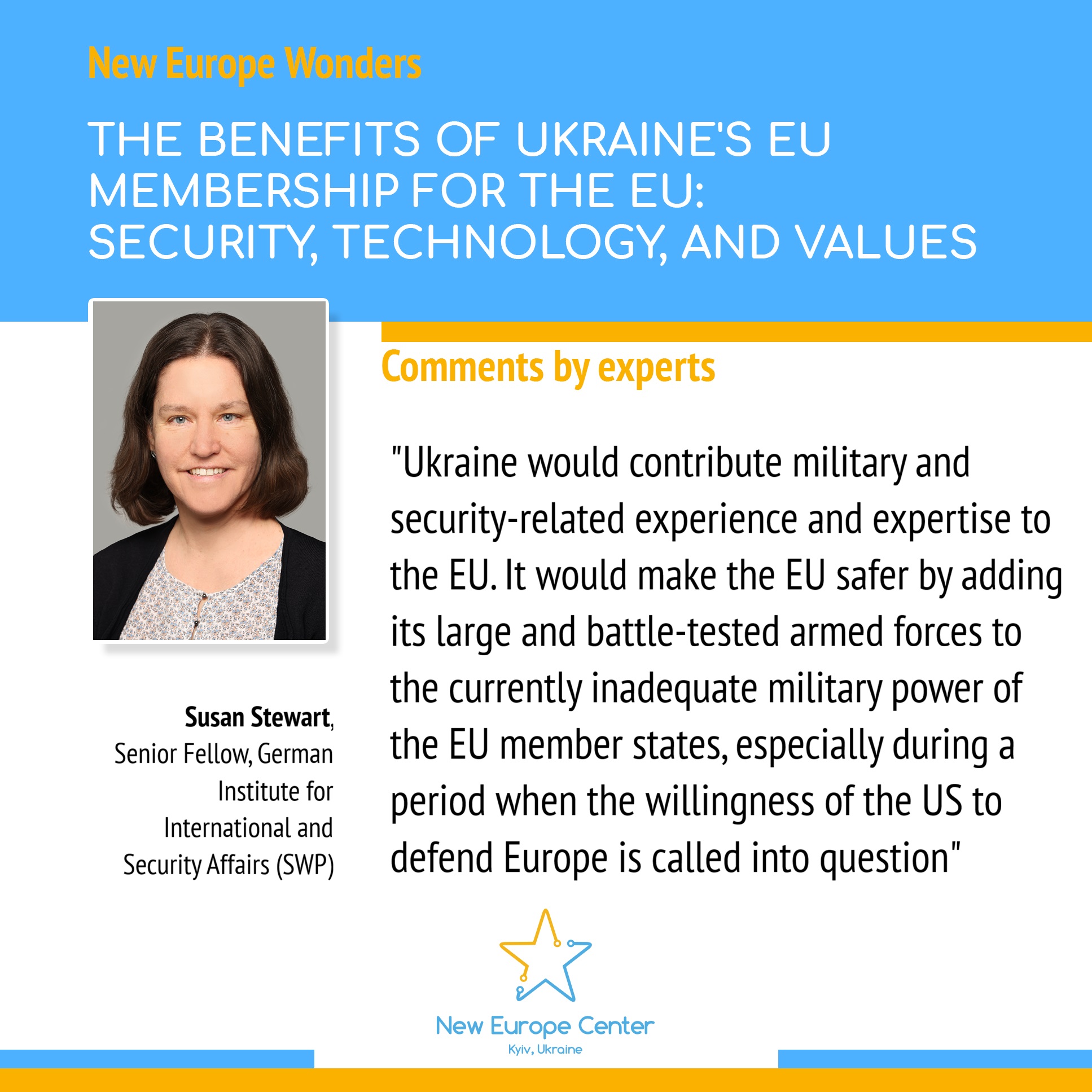
Susan Stewart, Senior Fellow, German Institute for International and Security Affairs (SWP), Germany
First of all, Ukraine would contribute military and security-related experience and expertise to the EU. It would make the EU safer by adding its large and battle-tested armed forces to the currently inadequate military power of the EU member states, especially during a period when the willingness of the US to defend Europe is called into question.
In addition, Ukraine would constitute a major asset in terms of food security and autonomy within the EU. While it is a competitor to certain member states in the agricultural sphere, from a broader standpoint Ukraine would significantly increase the EU’s overall agricultural potential.
Ukraine’s capacity to innovate and to act in a rapid and agile manner would also be a great benefit to the EU, where member states have become too used to slow and cumbersome processes that are unfit to handle the challenges of today’s swiftly evolving environment.
Finally, Ukraine’s direct and prolonged experience of dealing with Russian aggression not only on the battlefield, but also with regard to cyberattacks, disinformation, weaponization of political and economic instruments and of history, would help the EU to better withstand and counter the serious and growing threats emanating from Russia as part of Moscow’s attempt to weaken and destabilize the EU and its member states.
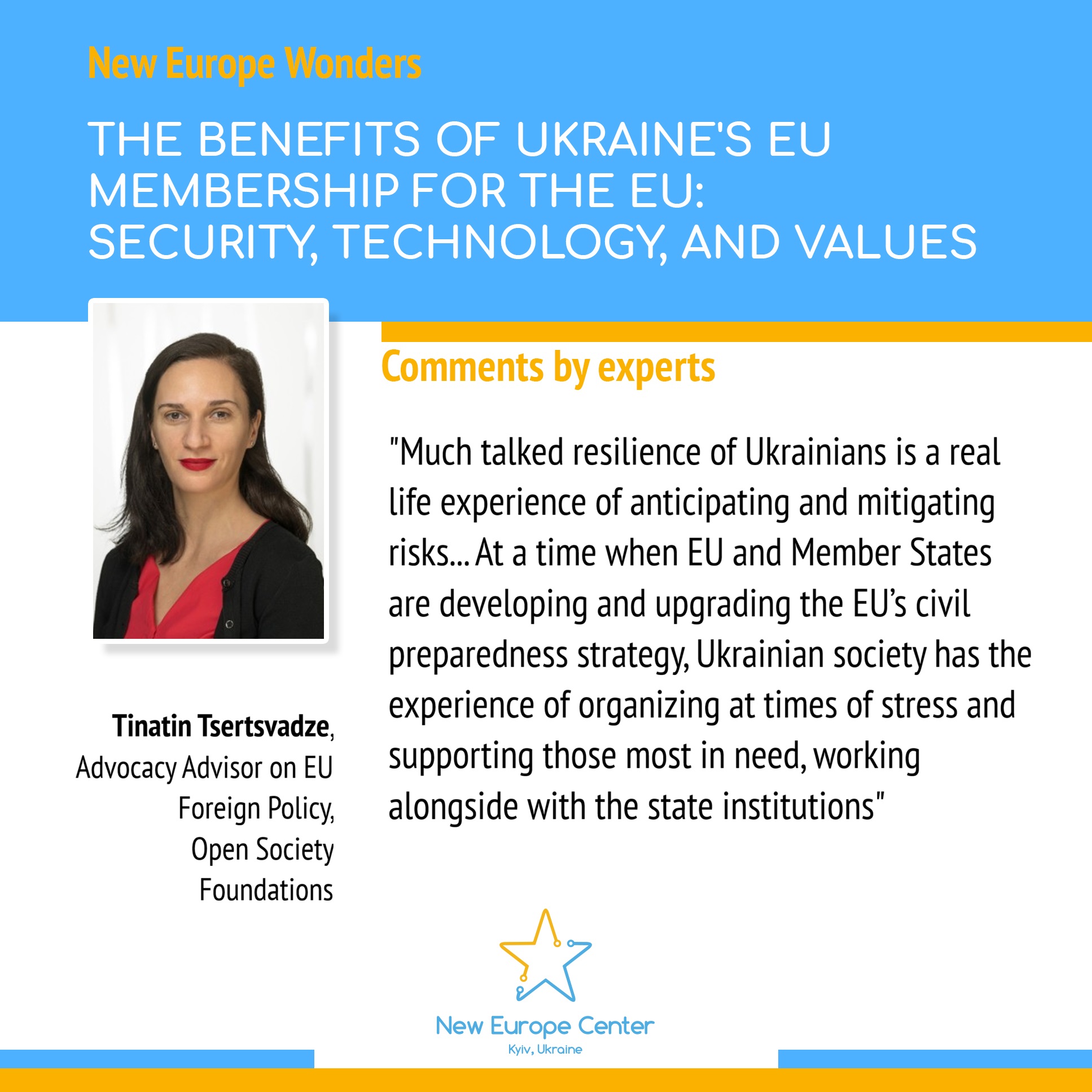
Tinatin Tsertsvadze, Advocacy Advisor on EU Foreign Policy, Open Society Foundations, Belgium
Ukraine’s EU accession and renewed political momentum for an enlarged EU, has brought back urgent need for structural EU reforms. The enlarged EU will need to be fit for the current and future geopolitical challenges, protecting its core values and the rule of law. It will cascade overdue reforms needed for the future fit EU, e.g. reforming the common agricultural policy, reforming the EU voting and decision-making procedures in the CFSP, and a 7-year EU budget.
Besides the much talked defence, security and technological innovation which will make the EU the stronger geopolitical and global actor, if integrated quickly and efficiently, I also would like to focus on the whole-of-society approach to resilience and risk management adapted in Ukraine by the state and the society equally, and how EU can benefit from it. Much talked resilience of Ukrainians is a real life experience of anticipating and mitigating risks, and bottom-up, horizontal approach in which every citizen can be involved. At a time when EU and Member States are developing and upgrading the EU’s civil preparedness strategy, Ukrainian society has the experience of organizing at times of stress and supporting those most in need, working alongside with the state institutions.
This document was prepared with the support of the International Renaissance Foundation. The material reflects the position of the authors and does not necessarily coincide with the position of the International Renaissance Foundation.