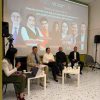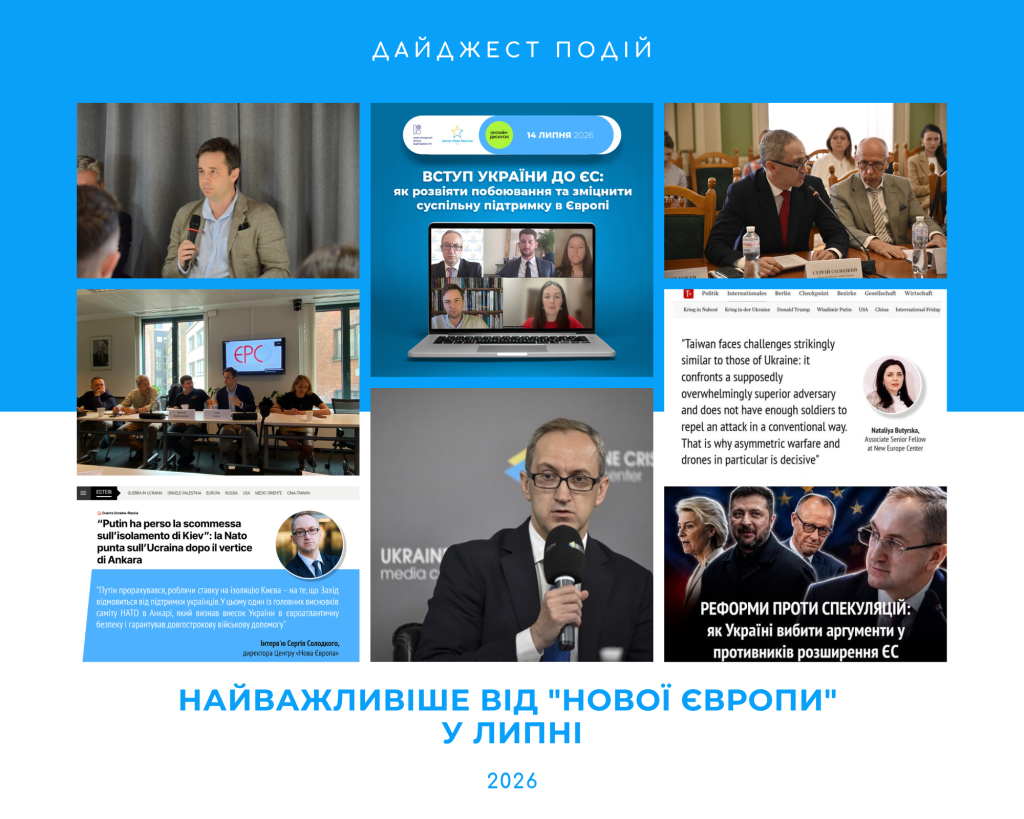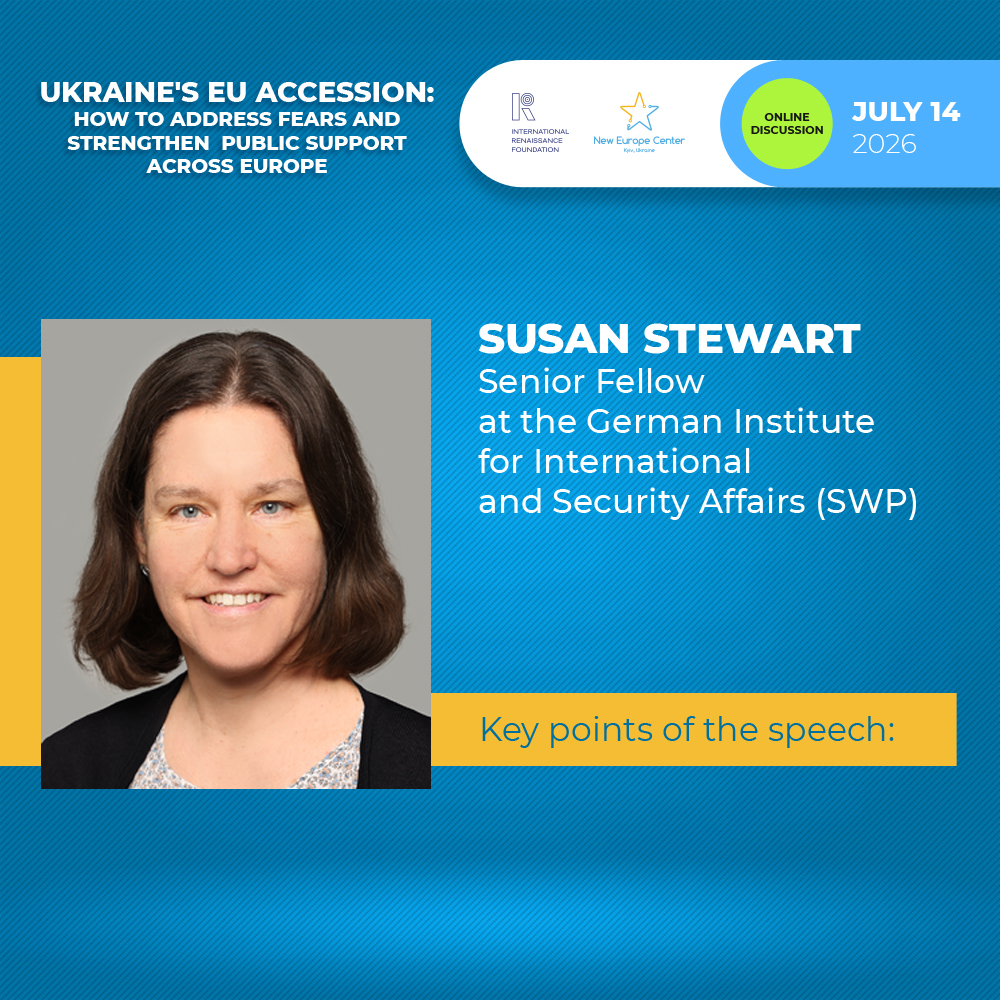
Susan Stewart, Senior Fellow at the German Institute for International and Security Affairs (SWP), argued during online discussion “Getting Ready for the ‘Ukrainian Plumber’ in the EU? Key Narratives of Resistance to EU Enlargement – and How to Counter Them” that advancing Ukraine’s EU accession requires addressing broader European concerns about enlargement, countering Russian disinformation, and demonstrating Ukraine’s ability to become a trusted and fully integrated EU member. She stressed that communication efforts must go beyond promoting Ukraine itself and engage with the wider debate on the future of EU enlargement across member states.
Key points of the speech:
- Ukraine’s accession should be discussed as part of the broader enlargement debate. According to Susan Stewart, support for Ukraine cannot be built in isolation from public perceptions of previous EU enlargements. “It’s not enough to talk about Ukraine”, she noted, arguing that each member state needs an open discussion about the benefits and lessons of enlargement as a whole;
- The positive impact of previous enlargements must be communicated more effectively. While public debates often focus on perceived shortcomings, Susan Stewart stressed that enlargement has brought substantial benefits both to new member states and to the European Union itself. These success stories should become a stronger part of the public conversation;
- Russian disinformation remains a major obstacle to Ukraine’s European integration. Persistent Russian narratives continue to influence public opinion in several EU countries, particularly Germany, where arguments for accommodating Russia still resonate. “All of this disinformation that Russia is constantly putting out has a serious bearing on how Ukraine can be viewed”, she warned;
- Ukraine is increasingly perceived as a security provider rather than a security burden. Susan Stewart pointed to an important shift in German public discourse, where Ukraine is now recognized not only as a country requiring support, but also as a contributor to European security through its military experience, defence innovation, and growing defence cooperation with European partners;
- Gradual integration into EU institutions could strengthen mutual trust before full membership. Referring to the proposal of German Chancellor Friedrich Merz for deeper institutional participation (so-called “associated membership” status for Ukraine that could grant institutional representation, such as seats in the European Parliament and Council, without voting rights, while providing mutual security guarantees), the expert pointed out that involving Ukraine more closely in EU decision-making would help both sides better understand each other and demonstrate Ukraine’s readiness for membership. Such participation would allow Ukraine “to present its arguments and its ideas” while facilitating its integration into the EU;
- Better coordination of communication across EU member states is essential. Susan Stewart proposed establishing a mechanism that would allow Ukrainian embassies across the EU to regularly exchange information on national debates, emerging concerns, and successful communication practices. Sharing experience between member states, she argued, would make Ukraine’s outreach more coherent and effective throughout the accession process.
- In Germany, Ukrainian migrants constitute an important part of Ukraine’s soft power. They can communicate directly and authentically with German society about the causes and consequences of the war. They can also appeal more effectively to people’s emotions, which is particularly important for a large part of the population, Susan Stewart underlined. In order to convince European citizens to support Ukraine’s EU accession, appeals on the emotional level will be just as crucial as those on the level of rational arguments.
The event was organized by the New Europe Center with the support of the International Renaissance Foundation. The views and positions expressed during the event are those of the experts and do not necessarily reflect the position of the International Renaissance Foundation.