Marianna Fakhurdinova, Coordinator, EU-Ukraine Partnership Program, Transatlantic Dialogue Center, during the online discussion “Getting Ready for the ‘Ukrainian Plumber’ in the EU? Key Narratives of Resistance to EU Enlargement – and How to Counter Them”, argued that Ukraine’s path to EU membership depends not only on reforms, but also on understanding and addressing the legitimate concerns of European societies. She stressed that public opinion across member states is shaped by fears about enlargement, and that Ukraine needs a more strategic, country-specific communication approach that combines facts, empathy, and a positive vision of the benefits of accession.
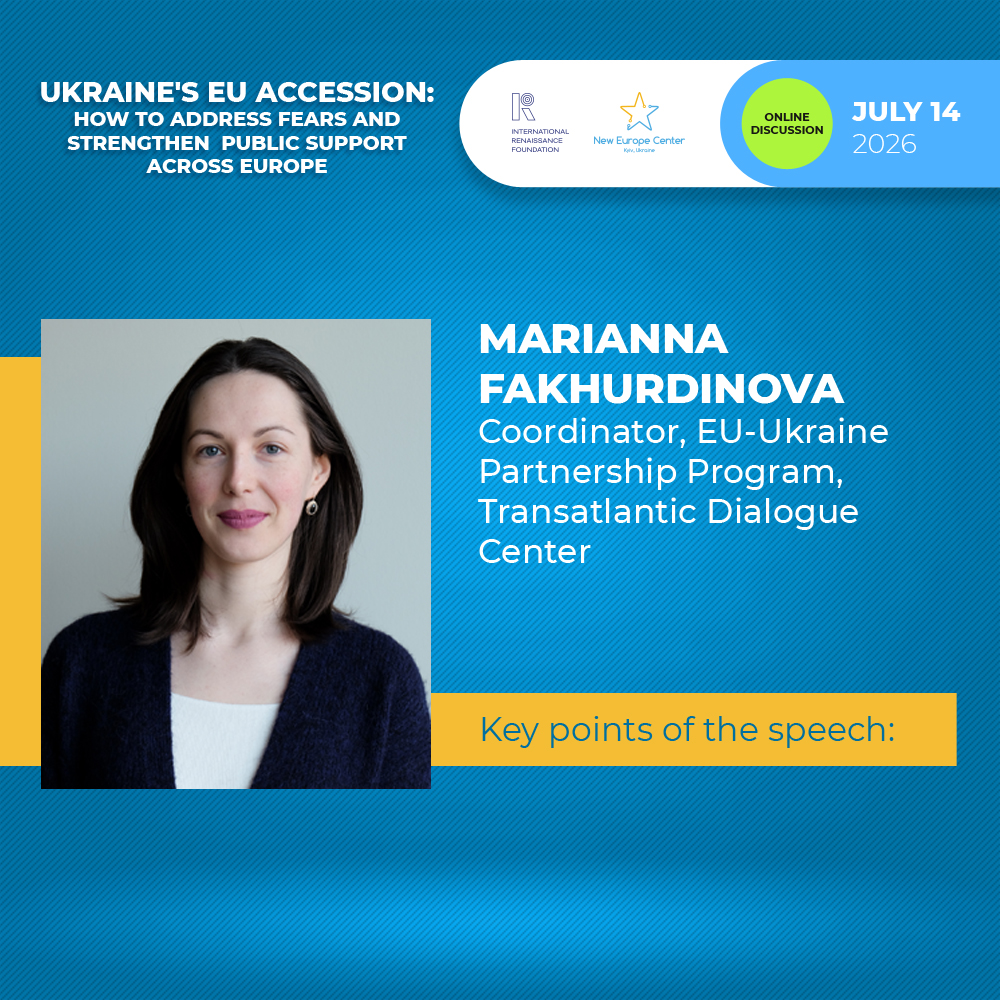
Key points of the speech:
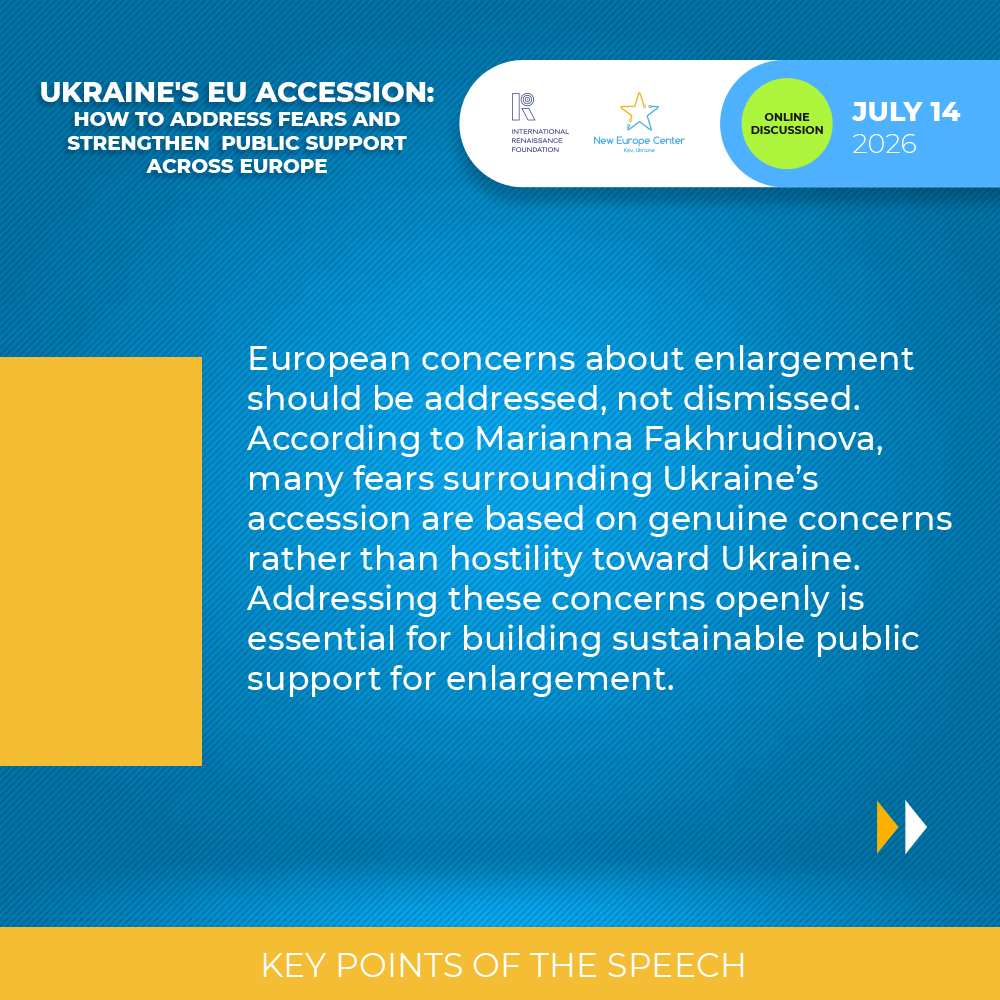
- European concerns about enlargement should be addressed, not dismissed. According to Marianna Fakhrudinova, many fears surrounding Ukraine’s accession are based on genuine concerns rather than hostility toward Ukraine. Addressing these concerns openly is essential for building sustainable public support for enlargement;
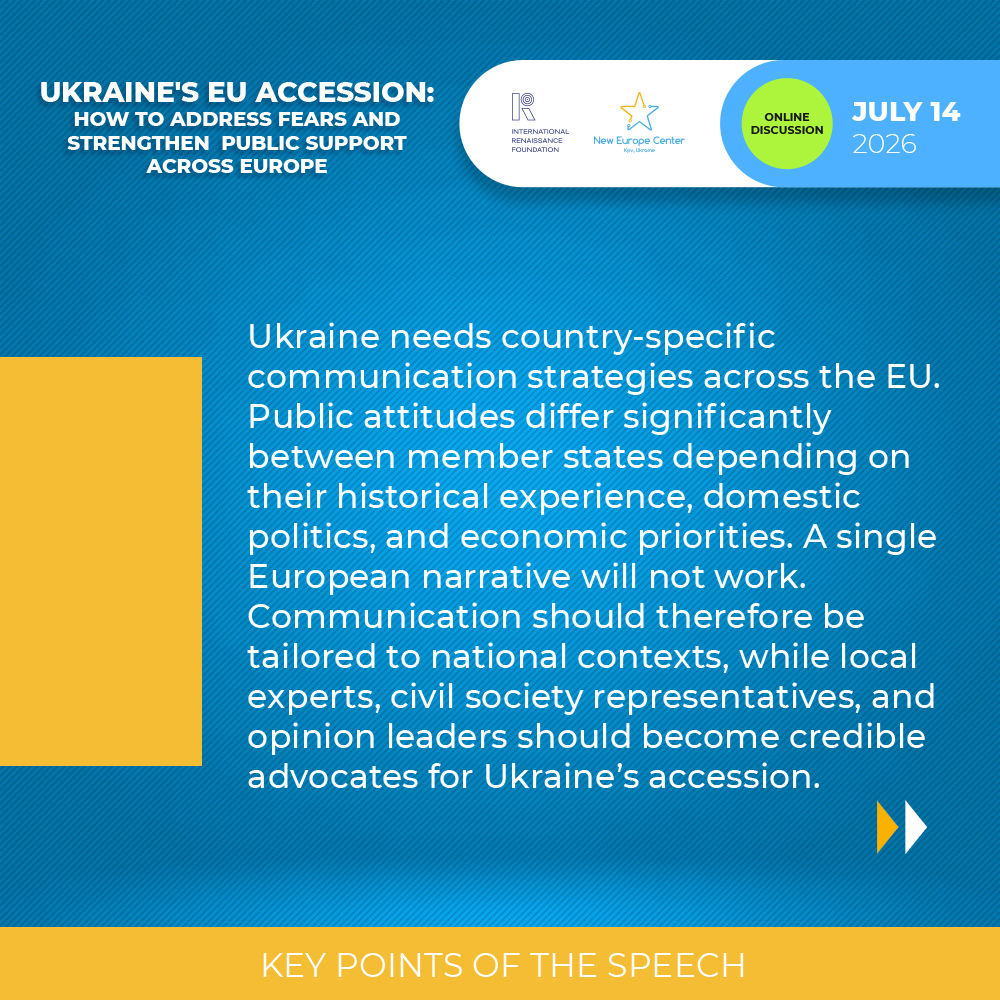
- Ukraine needs country-specific communication strategies across the EU. Public attitudes differ significantly between member states depending on their historical experience, domestic politics, and economic priorities. A single European narrative will not work. Communication should therefore be tailored to national contexts, while local experts, civil society representatives, and opinion leaders should become credible advocates for Ukraine’s accession;
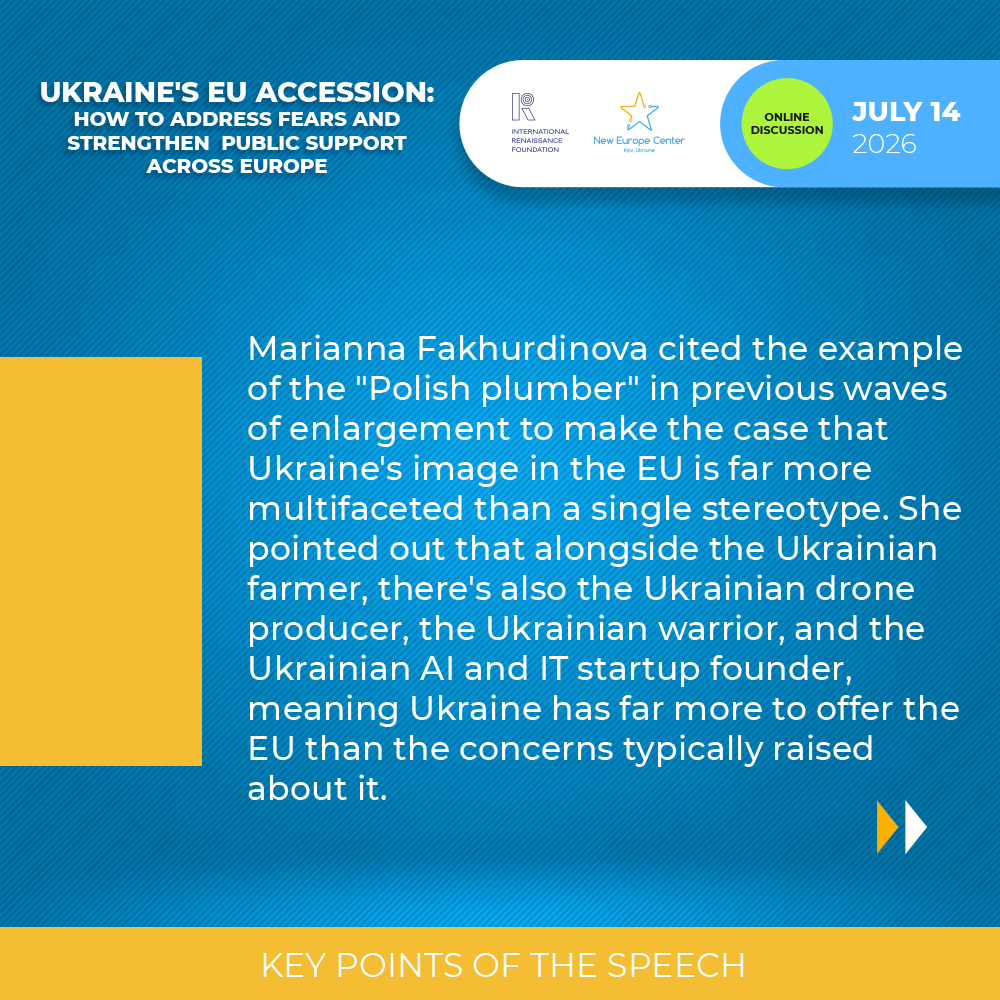
- Marianna Fakhurdinova cited the example of the “Polish plumber” in previous waves of enlargement to make the case that Ukraine’s image in the EU is far more multifaceted than a single stereotype. She pointed out that alongside the Ukrainian farmer, there’s also the Ukrainian drone producer, the Ukrainian warrior, and the Ukrainian AI and IT startup founder, meaning Ukraine has far more to offer the EU than the concerns typically raised about it;
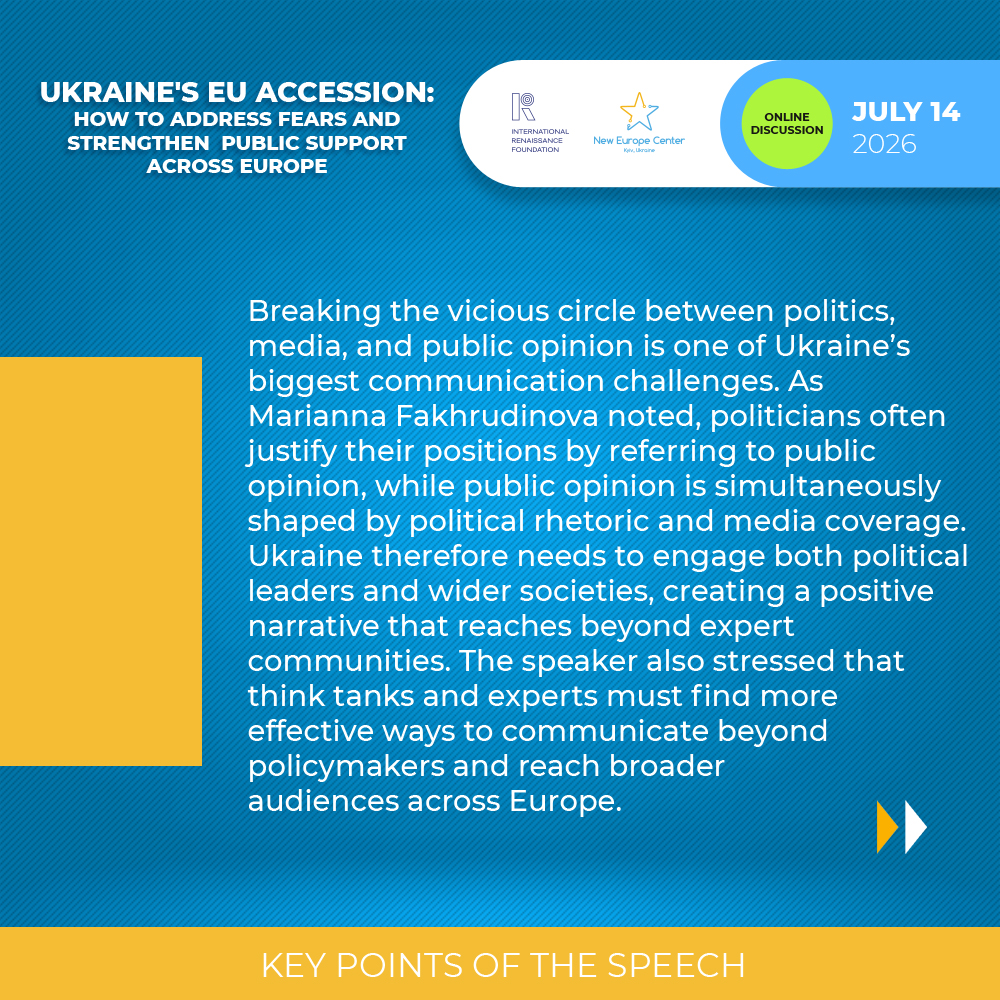
- Breaking the vicious circle between politics, media, and public opinion is one of Ukraine’s biggest communication challenges. As Marianna Fakhrudinova noted, politicians often justify their positions by referring to public opinion, while public opinion is simultaneously shaped by political rhetoric and media coverage. Ukraine therefore needs to engage both political leaders and wider societies, creating a positive narrative that reaches beyond expert communities. The speaker also stressed that think tanks and experts must find more effective ways to communicate beyond policymakers and reach broader audiences across Europe;
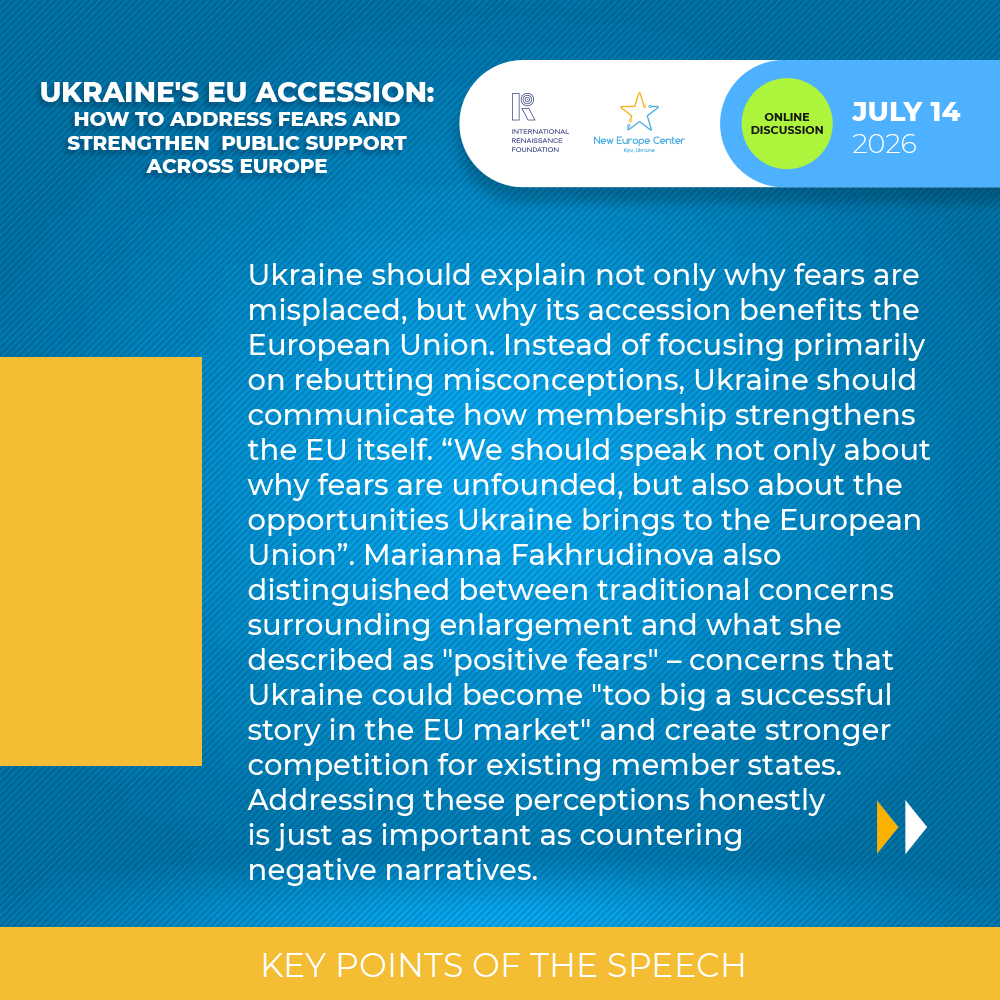
- Ukraine should explain not only why fears are misplaced, but why its accession benefits the European Union. Instead of focusing primarily on rebutting misconceptions, Ukraine should communicate how membership strengthens the EU itself. “We should speak not only about why fears are unfounded, but also about the opportunities Ukraine brings to the European Union”. Marianna Fakhrudinova also distinguished between traditional concerns surrounding enlargement and what she described as “positive fears” – concerns that Ukraine could become “too big a successful story in the EU market” and create stronger competition for existing member states. Addressing these perceptions honestly is just as important as countering negative narratives;
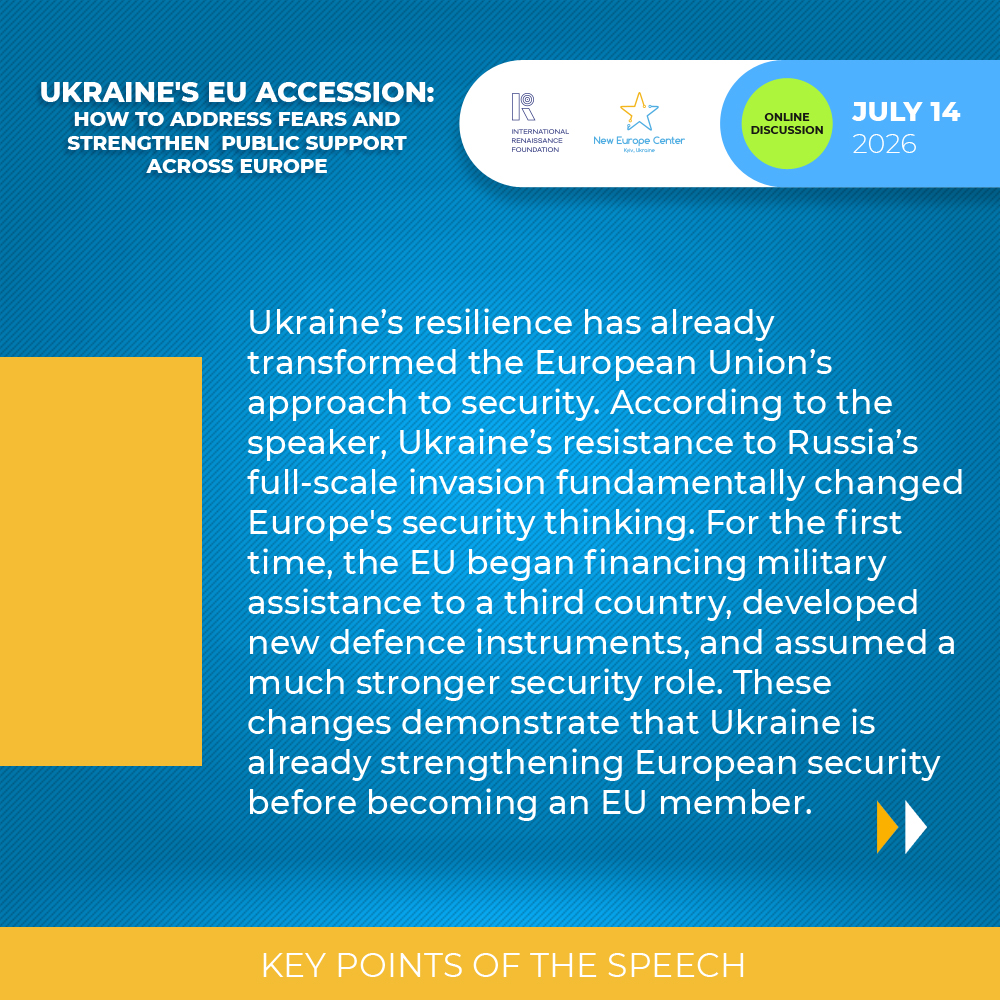
- Ukraine’s resilience has already transformed the European Union’s approach to security. According to the speaker, Ukraine’s resistance to Russia’s full-scale invasion fundamentally changed Europe’s security thinking. For the first time, the EU began financing military assistance to a third country, developed new defence instruments, and assumed a much stronger security role. These changes demonstrate that Ukraine is already strengthening European security before becoming an EU member;
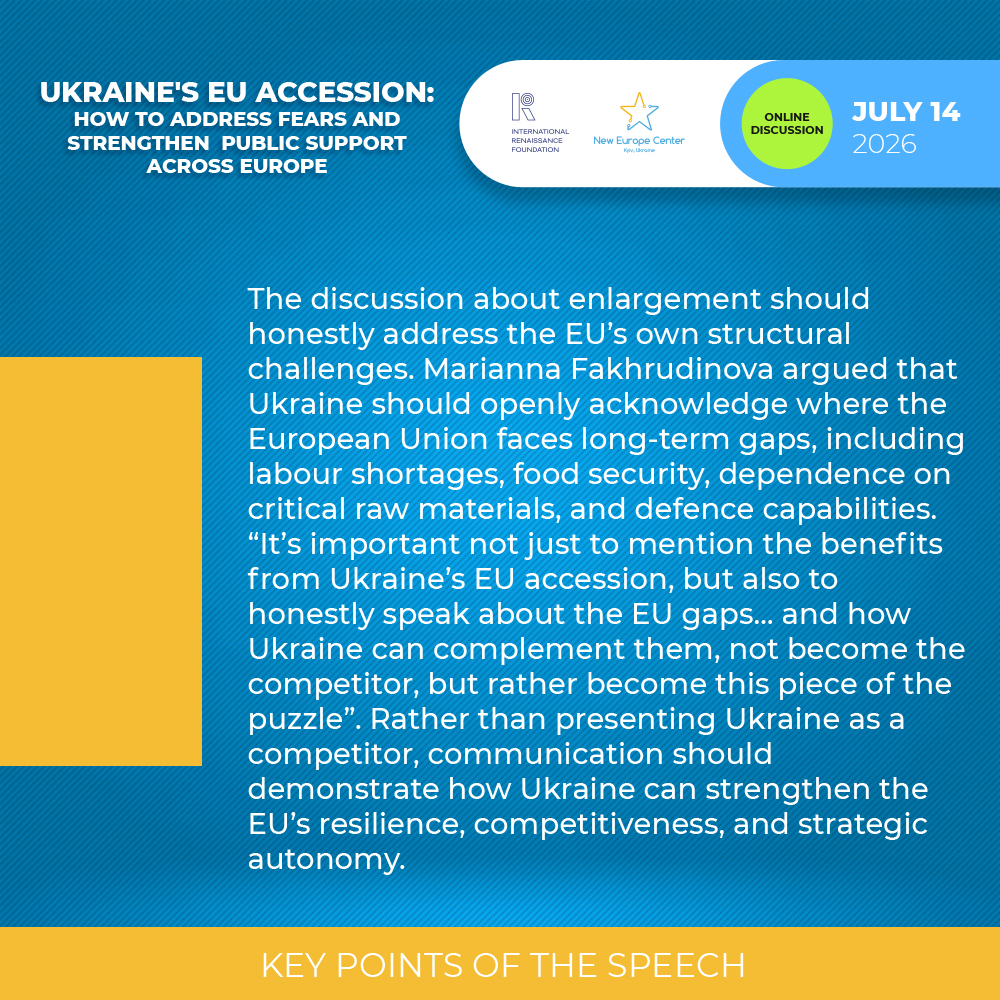
- The discussion about enlargement should honestly address the EU’s own structural challenges. Marianna Fakhrudinova argued that Ukraine should openly acknowledge where the European Union faces long-term gaps, including labour shortages, food security, dependence on critical raw materials, and defence capabilities. “It’s important not just to mention the benefits from Ukraine’s EU accession, but also to honestly speak about the EU gaps… and how Ukraine can complement them, not become the competitor, but rather become this piece of the puzzle”. Rather than presenting Ukraine as a competitor, communication should demonstrate how Ukraine can strengthen the EU’s resilience, competitiveness, and strategic autonomy.
The event is organized by the New Europe Center with the support of the International Renaissance Foundation. The views and positions expressed during the event are those of the experts and do not necessarily reflect the position of the International Renaissance Foundation.