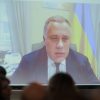
Before our discussion begins, I would like first to thank our defenders. Their sacrifice has made the EU enlargement possible again. Both for Ukraine and Moldova. What we have today is an achievement of women and men in uniform. Thanks to them, we know what a true value of our shared values is. This must be recognised.
Russia wanted to recreate its empire. But in fact, it is thanks to Ukraine holding the line, that the EU has received a chance to reaffirm its strength by defending democracy and expanding the frontier of freedom.
It is where the merit-based approach meets geopolitics. It is important to strike a balance between the two in order not to lose historic momentum to defend our common European destiny, support Ukraine in its struggle for independence and strengthen the EU.
This is a two-way street. No doubt, the success of candidates is measured by the pace of reforms. But the EU is also expected to be ambitious about the enlargement itself – I mean not to look for the technicalities to slow down it, but to create the opportunities to speed it up. This would shape the future of the continent and would give a hope for those who are still in Russia’s shadow.
Until recently, the enlargement process for the current Candidate Countries was largely guided by old modalities, adopted by the EU when very few wanted the enlargement to happen. In this regard, we welcome current consensus in the EU about strategic necessity of the enlargement for the EU itself. This approach is clearly reflected in the recent Commission’s Communication Preparing for a wider Union. We support such concept of the enlargement as the process that brings benefits for the future members but also strengthens and enriches the Union.
We all remember well where we were a year ago. A lot was covered with uncertainty. But we have both made a good progress over the last year:
- we overcame political hurdles within the Council for the accession negotiation to start;
- the four clusters are open. And I believe we will have the rest two by the end of the year;
- the work is ongoing on the preparation for IBAR, so we can start closing chapters already in the first half of the next year;
- despite the fifth year of Russia’s full-scale war, Ukraine remains as committed as ever to the EU and the reform agenda.
Russia was banking on fatigue of Ukraine, but the EU support remains as strong as ever.
Here I want to appreciate the support and engagement of the EU Member States, the European Commission and its leadership, the Irish, Cypriot and Danish Presidencies – for all we did together over these months.
In the anticipation of the report, there were already a lot of talks about Ukraine and Moldova. But I have an important disclaimer. Don’t consider this report as a competition with our friends and partners from Moldova.
We are operating under completely different conditions – for instance, our Parliament is often forced to pause its work because of air alerts. But even despite this, we are delivering. And we will.
Ukraine has realistic ambitions and high expectation from 2027:
- we are working closely with the European Commission to achieve a positive IBAR by March;
- for this purpose we established a Task Force, which meets every few days to coordinate Ukraine’s progress within Fundamentals cluster;
- likewise, we are looking forward to working closely with the Lithuanian and Greek presidencies to close maximum negotiation clusters by the end of 2027.
I know that the Commission has prepared some indicative plans for the next year, but I believe these plans would need some upgrade in the process, as such roadmaps shall facilitate more enlargement ambitions to achieve, rather than setting any limits.
In parallel, we will continue integration of Ukraine into the EU Internal Market by bringing particular Ukrainian sectors into the EU framework already now, even prior a full-fledged membership.
We are not going to compromise on our path to Europe. It is irreversible. The EU path is about our resilience and future. Here I want to come to the issue of peace. The EU integration is one of the strongest and most commonly accepted elements in security guarantees.
And it seems that the EU holds a bunch of cards to force Russia finally to peace. Through sanctions, financial support and providing weapons for Ukraine. We hope the EU will play all of them.
Russia understands this and invests a lot to divide Europe and undermine the EU support for Ukraine. But I know the EU commitment to Ukraine is as irreversible, as ours to the EU.
Thank you again for today’s discussion. Indeed, the enlargement brings benefits for the future members but also strengthens the Union itself.
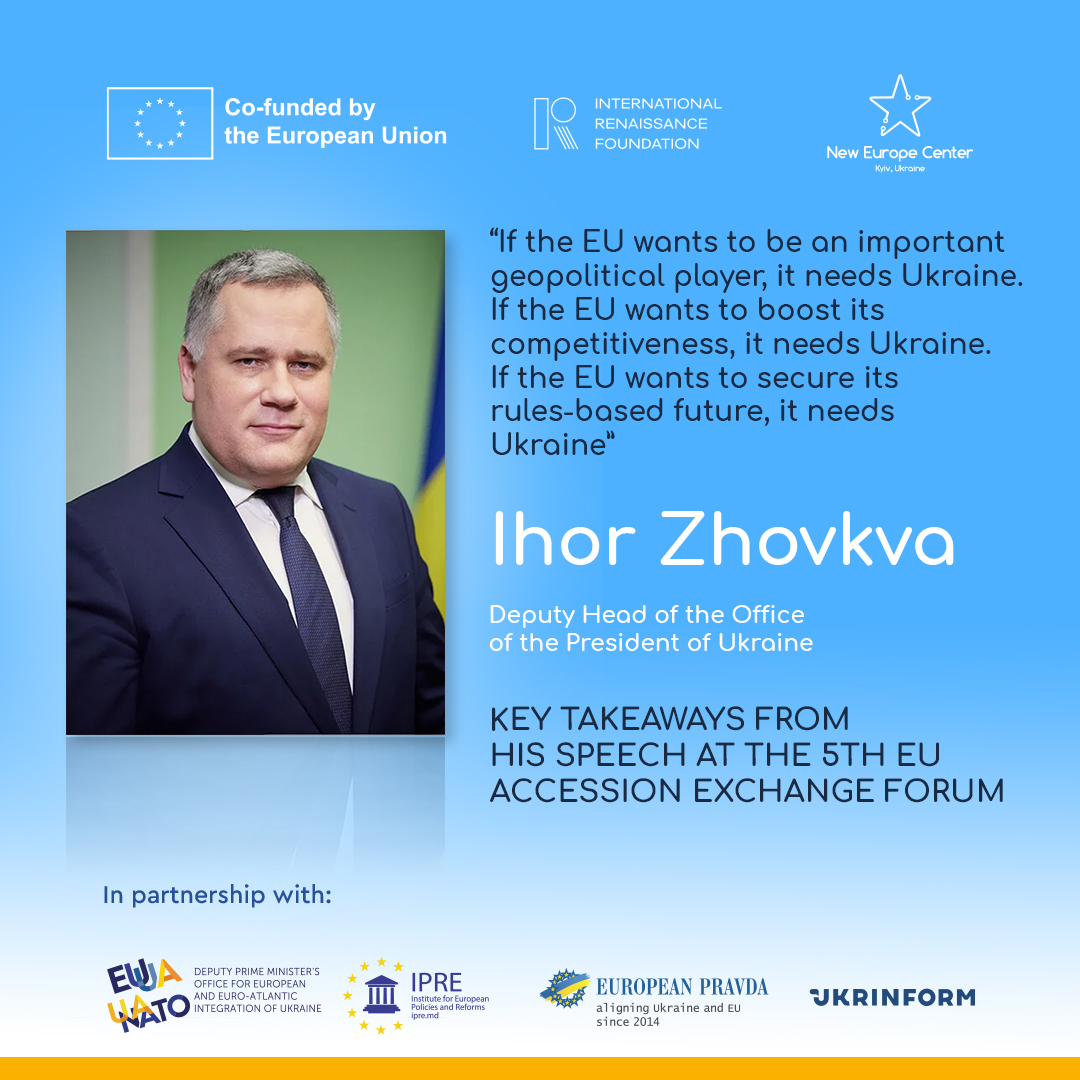
If the EU wants to be an important geopolitical player, it needs Ukraine.
If the EU wants to boost its competitiveness, it needs Ukraine.
If the EU wants to secure its rules-based future, it needs Ukraine.
And we need to continue working together on making Ukraine a full-fledged member of the EU asap.
Watch the full recording on our YouTube channel.
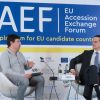
The EU Accession Exchange Forum is organized by the New Europe Center in partnership with the Office of the Deputy Prime Minister for European and Euro-Atlantic Integration of Ukraine, the International Renaissance Foundation, and the Institute for European Policies and Reforms (Republic of Moldova), with Ukrinform and European Pravda serving as media partners. The EU Accession Exchange Forum is taking place with EU support, within the EU-funded “Whole-of-Society Accession” project implemented by the International Renaissance Foundation.