Results of a nationwide opinion poll commissioned by the New Europe Center in September 2026
KEY FINDINGS:
Trust in the EU prevails, but it is not unconditional.
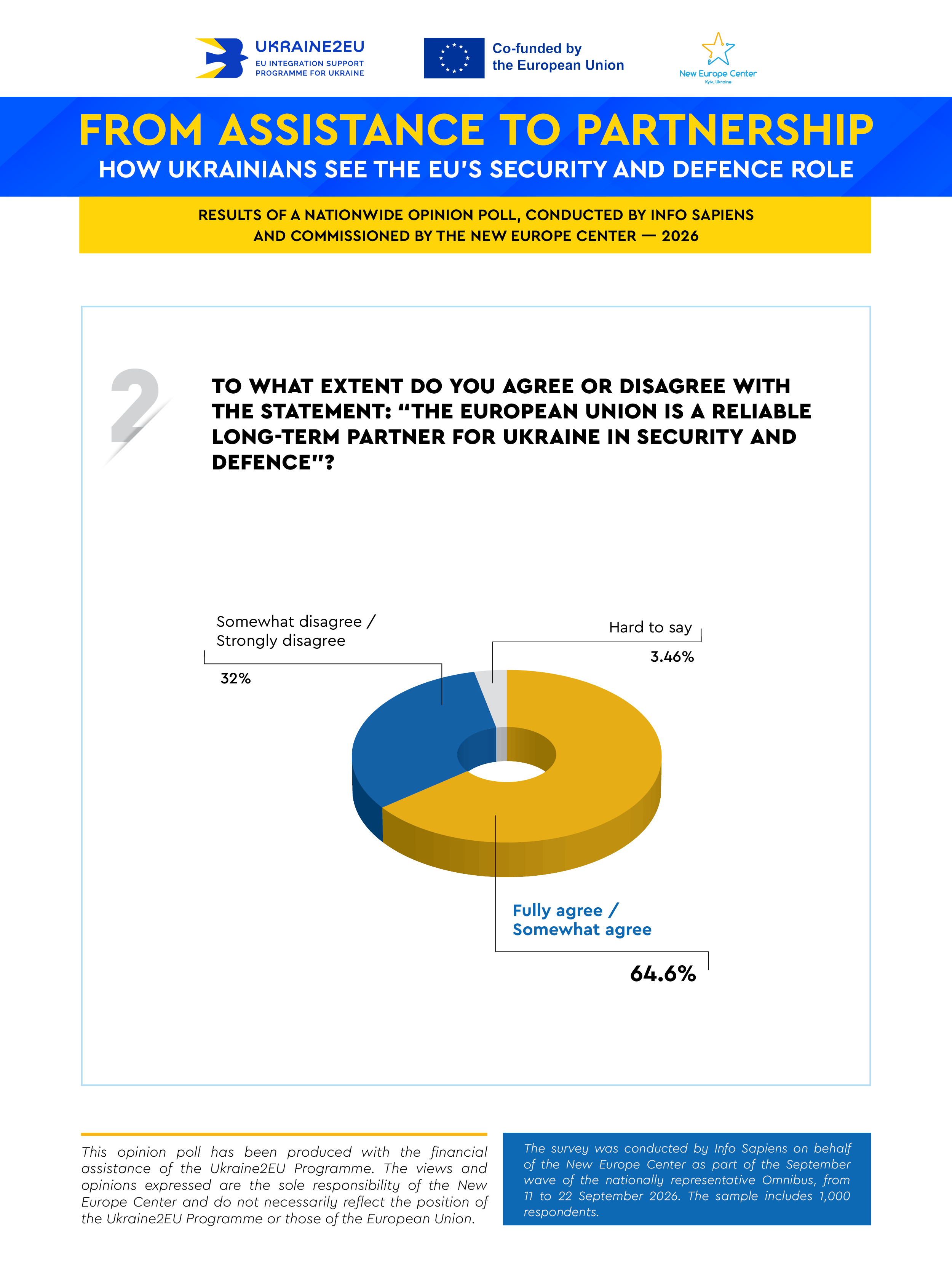
6% of respondents see the European Union as a reliable long-term partner for Ukraine in security and defence. At the same time, 32.0% disagree with this statement. The positive view is mostly moderate: 49.7% “somewhat agree” and 14.9% “fully agree.”
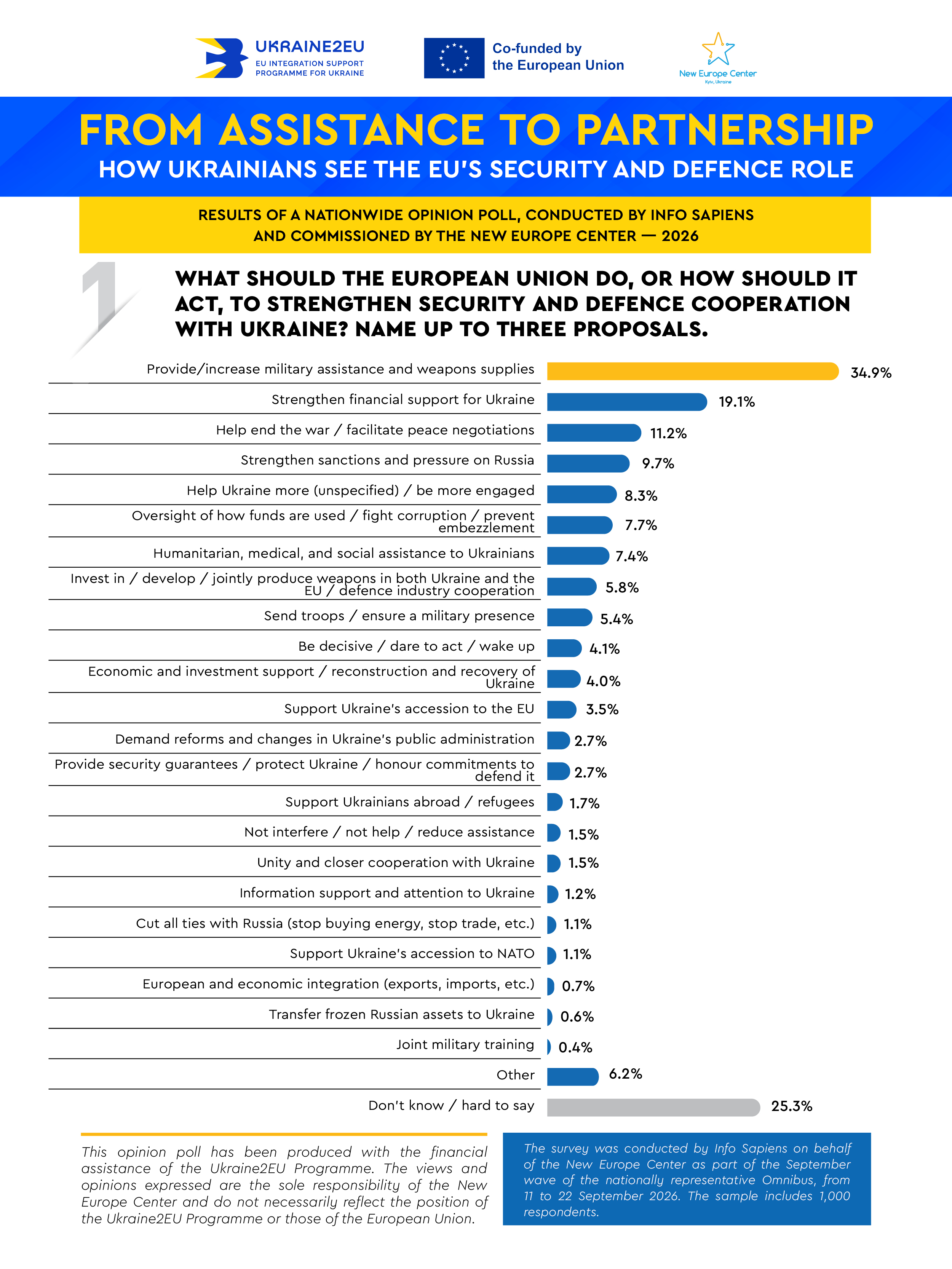
The main immediate expectation of the EU is more military assistance.
In an open-ended question, 34.9% of respondents named this proposal. The five most common answers also included stronger financial support for Ukraine (19.1%), helping to end the war or facilitate peace negotiations (11.2%), stronger sanctions and pressure on Russia (9.7%), and greater EU assistance and engagement in general (8.3%). Oversight of how funds are used and the fight against corruption were mentioned by 7.7%.
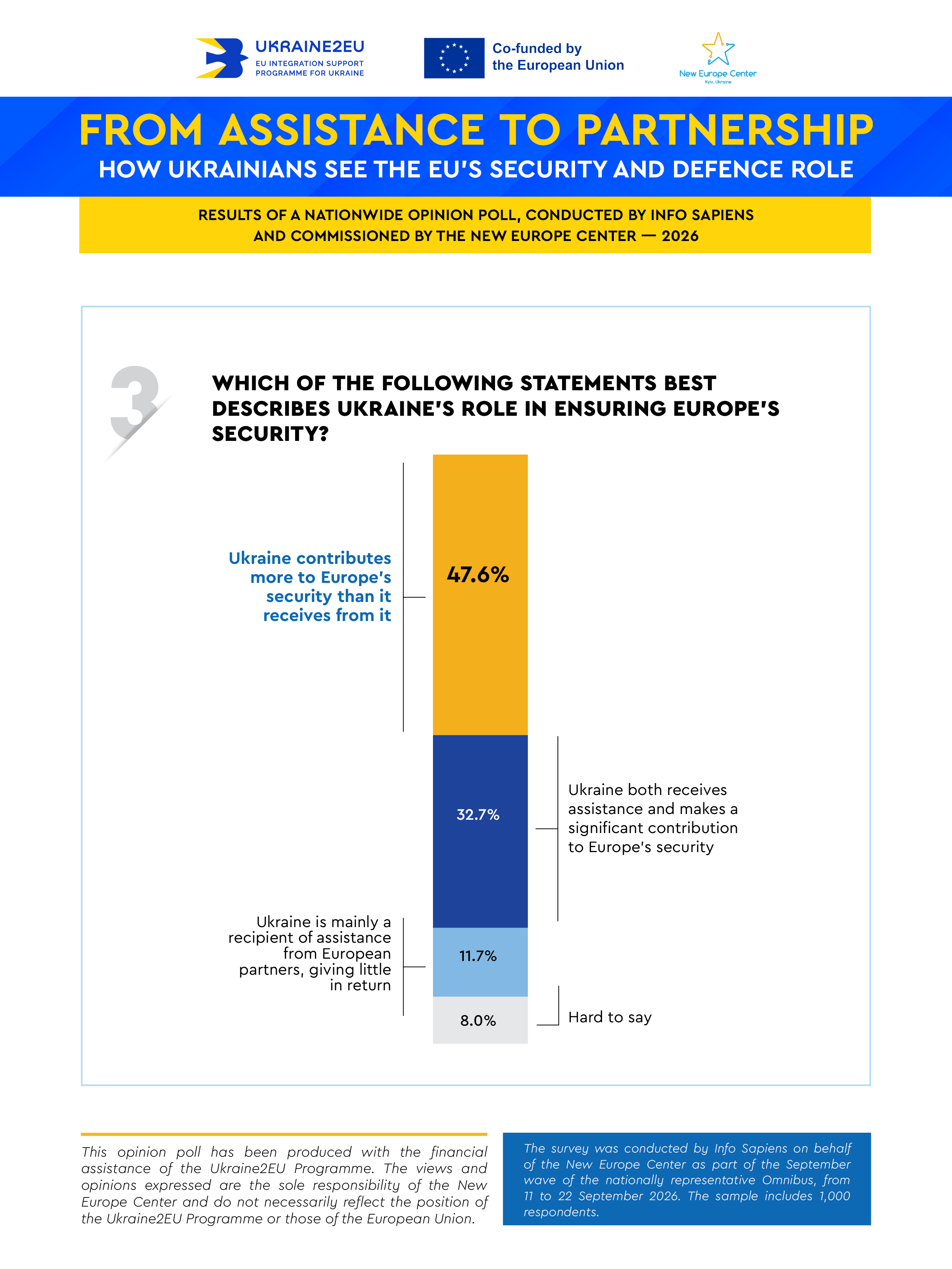
Ukrainians see their country as a security provider, not merely an aid recipient.
Overall, 80.3% believe Ukraine makes a significant contribution to Europe’s security. Of these, 47.6% are convinced that Ukraine gives Europe more than it receives, while 32.7% see it as both an aid recipient and a security provider. Only 11.7% view Ukraine primarily as an aid recipient.
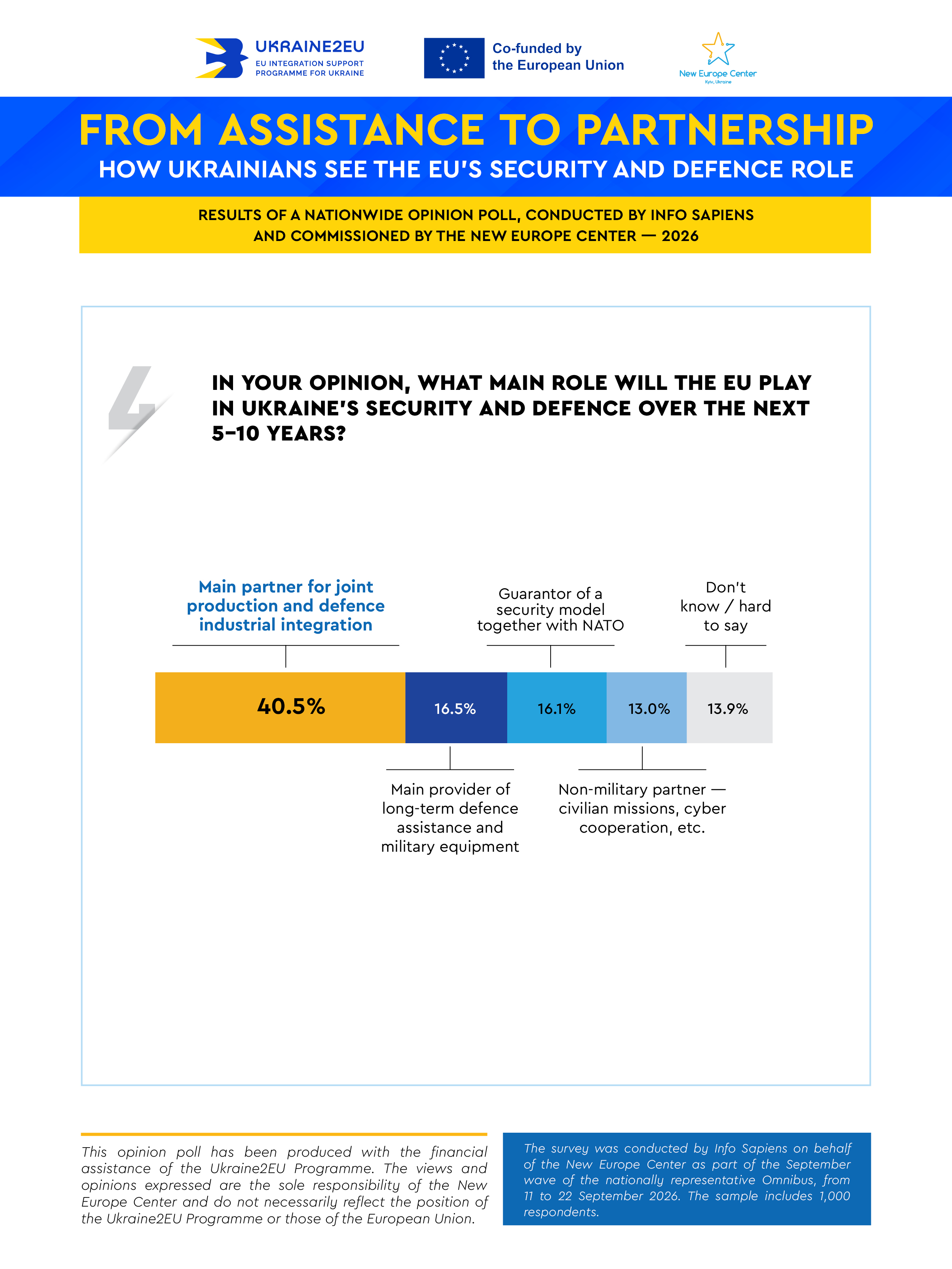
In the perspective of 5–10 years, Ukrainians assign the EU primarily the role of an industrial partner in the field of security and defence.
For 40.5%, the EU’s main role should be joint production and defence industrial integration. This far outpaces the role of main provider of long-term defence assistance (16.5%), guarantor of a security model together with NATO (16.1%), and non-military partner (13.0%).
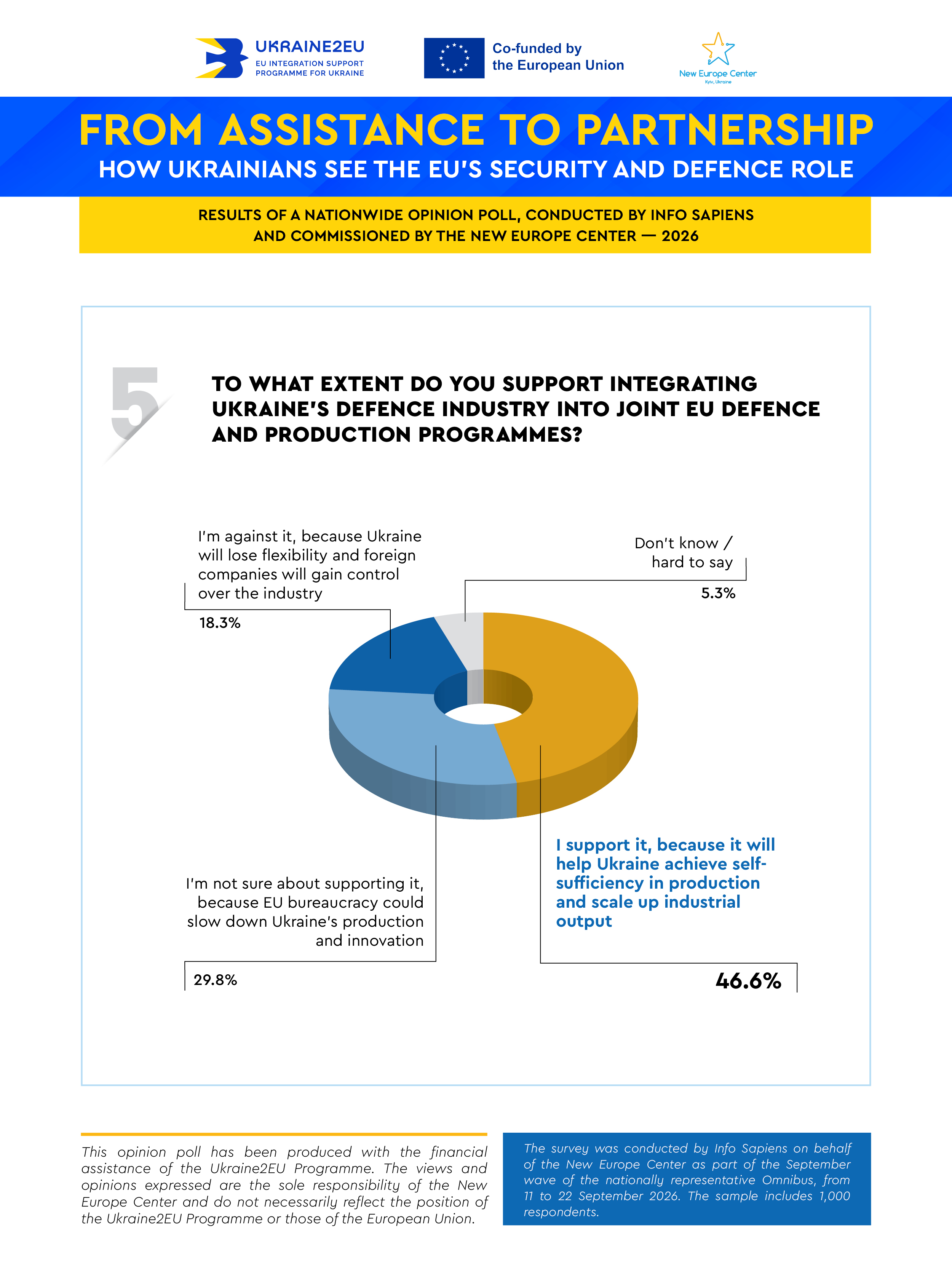
Defence integration, with reservations.
The largest group of respondents (46.6%) supports integrating Ukraine’s defence industry into EU programmes, expecting it to scale up production and strengthen Ukraine’s self-sufficiency. At the same time, 29.8% are unsure whether to support it because of the risk of European bureaucracy, and 18.3% oppose it because Ukraine could lose flexibility and control over its industry. Public demand for integration presupposes that Ukraine retains its agency, speed of decision-making, and control over key production assets.
The survey was conducted by Info Sapiens on behalf of the New Europe Center as part of the September wave of the nationally representative Omnibus, from 11 to 22 September 2026. The sample includes 1,000 respondents. The survey was carried out using CATI (computer-assisted telephone interviews), based on a random sample of mobile phone numbers. The sample is representative of the population of Ukraine aged 16 and older by gender, age, region, settlement size, and oblast. The data were weighted according to the population distribution provided by the State Statistics Service of Ukraine as of 1 January 2022, the most recent data available. The theoretical sampling error does not exceed 3.1% at a 95% confidence level. The survey was not conducted in the temporarily occupied territories of the Autonomous Republic of Crimea, the city of Sevastopol, Donetsk and Luhansk oblasts, or other occupied areas, nor in areas without Ukrainian mobile coverage.
This opinion poll has been produced with the financial assistance of the Ukraine2EU Programme. The views and opinions expressed are the sole responsibility of the New Europe Center and do not necessarily reflect the position of the Ukraine2EU Programme or those of the European Union.