KEY FINDINGS
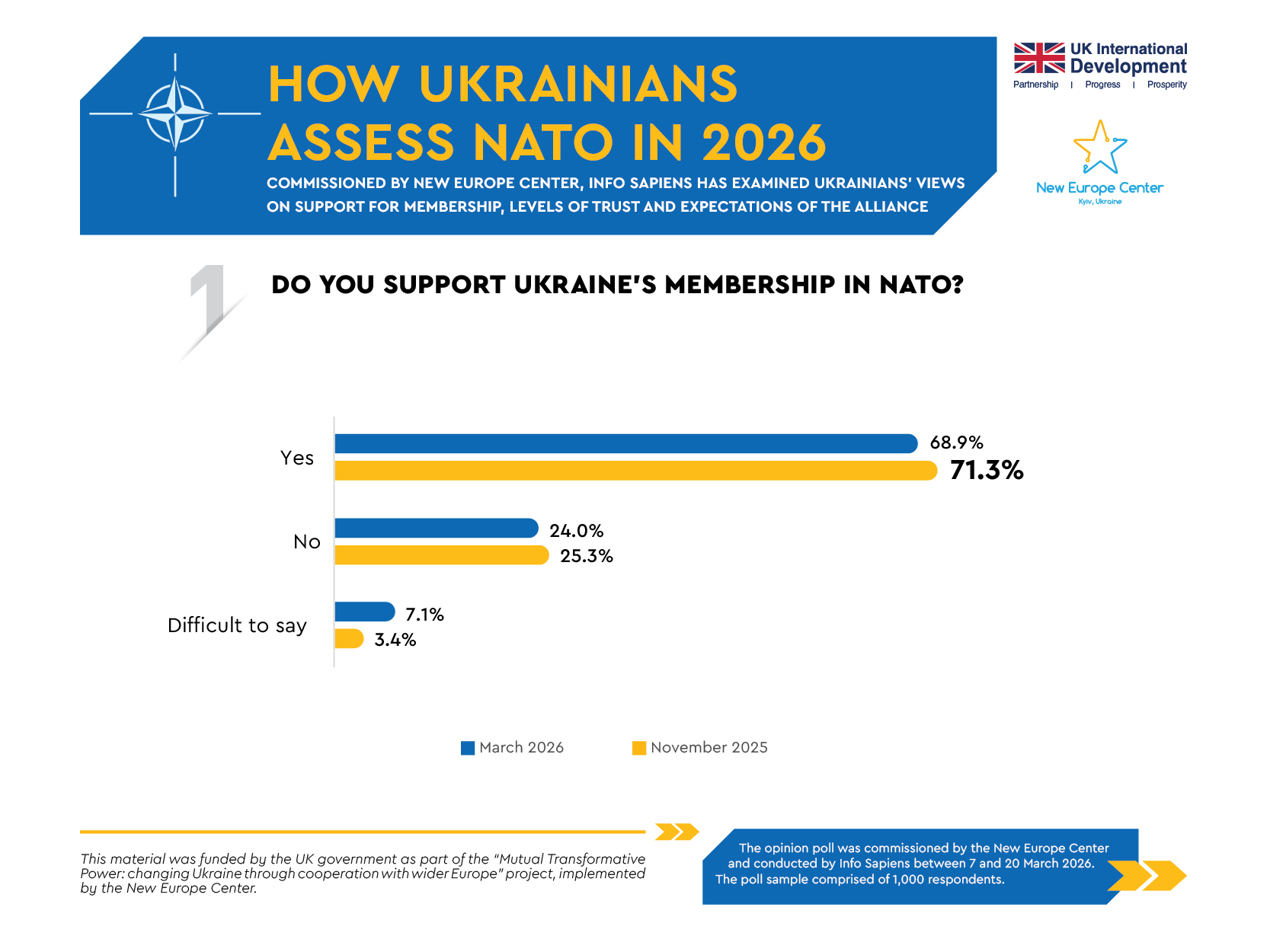
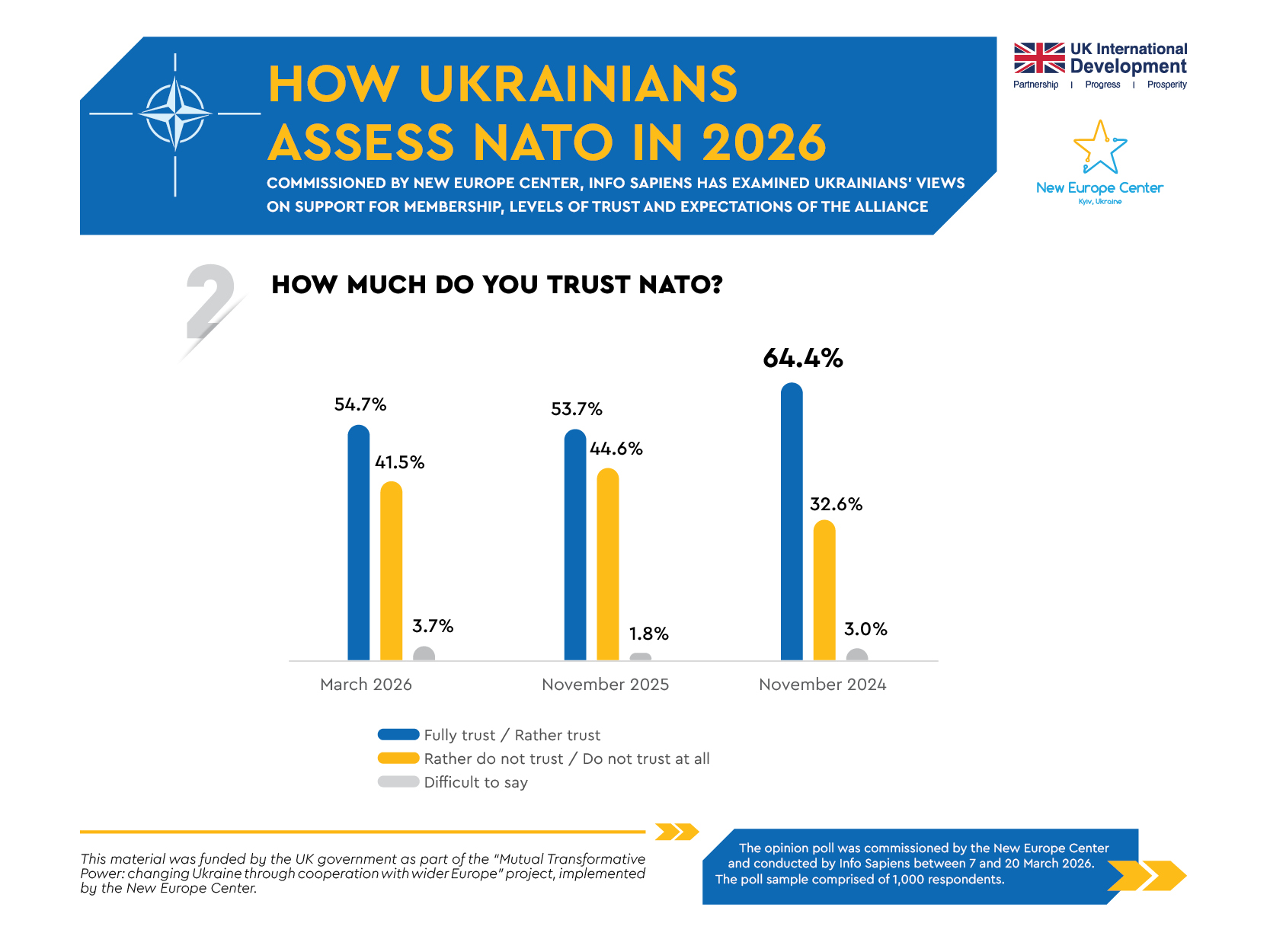
Mixed perceptions. Ukrainians support NATO membership, but do not fully trust the Alliance itself. 68.9% of Ukrainians support the country’s accession to NATO. At the same time, 54.7% of respondents trust the Alliance, while 41.5% do not. This indicates that some respondents, despite wanting Ukraine to join NATO, remain skeptical of it. The Center recorded a decline in trust in the Alliance for the first time last year: in November 2024, 32.6% of respondents did not trust NATO, compared to 44.6% last year (in March this year, this figure has remained almost unchanged at 41.5%).
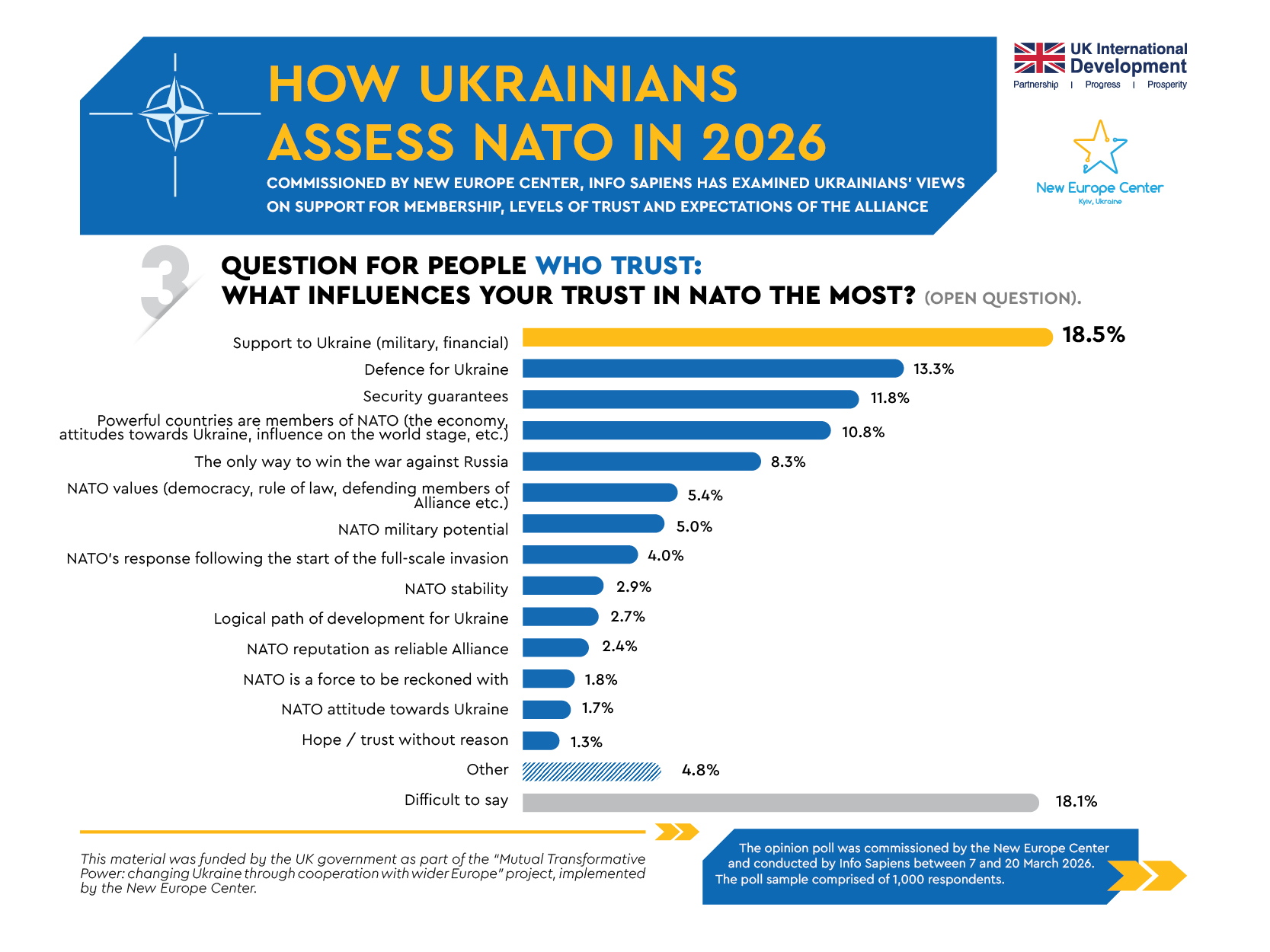
An Alliance of support and security. Public trust in NATO in Ukraine largely depends on the practical assistance provided by the Alliance. At the same time, positive perceptions are also shaped by viewing the North Atlantic Treaty Organization as a powerful security bloc – a force to be reckoned with. The New Europe Center asked Ukrainians who trust NATO an open-ended question (without suggested answer options): what most influences your trust? The top three factors were: “support to Ukraine” (18.5%), “defence for Ukraine” (13.3%), and “security guarantees” (11.8%). Other factors included: “powerful countries are members of NATO” (10.8%), “the only way to win the war against Russia” (8.3%), “NATO values” (5.4%), and “NATO military potential” (5.0%), among others. As we can see, the responses can be grouped into two main clusters – support for Ukraine and a high assessment of NATO’s capabilities. The response “security guarantees” to some extent bridges these two approaches. Ukrainians trust NATO because it guarantees security to its members (i.e., trust in the strength of the Alliance: “NATO members are not attacked”), but respondents also recognize that the Alliance could protect Ukraine from Russian aggression – reflecting a clear expectation of direct protection (“if we were in NATO, Russia would not have attacked,” “protection from Russia,” “it can provide guarantees for Ukraine’s security”).
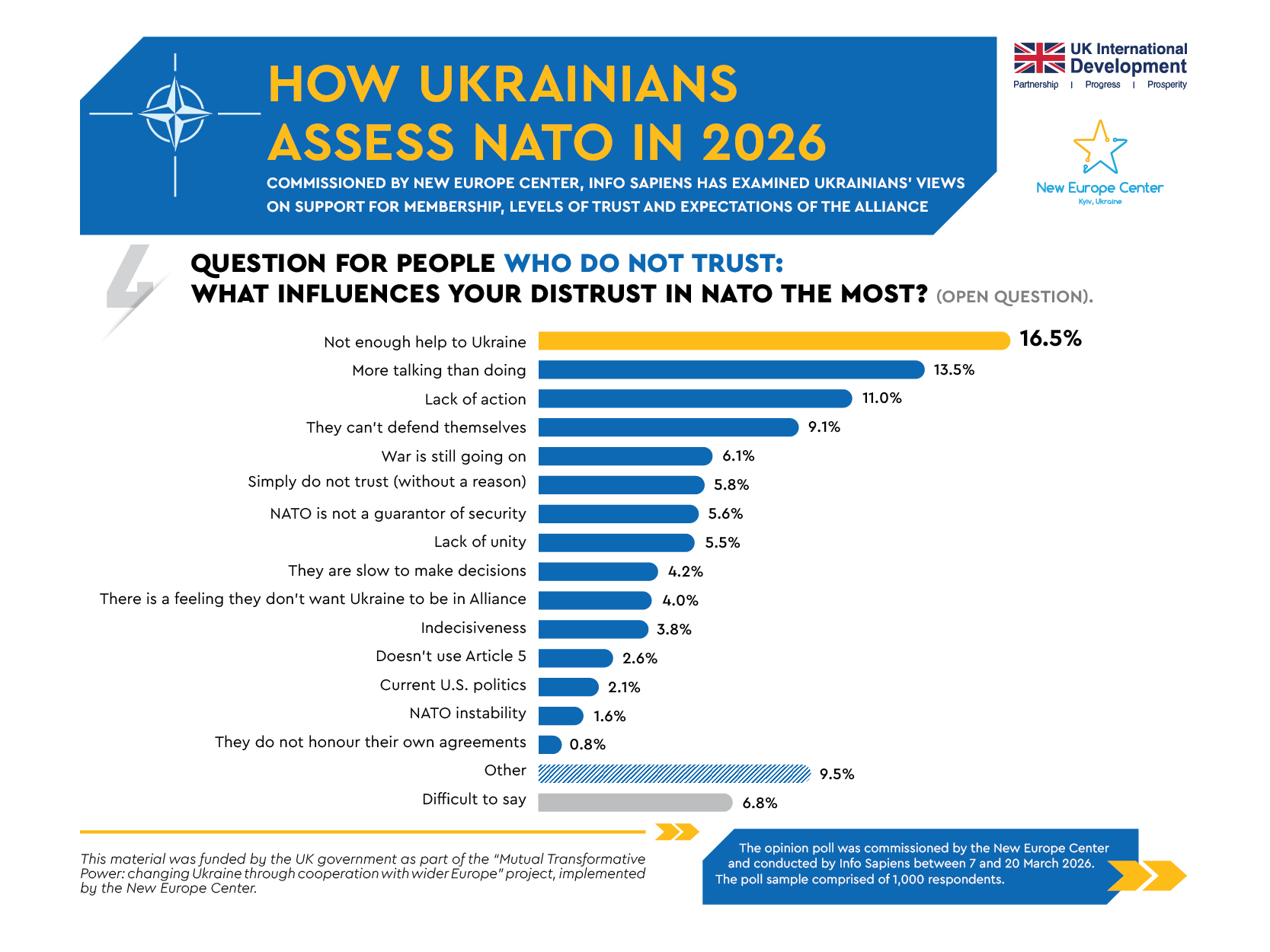
Distrust due to inaction. Ukrainians primarily distrust NATO because of how they assess its behavior during the war: the Alliance is perceived as doing too little, acting slowly, and lacking decisiveness. Responses to the open-ended question about the reasons for distrust included: “not enough help to Ukraine” (16.5%), “more talking than doing” (13.5%), “lack of action” (11.0%), “they can’t defend themselves” (9.1%), and “the war is still ongoing” (6.1%) – these are the five most frequently cited reasons. Most of these explanations relate to NATO’s policy toward Ukraine; however, some responses referred to NATO itself – its “instability,” the fact that the Alliance “doesn’t use Article 5,” as well as “current U.S. politics.” At the same time, a portion of Ukrainians admitted that they “simply do not trust” without a specific reason (almost 6%).
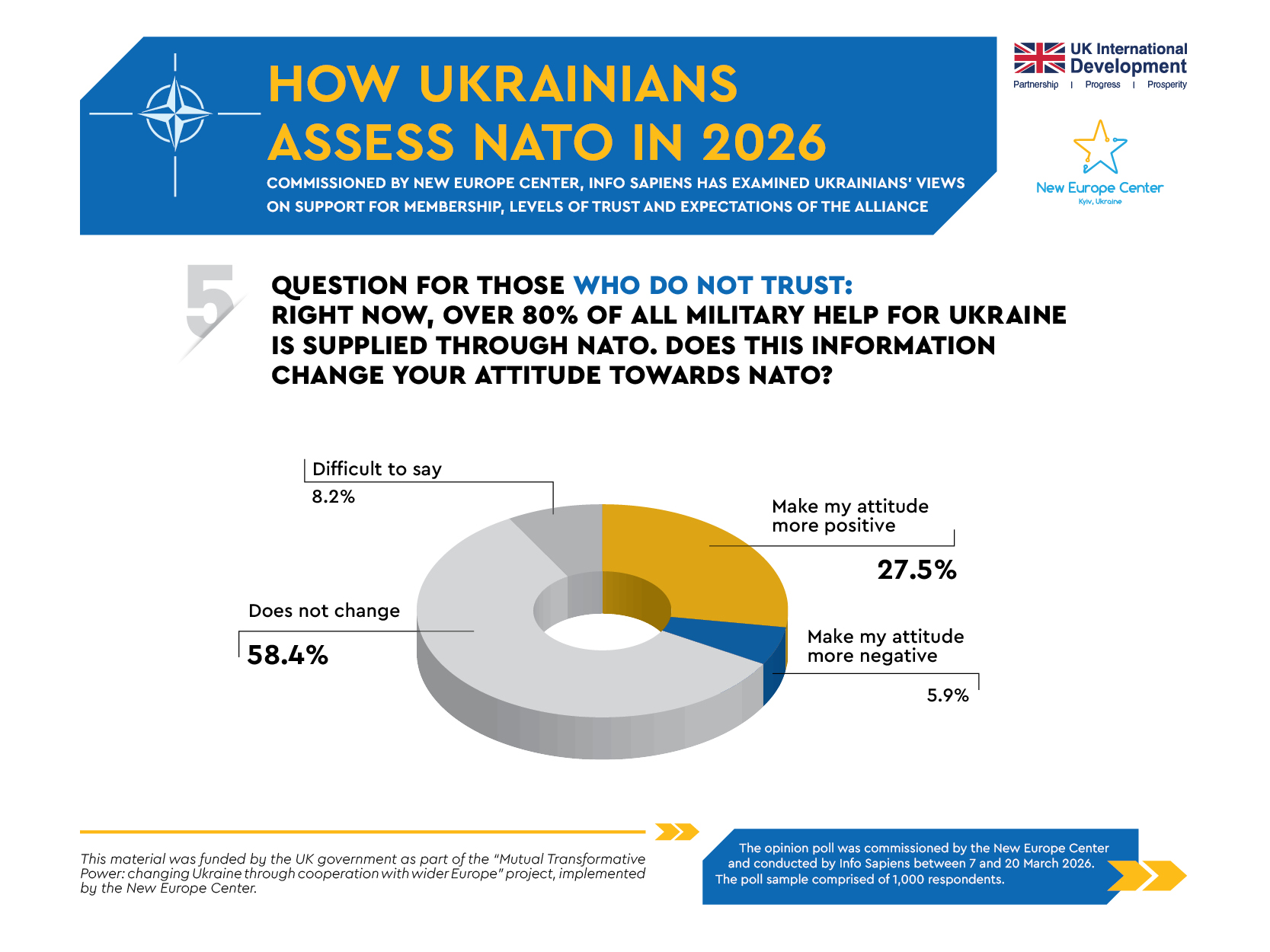
Sociological experiment. The New Europe Center asked an experimental question to the more than 40% of respondents who do not trust NATO: “Right now, over 80% of all military help for Ukraine is supplied through NATO. Does this information change your attitude towards NATO?” More than a quarter (27.5%) of Ukrainians responded that yes, it does – this fact makes their attitude toward the Alliance more positive. This suggests that a lack of awareness influences a portion of respondents. If we add this share of respondents who are willing to change their opinion to those who already trust NATO, the total would exceed 65%. This is roughly the same level of trust in the Alliance observed in Ukraine in November 2024 (64.4%). At the same time, the share of those unaffected by this information remains significant: 58.4% of respondents from the group that does not trust NATO said they would not change their opinion. Taking into account respondents’ explanations for their distrust, one possible hypothesis is that the mere fact of military assistance is not sufficient to restore trust – the timeliness and speed of support also matter (“if they had helped us in the first days of the war”). Many Ukrainians linked their distrust to the fact that “the war is still going on”; accordingly, regardless of the scale of weapons deliveries, the key indicator for this group remains the cessation of Russian aggression. One response that captures this public sentiment is: “minimum help: enough to keep us from dying, but not enough to let us win.” Another possible hypothesis is that media discussions about the insufficient capability and/or decisiveness of NATO countries to defend themselves – particularly in the event of an invasion of the Baltic states, especially under conditions of potential U.S. passivity or even withdrawal from NATO – contribute to these perceptions. As a result, some respondents question NATO’s “ability to defend itself.”
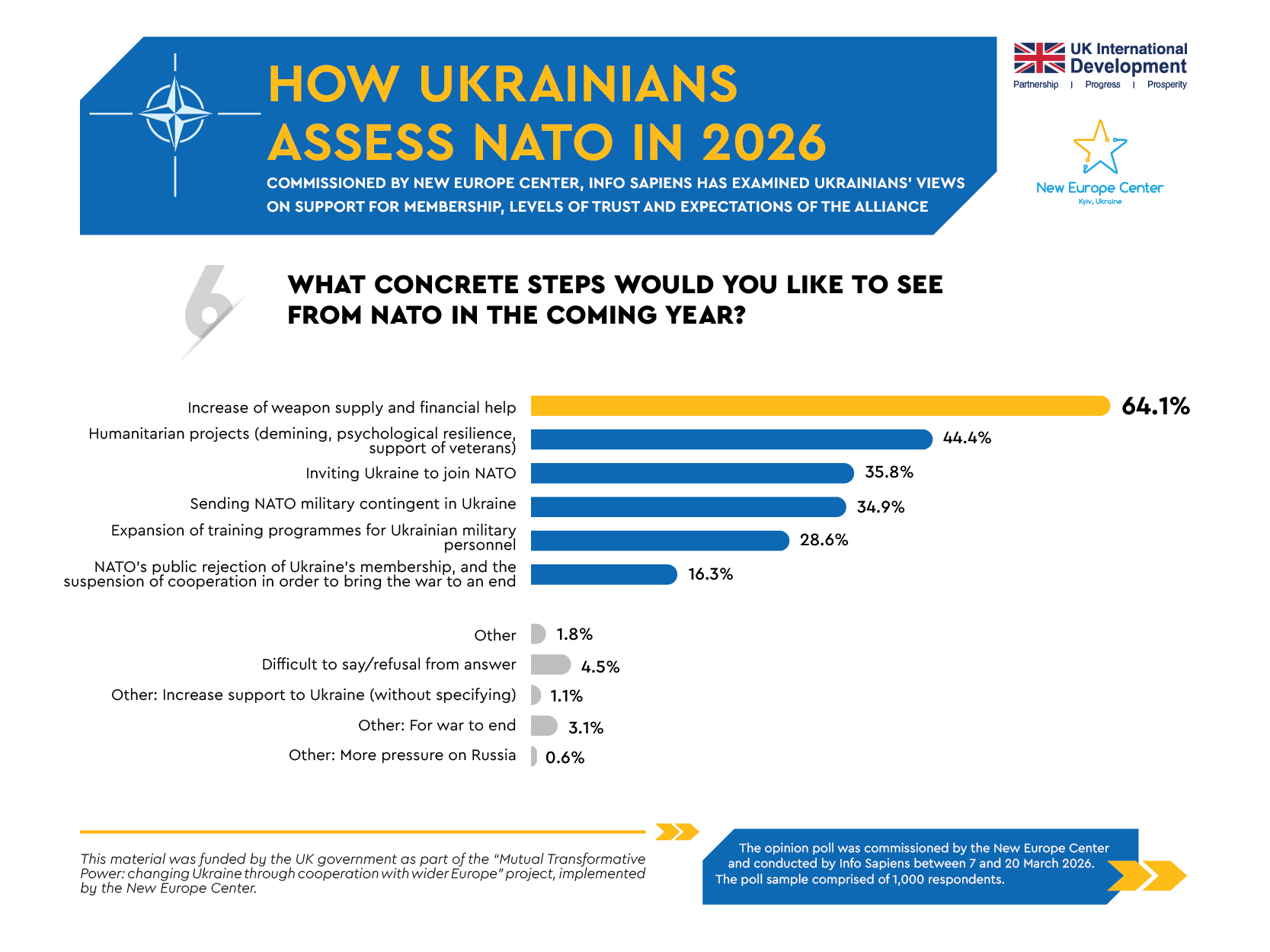
What concrete steps would you like to see from NATO in the coming year? 64.1% of respondents expect an increase in weapons supplies and financial assistance. At the same time, there is a strong demand for humanitarian initiatives – including demining, psychological resilience, and veteran support (44.4%) – which demonstrates that NATO is perceived not only as a military alliance, but also as a broader security instrument. More than one-third of respondents support extending an invitation for Ukraine to join NATO (35.8%) and deploying a NATO military contingent (34.9%). It can be assumed that these two figures would be significantly higher if Ukrainians believed these steps to be realistic, or if there were fewer doubts regarding the United States. Notably, the decline in trust in NATO coincided with the period when the issue of membership invitation disappeared from the public agenda (following the inauguration of the new U.S. president). This does not mean that Ukrainians themselves have abandoned the Euro-Atlantic perspective. On the contrary, the majority do not support the idea of NATO publicly rejecting Ukraine’s membership. Only 16.3% chose the option: “NATO’s public rejection of Ukraine’s membership, and the suspension of cooperation in order to bring the war to an end.”
The opinion poll was commissioned by the New Europe Center and conducted by Info Sapiens between 7 and 20 March 2026. The poll sample comprised of 1,000 respondents.
PDF-version is available here.
Omnibus is a monthly national representative opinion poll. The March 2026 wave was conducted between 7 and 20 March 2026.
The poll sample comprised of 1,000 respondents. The poll was conducted using the CATI method (computer-assisted telephone interviews) based on a random sample of mobile phone numbers. The sample is representative of the population of Ukraine aged 16+ by gender, age, region and size of place of residence prior to the full-scale invasion, in accordance with the latest available data from the State Statistics Service of Ukraine as of 1 January 2022. The theoretical margin of error does not exceed 3.1% with a confidence level of 95%. The survey was not conducted in the temporarily occupied territories of the Autonomous Republic of Crimea, the city of Sevastopol, the Donetsk and Luhansk regions and other areas under occupation, as well as in territories where Ukrainian mobile network coverage is unavailable.
The opinion poll was funded by the UK government as part of the “Mutual Transformative Power: changing Ukraine through cooperation with wider Europe” project, implemented by the New Europe Center. The views expressed in this material are those of the author(s) and may not coincide with the official position of the UK government.