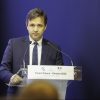
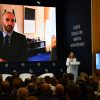
Ukraine should focus on finding Europe around itself and on building strategic alliances specifically with neighboring countries such as Poland and Turkey. This was one of the key messages of the discussion “Ukraine in the New Europe: Who Could Be Ukraine’s Kundera?”, featuring Svitlana Pyrkalo, writer, member of the BBC Book of the Year Award jury, and co-author of the essay collection New Europe. The event was moderated by Sergiy Solodkyy, First Deputy Director of the New Europe Center.
The event continued a series of presentations and discussions centered on New Europe, a collection of essays by Ukrainian intellectuals.
“This November marked 35 years since the publication of The Tragedy of Central Europe, an essay by Milan Kundera, the French writer of Czech origin. It was published in 1983—a period I would describe as a time of dreaming. Kundera probably sensed that the winds of change were approaching and that it was therefore necessary to draw the attention of Western European and American audiences to the fate of Central Europe, which had been stolen from the West. Public intellectuals and cultural figures played an important role in keeping the democratic world interested in the countries behind the Iron Curtain. Although we are not behind an Iron Curtain, the feeling of having been stolen away still remains,” Sergiy Solodkyy said at the beginning of the discussion.
Opening her remarks, Svitlana Pyrkalo noted that, in the eyes of Western Europeans, Ukraine had already moved from Eurasia to Eastern Europe:
“Many people still think of Europe as existing only in the western part of the continent. The question I ask in my essay is: is that really where we should be looking for Europe? For Western Europe, we have already become Eastern Europe. When I first came to Britain, we were still considered part of Eurasia. For example, the British Foreign Office had a Eurasia department that included Ukraine. Now Ukraine is emerging from this Eurasian space and becoming part of Eastern Europe.”
The writer noted that both Maidans—the Orange Revolution and the Revolution of Dignity—contributed to this process:
“Before 2004, people would ask: ‘Where is this Ukraine of yours?’ And when they heard the name ‘Shevchenko,’ they would shout: ‘Milan!’ Now there are no such questions—everyone knows exactly where Ukraine is. That question has been settled.”
The participants also discussed promoting Ukraine abroad through the arts, particularly Ukrainian literature. According to Svitlana Pyrkalo, Ukraine currently has relatively few works of fiction that could readily be translated for Western audiences:
“Unfortunately, we have not yet seen a breakthrough by a Ukrainian writer. If we talk about Central Europe, there is Kundera; there is also Serbian literature, which gained international prominence amid the tragic events in Yugoslavia. Serbian literature began to be translated extensively because the war generated interest in the country. But Serbia already had a body of literature ready to be translated, whereas we still have relatively little literature of that kind.”
The writer also called on Ukraine to build strategic alliances with its neighbors:
“How do we get into Europe? I believe Europe should come to us. We need to look for Europe around us. We need to build alliances with our neighbors. We should also look for partners farther afield—particularly where there are common threats. That is why I write mainly about Poland and Turkey, both of which have an interest in cooperation with Ukraine.”
“Can Ukraine become a regional power with weight of its own? I think it can—but only if it starts building regional alliances,” Svitlana Pyrkalo added.
According to her, Ukraine already belongs to the broader Europe that the EU is building:
“Where does Europe end? Where are its borders? If we look at the European Union’s partnership policies, they encompass the Mediterranean, Eastern Europe and the Caucasus. In other words, the EU is building a broader Europe around itself, and we already belong to it.”
The writer noted that it is difficult to interest British audiences in Ukrainian literature:
“Why is it difficult to get British people interested in Ukraine through literature? It is difficult to get the British interested in almost anything. They have an enormous body of literature of their own: English, Welsh, American, Canadian, South African, Australian, and Indian. And then there is translated literature, because all the world’s leading writers want to be published in English.”
Svitlana Pyrkalo stressed that Ukraine should promote in the West the developments and experiences shaping the country today:
“We need to forget about ‘selling’ embroidered folk trousers and varenyky, as though no one has ever heard about them. We should promote what is happening in Ukraine now: explain that Russia annexed Crimea, that many Crimean Tatars left the peninsula for mainland Ukraine and opened restaurants serving their own cuisine there. In this way, we have rediscovered something that was already our own.”