During the 4th session “Above All, the Fundamentals: Rule of Law and Anti-Corruption as an Anchor of EU Accession” of the 4th EU Accession Exchange Forum experts highlighted that strong institutions, anti-corruption reforms, and civil society oversight are crucial for Ukraine’s EU path, even during wartime.
Progress in opening negotiation clusters hinges not only on technical readiness but on continued reform momentum, particularly in rule of law and anti‑corruption areas, and on political support within the EU.
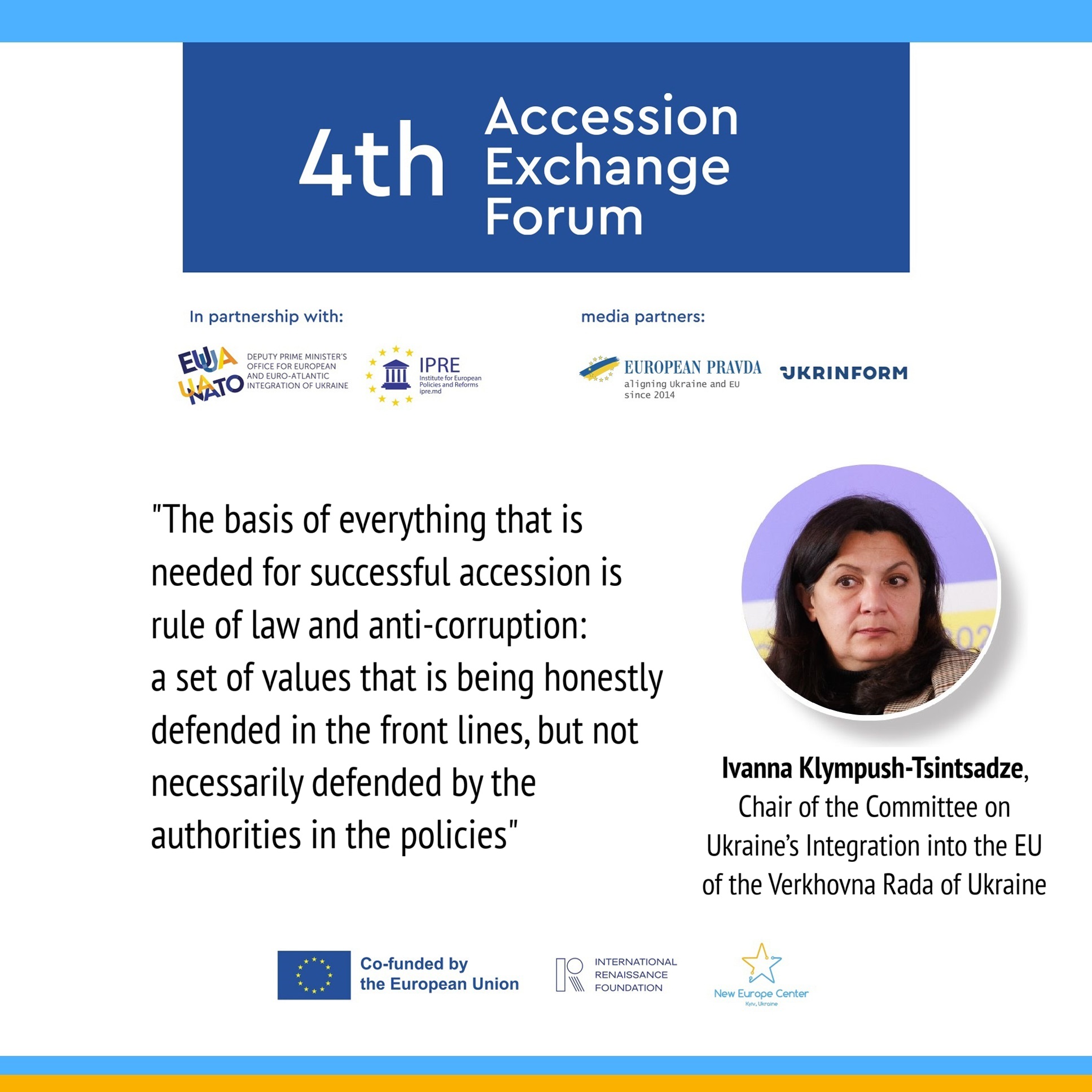
Ivanna Klympush-Tsintsadze, Chair of the Committee on Ukraine’s Integration into the EU of the Verkhovna Rada of Ukraine:
– The basis of everything that is needed for successful accession is rule of law and anti-corruption: a set of values that is being honestly defended in the front lines, but not necessarily defended by the authorities in the policies;
– I think the lessons must be learned from the July events, in order to efficiently materialize them in reality. At this point, I do not believe that we learned them. Yes, the situation has been reversed with the restoration of the independence of the anti-corruption bodies, but it unfortunately did make damage. That’s first;
– Secondly, the attacks on the anti-corruption infrastructure are being continued, and that is, unfortunately, a part of the state policy;
– Thirdly, even in that very attempt to restore the independence of anti-corruption bodies, we somehow have forgotten part of the thing on restoring the competitions for the Prosecutor’s General Office. And right now reshuffles are being made, changes are being done, people are being appointed, and that definitely does not lead to thorough, transparent, credible, rule-based investigations;
– We have eroded the trust of our partners towards Ukraine. And the only thing that gives us the possibility to still conduct a proper dialogue is a trust in our society that has gone out to voice their concern;
– The Ukrainian case is like a sandwich that has been always efficiently working. It’s the pressure from the civil society, from media, from our external partners, and it’s the work of those people inside the system who are still reform-minded and who are capable of trying to drive the process from within. It was very naіve of me to think that during the full-scale war we would not need that sandwich. But unfortunately, it has turned out that only such kind of sandwich can produce the results.
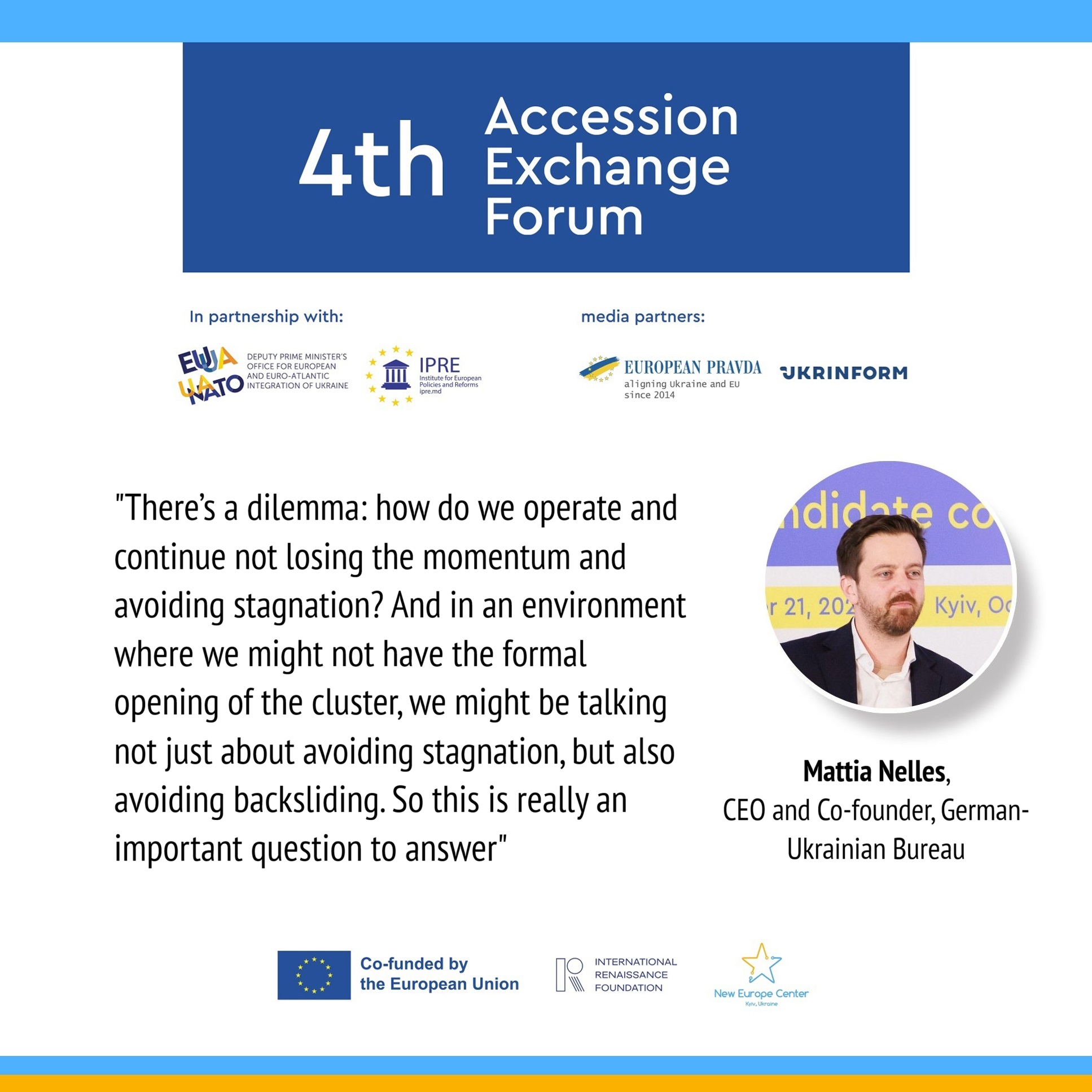
Mattia Nelles, CEO and Co-founder, German-Ukrainian Bureau, Germany:
– It’s not easy to operate in the imperfect environment where Ukraine is being threatened by a war of annihilation and has to be the perfect “Musterschuler”, as we say in Germany, the perfect pupil in school and do everything perfectly right;
– There’s a dilemma: how do we operate and continue not losing the momentum and avoiding stagnation? And in an environment where we might not have the formal opening of the cluster, we might be talking not just about avoiding stagnation, but also avoiding backsliding. So this is really an important question to answer;
– There are underlying factors which affect the EU accession process, which cannot be solved through conditionality and that regards the informal control of institutions, the disregard of checks and balances that we have witnessed since 2019. The war has exacerbated those, but the modus operandi of governing runs contrary to what we need in the EU accession process. So we need independent, effective institutions, from NABU and SAPO on one side to regulators, the monopoly commission on the other;
– We have to focus on what we can do in this imperfect environment. Why do we have to wait for Orban to come around or to be sent out for coffee? Let’s focus on what we can do. I understand not all of that can be done because it involves challenging vested interests, but let’s focus on doing what we can and Ukraine has the people and the minds to do it, we just have to push together to get some things done.
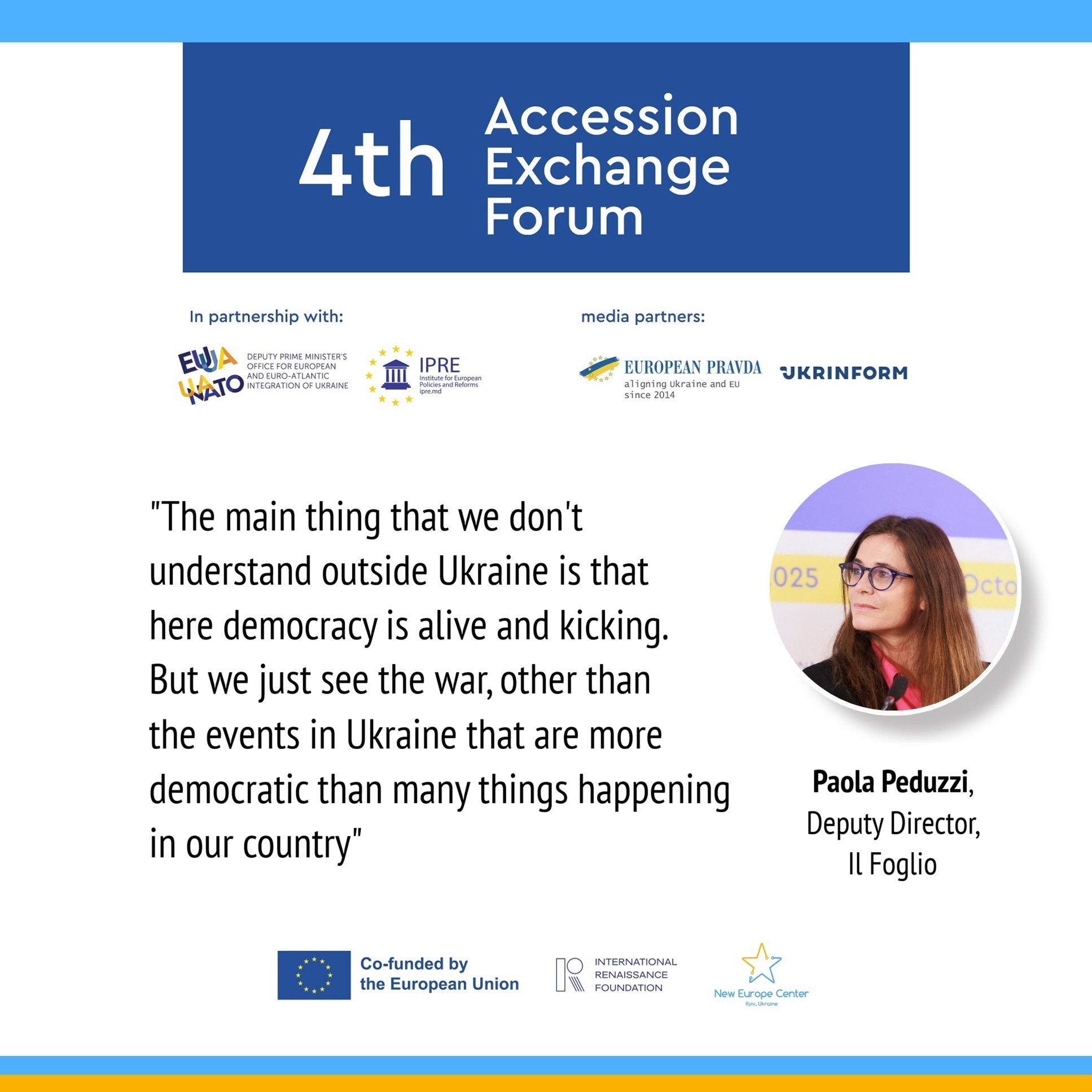
Paola Peduzzi, Deputy Director, Il Foglio, Italy:
– Italian public discourse on Ukraine is heavily distorted by media. TV shows and media, completely distorted the understanding of the situation in Ukraine. However, more than half of Italians support financial help to Ukraine. But even if public opinion is not against Ukraine, the media environment is;
– Media fatigue reshaped perceptions of Ukraine in Italy and Western Europe. It was the narrative of fatigue that started in 2023. The long war, where an ending is not seen, a winner is not defined, and the impasse and the fatigue changed completely the approach;
– The Italian media have higher standards for Ukraine than for its own leadership. For example, the protest this summer in Kyiv was discussed like the end of Zelenskyy, the end of the reform process, the autocratic decline of Zelenskyy’s government. But I think that the result of the protest and the process was that Ukraine is more democratic than Italy;
– The main thing that we don’t understand outside Ukraine is that here democracy is alive and kicking. But we just see the war, other than the events in Ukraine that are more democratic than many things happening in our country.
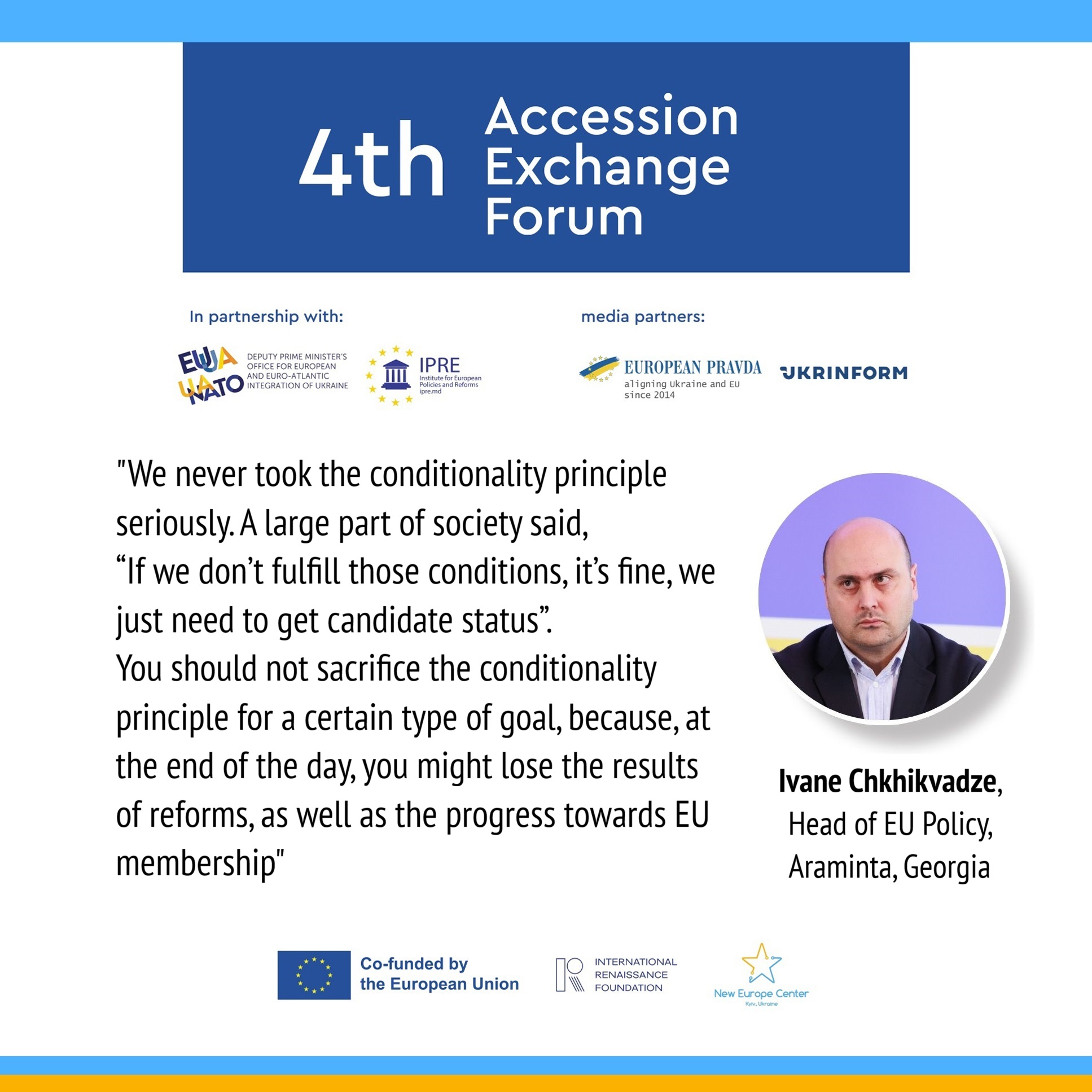
Ivane Chkhikvadze, Head of EU Policy, Araminta, Georgia:
– Basically, most of us, if not all of us, consider that this is not just the war of Ukraine, but this is our war as well. Because if we want to be successful in fighting against “Georgian dream ” or rather “Georgian Nightmare”, it very much depends on how the war is going on the battlefield;
– When Georgia was labelled as a frontrunner of the Eastern Partnership, we were shouting very loudly that something was going in a very wrong direction. At that time, the answers from Brussels or from some of the capitals were: calm down, you are doing better than Ukraine or Moldova or others;
– I wouldn’t compare Georgia and Ukraine, because the situation is totally different. You have a classical war, but we are also in war. We are having a hybrid war against Russia;
– People in Georgia now care about how to save statehood. Because the stake is higher than just fighting elite corruption. You might be independent, but you can lose the features of statehood;
– We never took the conditionality principle seriously. A large part of society said, “If we don’t fulfill those conditions, it’s fine, we just need to get candidate status”. You should not sacrifice the conditionality principle for a certain type of goal, because, at the end of the day, you might lose the results of reforms, as well as the progress towards EU membership.
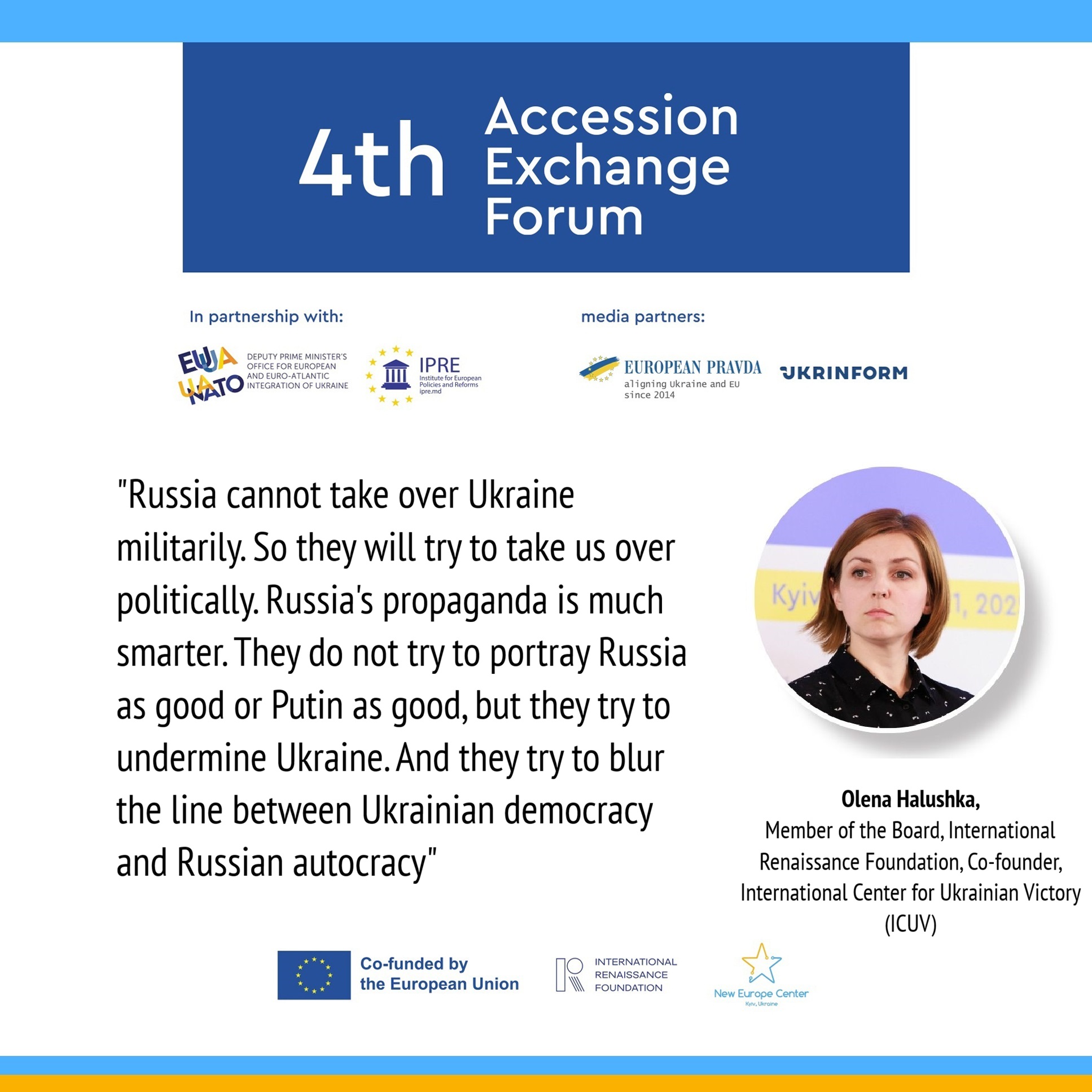
Olena Halushka, Member of the Board, International Renaissance Foundation, Co-founder, International Center for Ukrainian Victory (ICUV), Member of the Board, Anti-corruption Action Center, Ukraine:
– A strong army and strong institutions will save Ukraine. Ukraine is presently defending itself In the full-scale war, with top priority, winning over Russia. Martial law brings additional limitations on civic engagement and democratic manifestation, but we are also seeing the global rollback in liberal democracies;
– I’m glad to look at some numbers, especially that 74% of Ukrainians support the EU accession process, 75% strongly support reform conditionalities of the European Union toward Ukraine. Conditionalities are effective instruments that reinforce domestic reforms even during wartime;
– Democracy is so deeply embedded in Ukrainian society that Ukrainians will always find the way to protect independent institutions. We as a society still see the EU integration as one of the lighthouses and the hope in our future;
– Russia cannot take over Ukraine militarily. So they will try to take us over politically. Russia’s propaganda is much smarter. They do not try to portray Russia as good or Putin as good, but they try to undermine Ukraine. And they try to blur the line between Ukrainian democracy and Russian autocracy.
The session was kindly moderated by Sergiy Sydorenko, Editor of the European Pravda, Ukraine.
Watch the full recording of the Forum on New Europe Centre`s YouTube channel .
Analytical Report on the Outcomes of the 4th EU Accession Exchange Forum can be found here.
The EU Accession Exchange Forum is organized by the New Europe Center in partnership with the Office of the Deputy Prime Minister for European and Euro-Atlantic Integration of Ukraine, the International Renaissance Foundation, and the Institute for European Policies and Reforms (Republic of Moldova), with Ukrinform and European Pravda serving as media partners. The EU Accession Exchange Forum is taking place with EU support, within the EU-funded “Whole-of-Society Accession” project implemented by the International Renaissance Foundation.