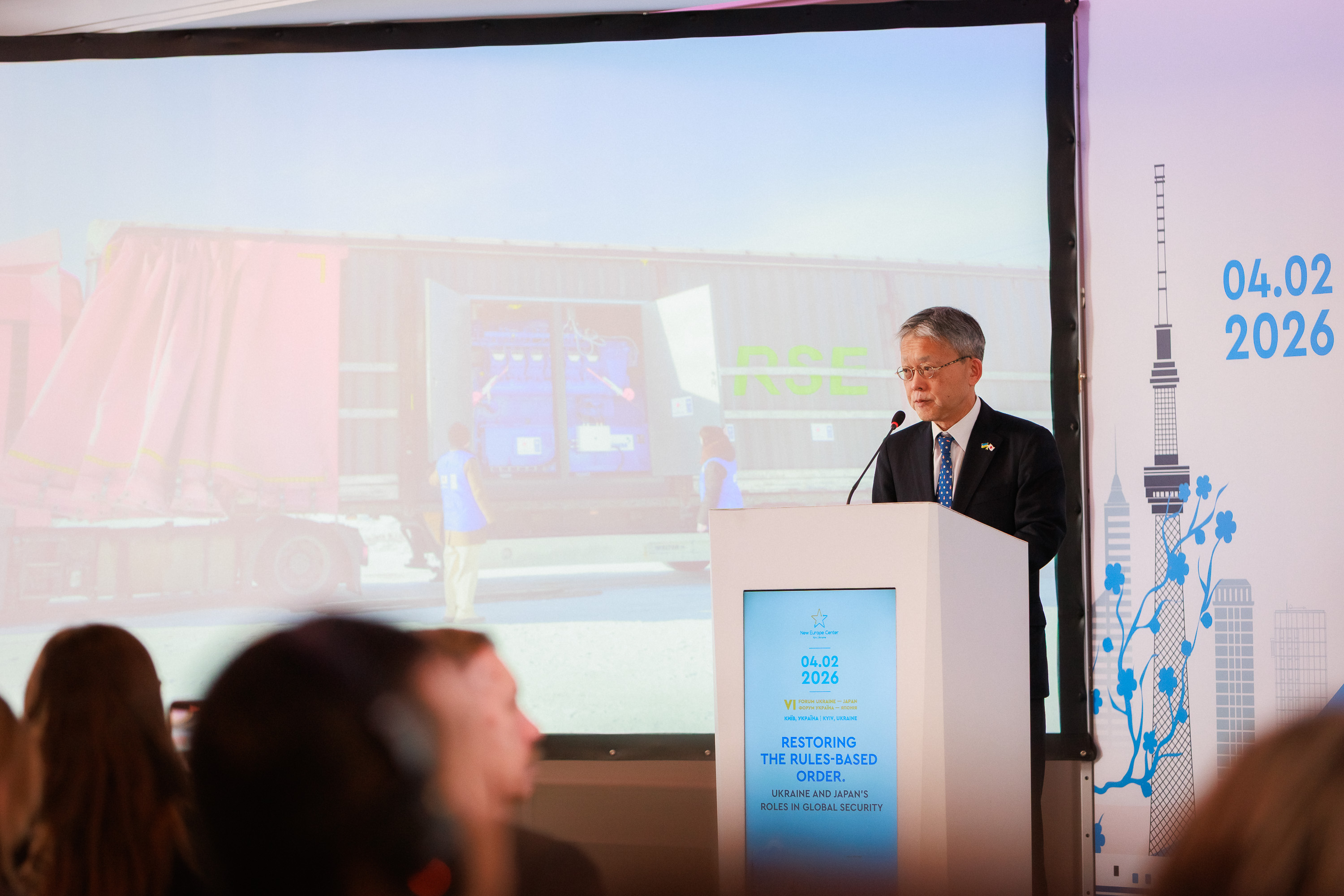
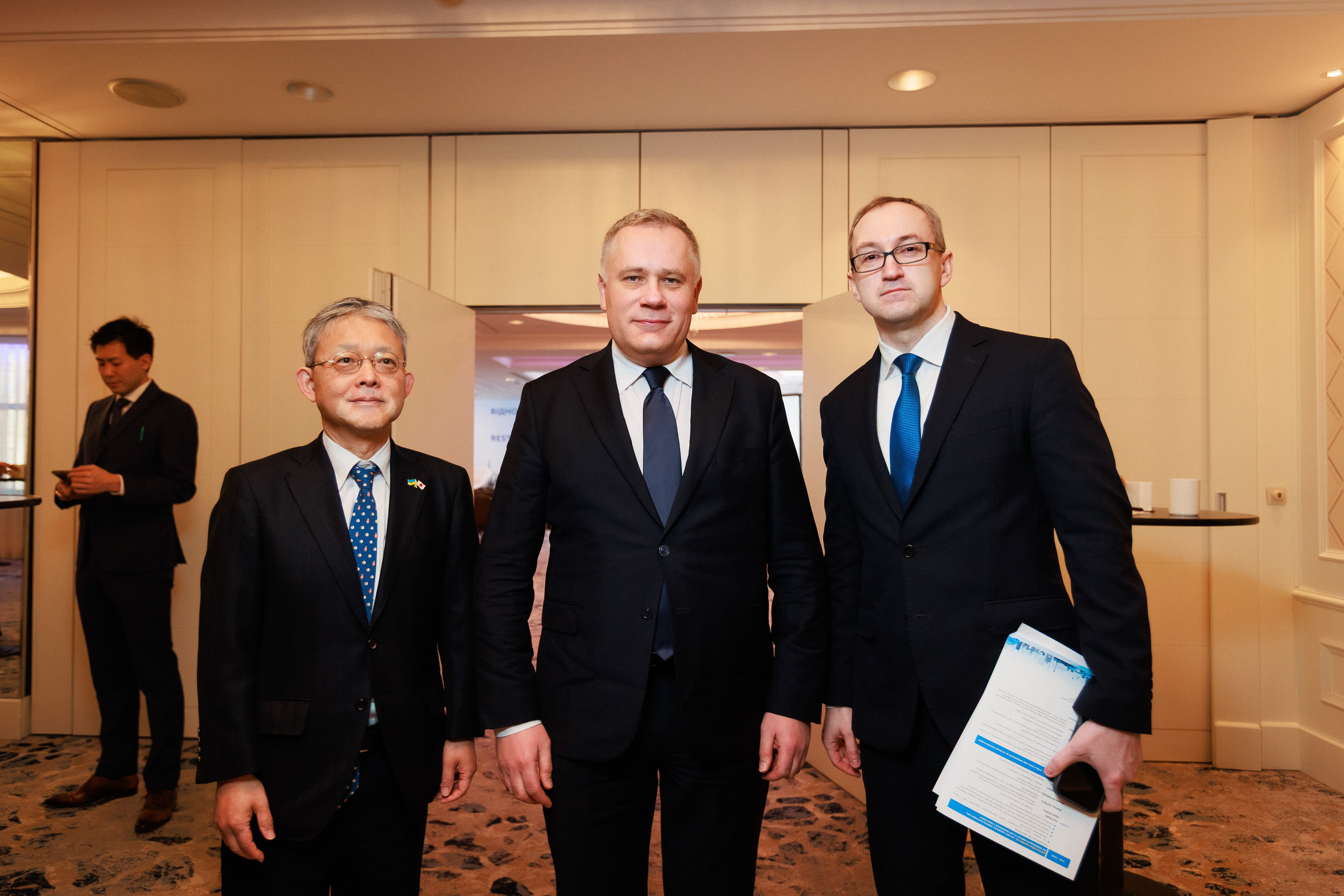
Masashi Nakagome, Ambassador Extraordinary and Plenipotentiary of Japan to Ukraine, spoke about Japan’s support for Ukraine, the transformation of Japan’s security policy, and a shared vision for peace during his address at VI Ukraine-Japan Forum.
In a difficult winter, Japan stands with Ukraine and is providing practical life-saving support in the energy sector. This morning, many in Kyiv woke up to another bitterly cold day of minus 18 degrees Celsius. This season ranks among the coldest in 30 years. Russia’s repeated attacks on energy infrastructure have forced millions of Ukrainians to endure the season without heating, electricity, and even water. Just two days ago, on Monday night, Kyiv and many regions across Ukraine suffered another massive attack on critical infrastructure.
Japan has been providing generators, transformers, cogeneration units, and other equipment to help Ukraine withstand the extreme cold. This winter, Japan will provide 138 generators, 128 of which are already in storage facilities in Ukraine, ready to be dispatched to the hardest hit regions, and 10 more are arriving soon. Japan will also provide approximately 60 small and medium-sized transformers, all of which are already in storage in Ukraine, ready for delivery where needed. In addition, Japan will deliver two cogeneration units, CZUs, and 13 variable frequency drives, VFDs. Some have already arrived, and the remaining units are expected by the end of March. Japan will stand shoulder to shoulder with Ukraine in this time of need.
Although Japan and Ukraine are geographically far apart, our two countries are united by shared values and commitment to a rules-based international order. In 2024, as Mr. Zhovkva mentioned, Japan and Ukraine signed the historic bilateral accord for support and cooperation. As Prime Minister Takaichi stated at the Сoalition of the Willing meeting, Japan remains resolute in its belief that Russia’s aggression against Ukraine is an outrageous act that shakes the very foundation of the international order. We firmly oppose any unilateral attempt to change the status quo by force, whether in Ukraine or East Asia.
Since the beginning of the full-scale invasion, Japan has been one of the strongest supporters of Ukraine, providing 20 billion U.S. dollars in assistance, including crucial budget support, in the far south of 2026, to help Ukraine address its current financial challenges.
Further, the Japanese parliament recently approved 22.3 billion yen, at the current rate 143 million dollars, in additional assistance under the supplementary budget.
We are at a critical juncture in global security. The rule-based international order faces unprecedented challenges, not only here in Ukraine, but across many regions and many forms.
International rules and norms are being contested and, in some cases, violated. Inward-looking tendencies are spreading, while authoritarian states seek to exploit divisions, including through economic caution, to challenge democratic nations.
In such a dire situation, even former champions of the rules-based order speak of the end of an era. Should we accept a world where the mighty prevail and the weak must submit? Emphatically, no. Ukraine should not accept such a world order, nor should Japan, nor any other country. The world has never been perfect, not even in the euphoric days following the end of the Cold War. There have been always setbacks in the pursuit of an international order based on the rule of law. But acknowledging challenges entirely different from surrendering to a world ruled by the strong.
As Foreign Minister Motegi recently stated, the basic principle of Japan’s foreign policy is and continues to be the maintenance and strengthening of free and open international order based on the rule of law. Consider Ukraine. As I understand, in Abu Dhabi, Ukraine, Russia and the United States plan to hold the second round of trilateral talks. Japan is steadfast in its commitment to work alongside Ukraine and its international partners to achieve peace as swiftly as possible. But does this mean Ukraine should accept Russia’s dictates? Of course not. It is vital that Ukraine achieves a just and lasting peace. Such an outcome is essential not only for Ukraine, but also for Japan, for Ukraine’s friends and partners, and for the international order itself. For this reason, Japan firmly believes that unity among key international players, including the United States, is indispensable. And we are committed to playing our part in maintaining and strengthening that unity. Japan has participated in the Coalition of the Willing summit meetings and underscored this point.
What about Japan? How is Japan navigating an increasingly uncertain international environment? Where is the Japanese foreign policy heading? The Japan-US alliance remains a cornerstone of Japan’s diplomacy. Building a relationship of trust with the United States is crucial for Japanese diplomacy. That is why Prime Minister Takaichi, after taking off just a week, welcomed President Trump in Tokyo. In the current international climate of intensifying division and confrontation, it is also important to develop cooperative relations with a variety of countries and regions under various frames. For example, Japan is strengthening plurilateral cooperation, such as the QUAD, Japan-US-Australia-India cooperation, as well as Japan-US-Republic of Korea, or Japan-US-Philippines cooperation, to help realize a free and open Indo-Pacific.
What about Japan’s relationship with Ukraine? As Japan repeatedly stated, the security of the Euro-Atlantic and the Indo-Pacific is closely connected and inseparable. Japan faces very difficult neighbors. One of Japan’s neighbors, North Korea, is not only assisting Russia, but is also an active participant in this war. And North Korea is learning modern warfare and modern technology from Russia. I believe Tokyo must learn from Ukraine the modern warfare being waged here and the rapid technological transformation the country is leading.
This is one reason Prime Minister Takaichi decided to revise Japan’s national security strategy and related security document. It’s not only just drones, but also cyber, IT, medical, rehabilitation, and much, much more.
The hard lessons Ukraine has learned, and the remarkable innovations Ukrainians have created, are of immense value. Japan must learn from them. I have emphasized repeatedly to my colleagues and friends in Japan that supporting Ukraine is not a one-way street. It’s a mutually beneficial cooperation. Ukrainians are keen to share their experience and lessons with Japan, and Japan must seize this opportunity to update itself and compete on the world stage. This applies not only to the government but also to the private sector.
Consider the case of demining. Last October, Japan hosted the Ukraine Mine Action Conference (UMAС), in Tokyo, bringing together around 600 participants, including many businesses. Ukrainians have developed affordable yet effective unmanned demining machines and are already deploying mine-detecting drones. While Japan has years of experience and advanced technology in demining, we must keep pace with the rapid innovations happening in Ukraine. At UMAС, I urged Japanese demining companies to come to Ukraine, learn from Ukrainians, work with Ukrainians. The Government of Japan has actively encouraged Japanese businesses to engage in Ukraine’s reconstruction through various programs. Last year alone, six public-private business missions visited Ukraine. Through programs of METI, MAFF, and JICA, almost 80 Japanese companies are now partnering with or seeking partners in Ukraine across many sectors, including agriculture, IT, infrastructure, health, and medical services. Just last month, I’d like to mention that the Japanese government eased the travel advisory for Lviv Oblast, enabling Japanese companies and NGOs involved in construction to travel there.
The Osaka Kansai Expo last year was an important milestone in expanding Japanese-Ukrainian business ties. The highly acclaimed Ukrainian family-owned theme, Not For Sale, sent a powerful message to visitors from Japan and around the world, and it also provided an opportunity to deepen business links. Ukraine’s National Day at the Expo offered a valuable chance for Japanese and Ukrainian businesses to meet and strengthen their ties.
I am pleased to add that another Japanese mission, a public-private business mission, will visit Ukraine in the coming months. In closing, let me assure you that Japan remains unwavering in its commitment to supporting Ukraine because it’s in Japan’s interest. The energy support I mentioned at the beginning is just one example. Japan will continue to provide humanitarian, recovery, economic and financial assistance to Ukraine in pursuit of peace and reconstruction.
I hope this forum serves as a platform to deepen academic and policy dialogue, exchange ideas and build the network essential to overcoming the profound challenges we face.
Video recordings of the forum are available in Ukrainian and English.
Photo report is here.
Mediapartner: Ukrinform.
Photo credit by Illia Nosyk