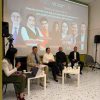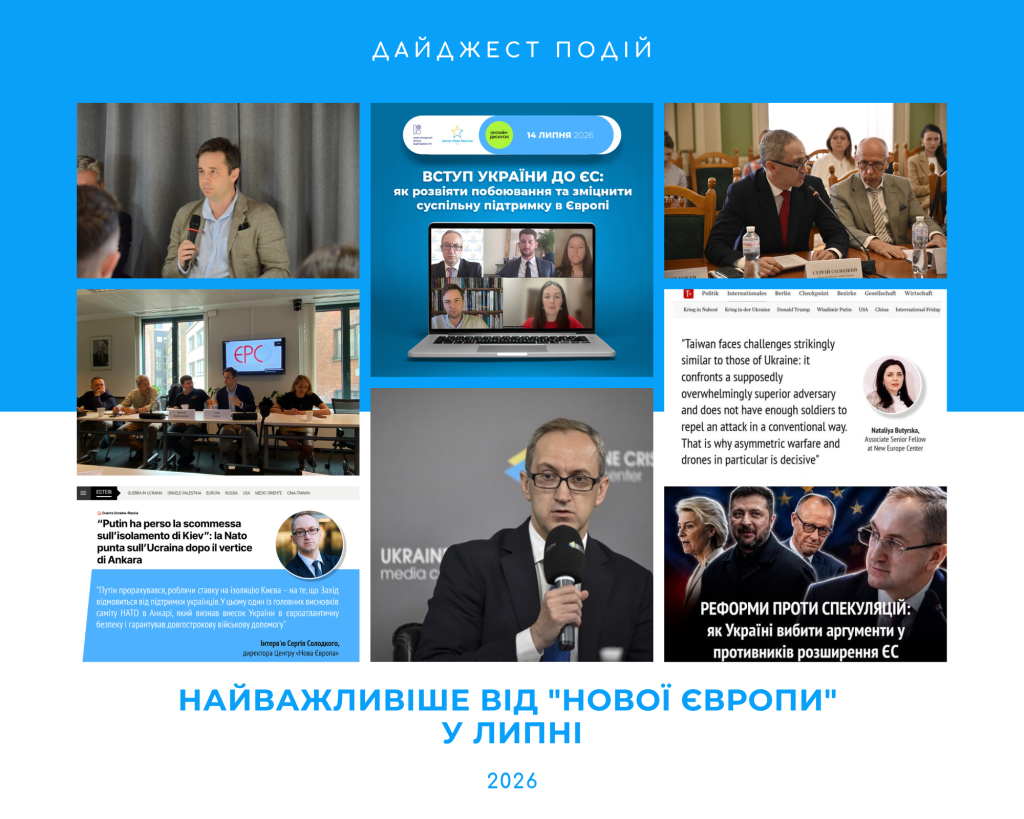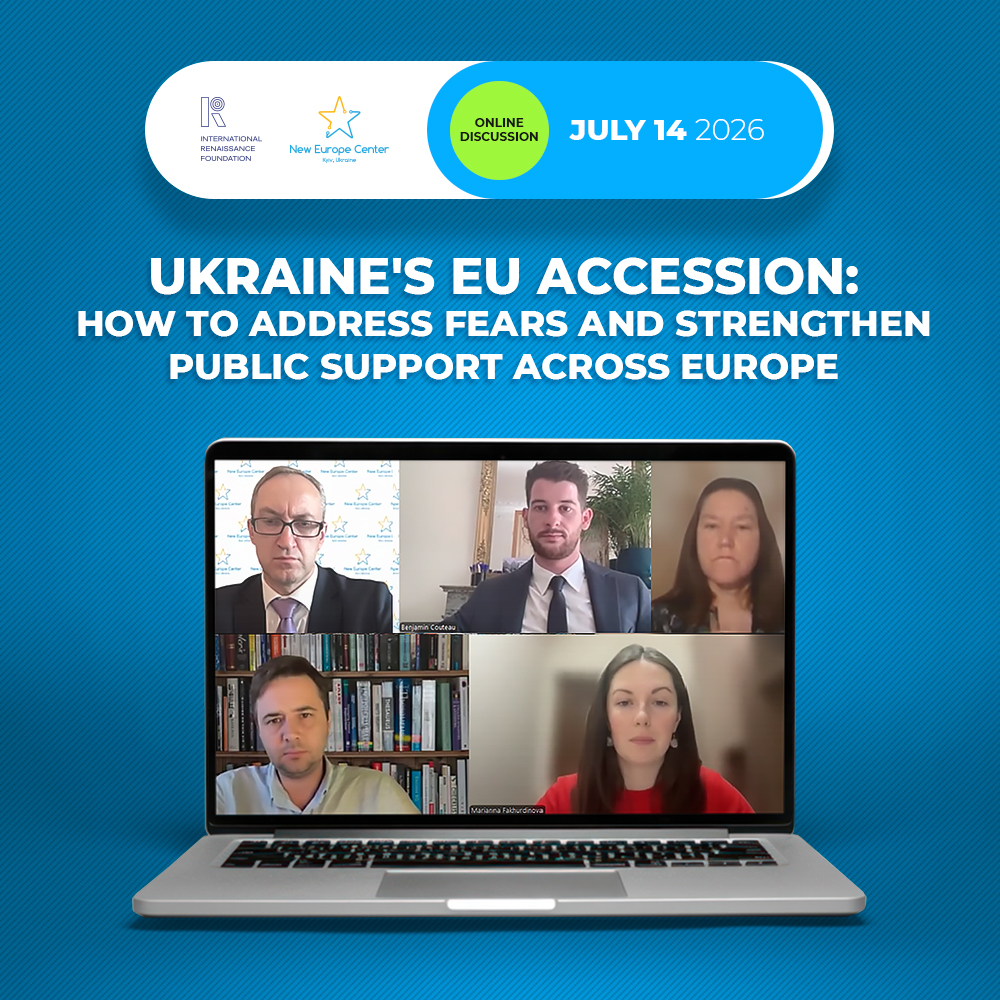
On July 14, the New Europe Center organized an online discussion “Getting Ready for the ‘Ukrainian Plumber’ in the EU? Key Narratives of Resistance to EU Enlargement – and How to Counter Them”. The event brought together experts from Ukraine, France, and Germany to examine how Ukraine’s future EU membership is perceived across the European Union, what concerns continue to shape public opinion, and how these narratives can be effectively addressed.
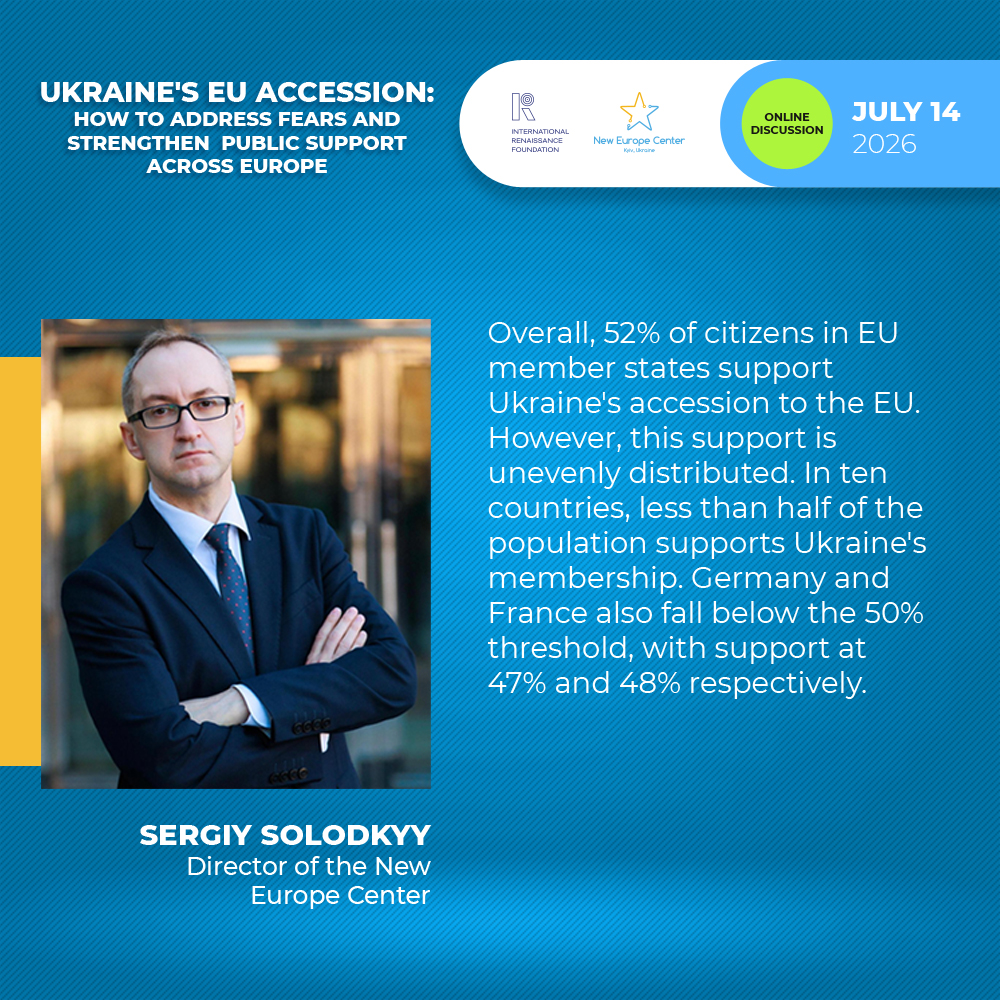
Opening the discussion, Sergiy Solodkyy, Director of the New Europe Center, drew attention to the uneven levels of public support for Ukraine’s EU membership across the European Union. Referring to the latest Eurobarometer survey, he noted: “Overall, 52% of citizens in EU member states support Ukraine’s accession to the EU. However, this support is unevenly distributed. In ten countries, less than half of the population supports Ukraine’s membership. Germany and France also fall below the 50% threshold, with support at 47% and 48% respectively”. Sergiy Solodkyy stressed that understanding and addressing the concerns behind these figures is essential for building broader support for Ukraine’s accession.
Recently, the New Europe Center also conducted a series of expert surveys among European specialists to identify the key benefits that Ukraine’s accession would bring to the European Union (The Benefits of Ukraine’s EU Membership for the EU: Security, Technology, and Values) and the cost of inaction (The High Cost of Non-Enlargement). The surveys highlighted security, defence innovation, geopolitical weight, and food and economic resilience as the strongest arguments in favour of enlargement, reflecting the increasingly security-driven nature of the EU’s current enlargement policy.
The discussion continued the New Europe Center’s broader analytical work on Ukraine’s EU accession. Earlier this year, the think tank proposed its PACT (Political Accession with Commitments to Transformation) as a proposal to accelerate Ukraine’s EU accession process.\
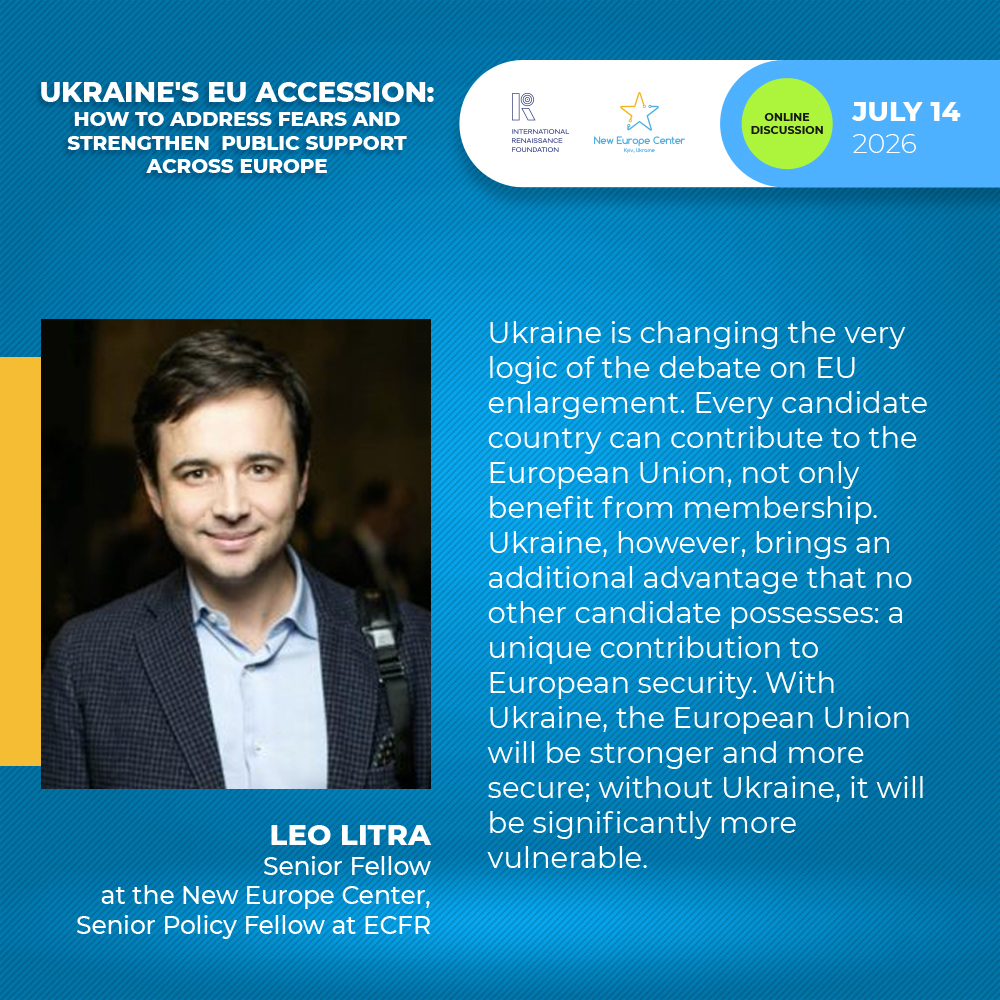
During the discussion Leo Litra, Senior Fellow at the New Europe Center, Senior Policy Fellow at ECFR, argued that much of today’s resistance to enlargement stems from misconceptions about previous rounds of EU enlargement rather than from Ukraine itself. He stressed that Ukraine is changing the terms of the debate by bringing a unique security dimension to the accession process: “Ukraine has an extra argument which other countries don’t have. It’s the security one – the argument that Europe is safer, the EU is safer with Ukraine”. Leo Litra also called for greater attention to the cost of non-enlargement, arguing that delaying strategic decisions can ultimately prove more costly than enlargement itself. At the same time, he emphasized that Ukraine should complement its security narrative by demonstrating its commitment to shared European values and continuing domestic reforms.
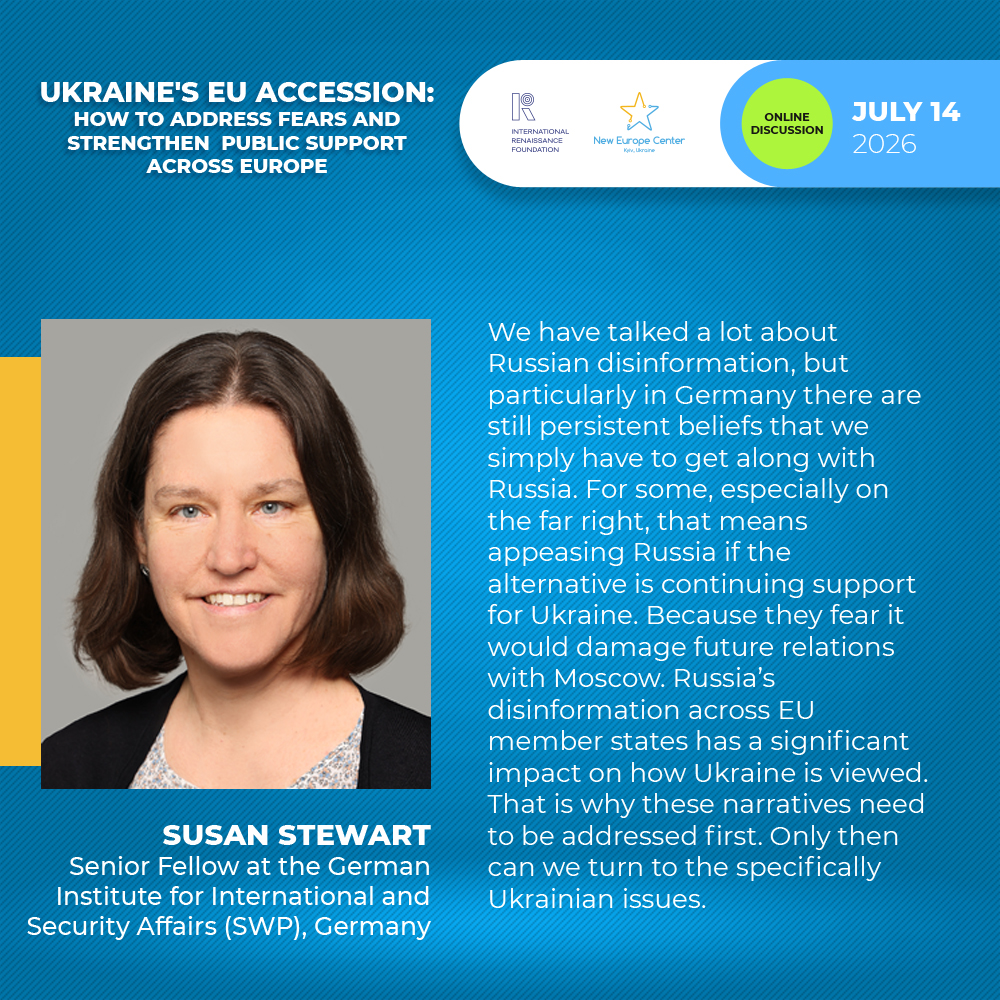
Susan Stewart, Senior Fellow at the German Institute for International and Security Affairs (SWP), Germany, noted that concerns about Ukraine’s accession in Germany extend beyond Ukraine itself and reflect broader debates about EU enlargement. According to her, economic issues, the rule of law, migration, security, and Russian disinformation all influence public perceptions. She stressed the importance of explaining the positive outcomes of previous enlargements and strengthening communication efforts across EU member states: “We need to convey that previous enlargements had not only negative but arguably primarily positive impacts, not only for the countries involved, but also for the EU as a whole”.
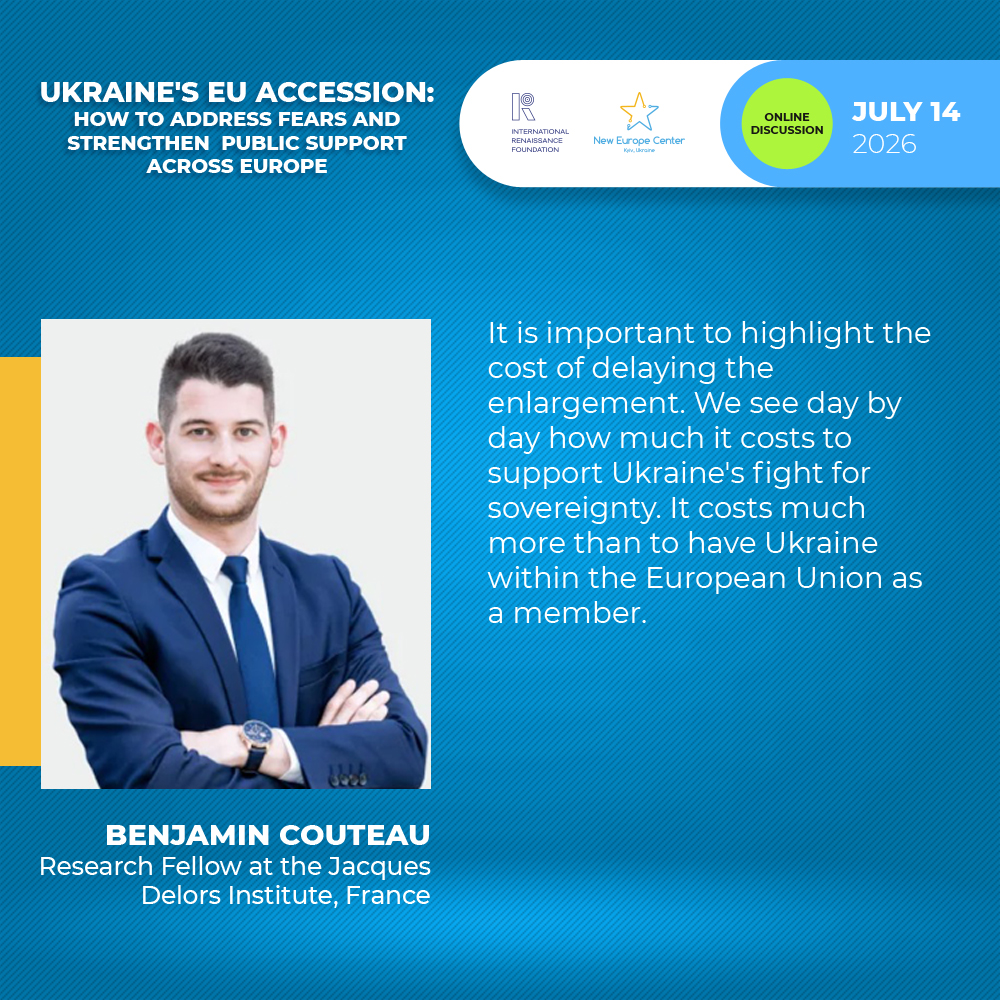
Benjamin Couteau, Research Fellow at the Jacques Delors Institute, France, observed that although France’s political leadership has become more supportive of enlargement since 2022, this shift has not yet been reflected in public opinion. “The shift we see at the political level in France is not reflected and explained in the public debate. Because of the lack of debate, this sentiment towards the EU is the same for 20 years”, Benjamin Couteau noted. He argued that communication should focus on Ukraine’s contribution to European sovereignty, while honestly addressing concerns surrounding agriculture and the economic impact of enlargement: “For France, the question of sovereignty resonates the most. Ukraine can strengthen the EU through defence, technology and food security”. He also underlined that delaying enlargement comes at a strategic cost for Europe itself.
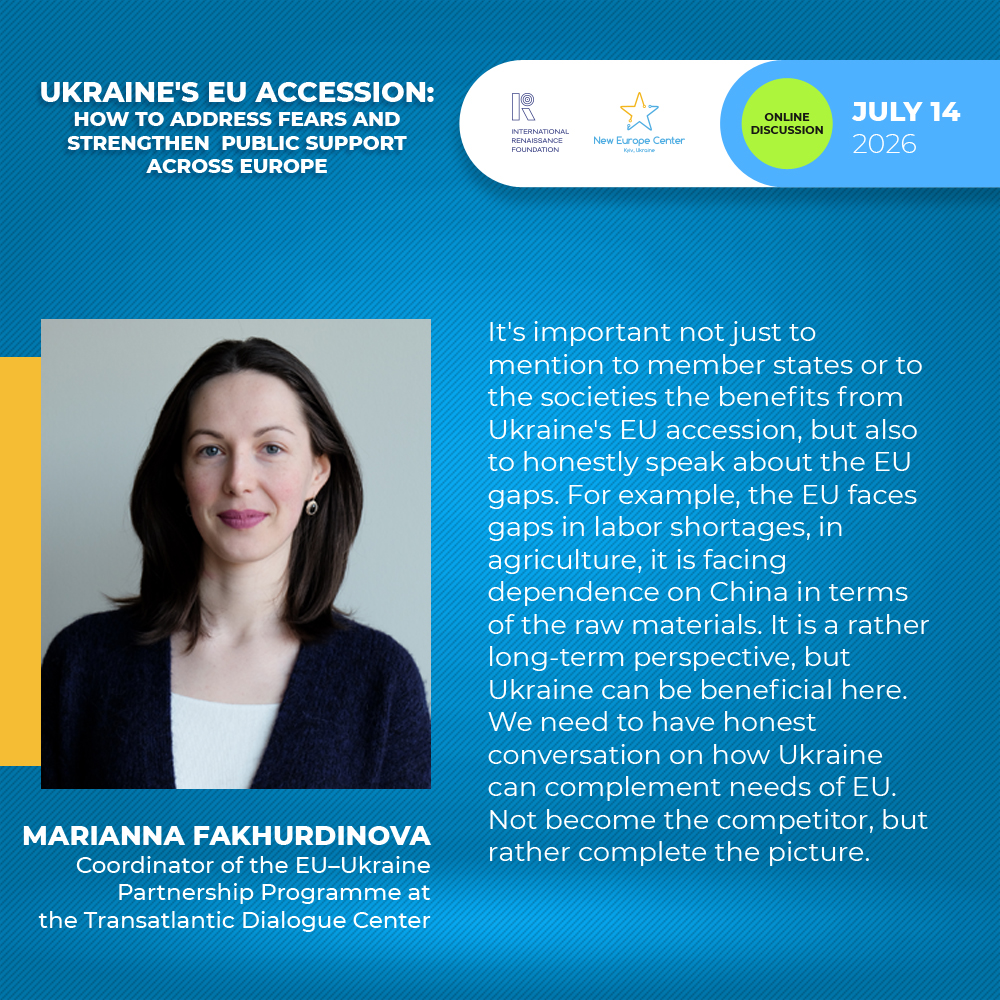
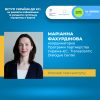
Marianna Fakhurdinova, Coordinator of the EU–Ukraine Partnership Programme at the Transatlantic Dialogue Center, suggested distinguishing between different categories of concerns surrounding Ukraine’s accession. Beyond traditional fears related to war or corruption, she pointed to what she described as “positive fears”: “People who deal with EU enlargement and with Ukraine more closely also talk about positive fears. Here we’re talking about competition, about Ukraine becoming too big a successful story in the EU market”. She argued that Ukraine should communicate not only the benefits of its accession but also how it can help address the EU’s own structural challenges, including labour shortages, food security, critical raw materials, and defence capabilities. “It’s important not just to mention the benefits from Ukraine’s EU accession, but also to honestly speak about the EU gaps… and how Ukraine can complement them, not become the competitor, but rather become this piece of the puzzle”, Marianna Fakhurdinova stated.
Participants agreed that Ukraine’s successful accession will depend not only on implementing reforms but also on winning the public debate across EU member states. They emphasized the importance of countering misinformation, addressing legitimate concerns with facts, tailoring communication to national audiences, and demonstrating that Ukraine’s membership would strengthen the European Union’s security, resilience, and long-term competitiveness.
Below you can find the key messages of speakers:
“Ukraine’s EU Accession: From Misconceptions to Strategic Reality“, Leo Litra, Senior Fellow at the New Europe Center, Senior Policy Fellow at ECFR.
“Winning Public Support for Enlargement in EU Member States Is Key to Ukraine’s EU Membership“, Susan Stewart, Senior Fellow at the German Institute for International and Security Affairs (SWP).
“Addressing Legitimate Concerns in the EU States is Essential to Winning Support for Ukraine’s EU Membership“, Benjamin Couteau, Research Fellow at the Jacques Delors Institute.
“Ukraine Should Speak Not Only About the Benefits of Accession, but Also About How It Will Strengthen the EU“, Marianna Fakhurdinova, Coordinator, EU-Ukraine Partnership Program, Transatlantic Dialogue Center.
The event is organized by the New Europe Center with the support of the International Renaissance Foundation. The views and positions expressed during the event are those of the experts and do not necessarily reflect the position of the International Renaissance Foundation.