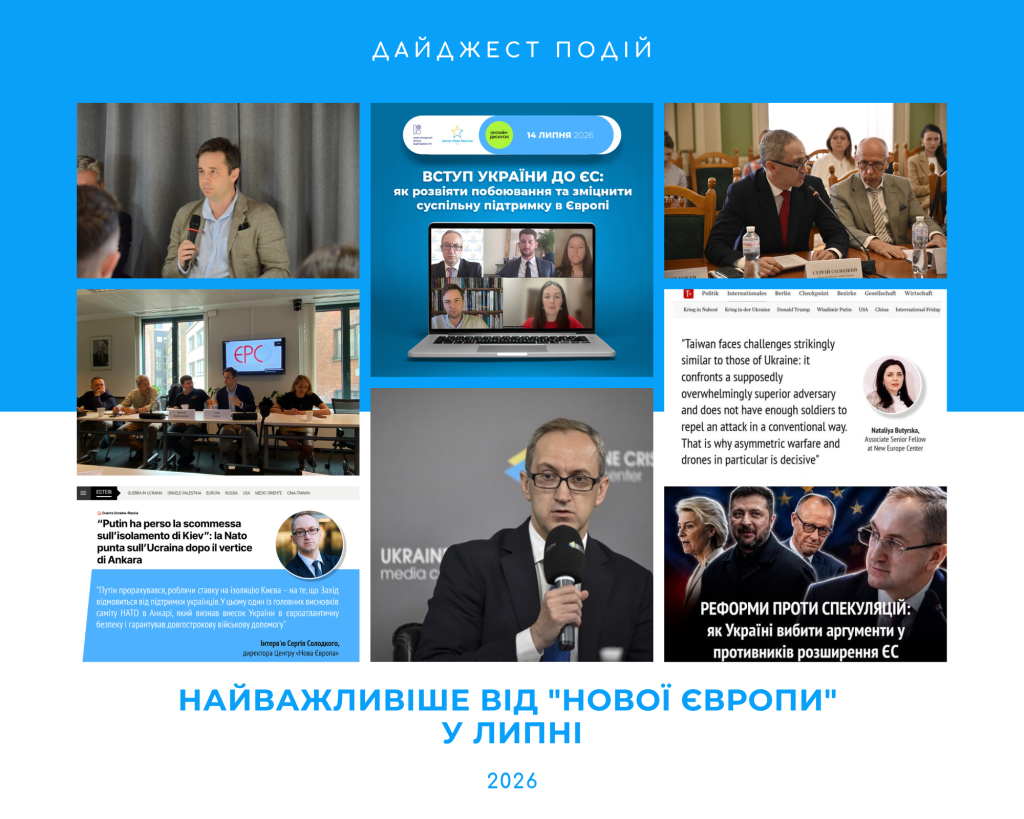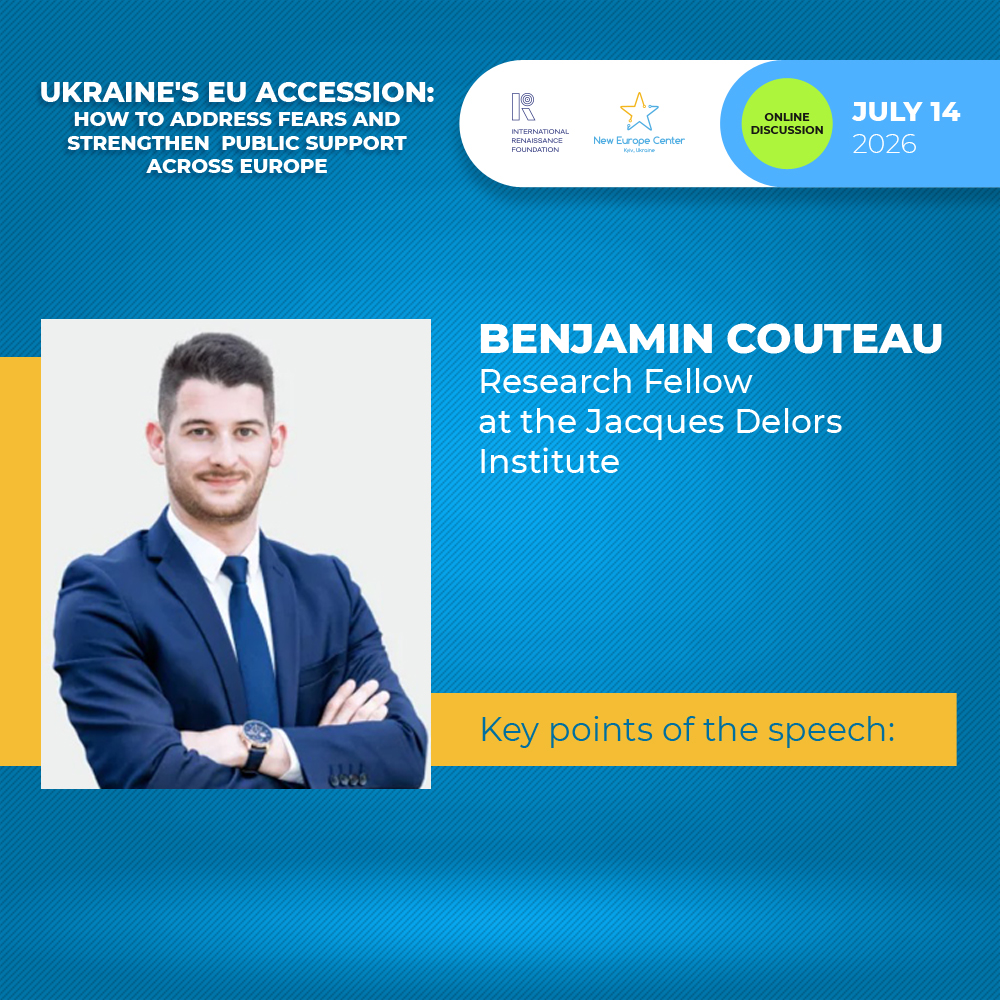
Benjamin Couteau, Research Fellow at the Jacques Delors Institute, during the online discussion “Getting Ready for the ‘Ukrainian Plumber’ in the EU? Key Narratives of Resistance to EU Enlargement – and How to Counter Them”, emphasized that Ukraine’s accession to the EU depends not only on reforms in Kyiv, but also on rebuilding public support for enlargement within EU member states. Focusing on France, he stressed that political leadership must take ownership of the enlargement debate, counter disinformation, and clearly communicate why Ukraine’s membership strengthens European sovereignty, security, and resilience.
Key points of the speech:
- France has shifted politically in favour of enlargement, but public opinion has not followed. While President Emmanuel Macron has made Ukraine’s accession a strategic priority, this change remains largely a top-down initiative and has not translated into broader political or public support. “The shift we see at the political level is not reflected, echoed in the public debate, and it’s not been explained”, Benjamin Couteau noted;
- Public perceptions of enlargement are still shaped by misconceptions dating back two decades. French debates continue to be influenced by concerns over migration, economic competition, and the legacy of previous enlargements, including the “Polish plumber” narrative. According to the expert, rebuilding confidence in enlargement requires reopening an honest political debate rather than avoiding difficult conversations;
- Ukraine’s strongest argument is its contribution to European sovereignty. Benjamin Couteau argued that Ukraine’s membership should be presented not only as an act of solidarity but as a strategic asset for the European Union. Defence and security, technological innovation, and food security together demonstrate how Ukraine can strengthen Europe’s strategic autonomy and resilience;
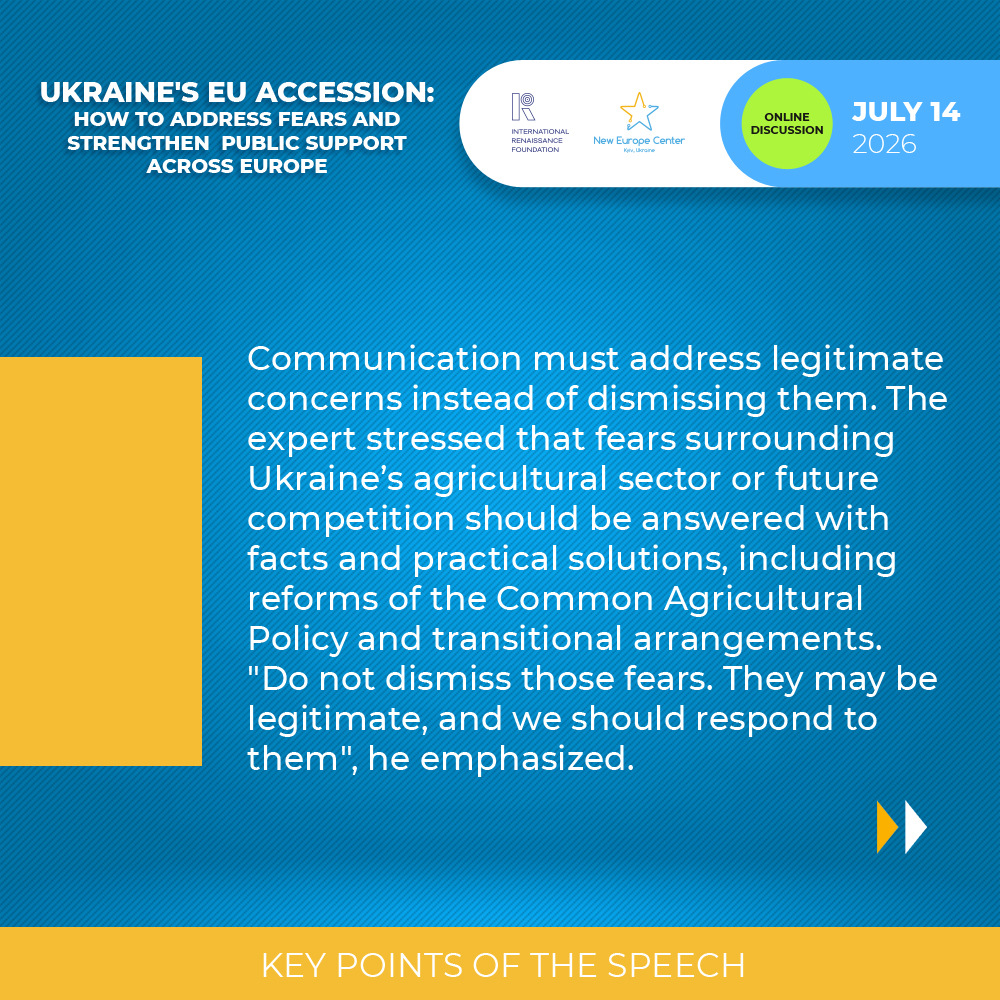
- Communication must address legitimate concerns instead of dismissing them. The expert stressed that fears surrounding Ukraine’s agricultural sector or future competition should be answered with facts and practical solutions, including reforms of the Common Agricultural Policy and transitional arrangements. “Do not dismiss those fears. They may be legitimate, and we should respond to them”, he emphasized;
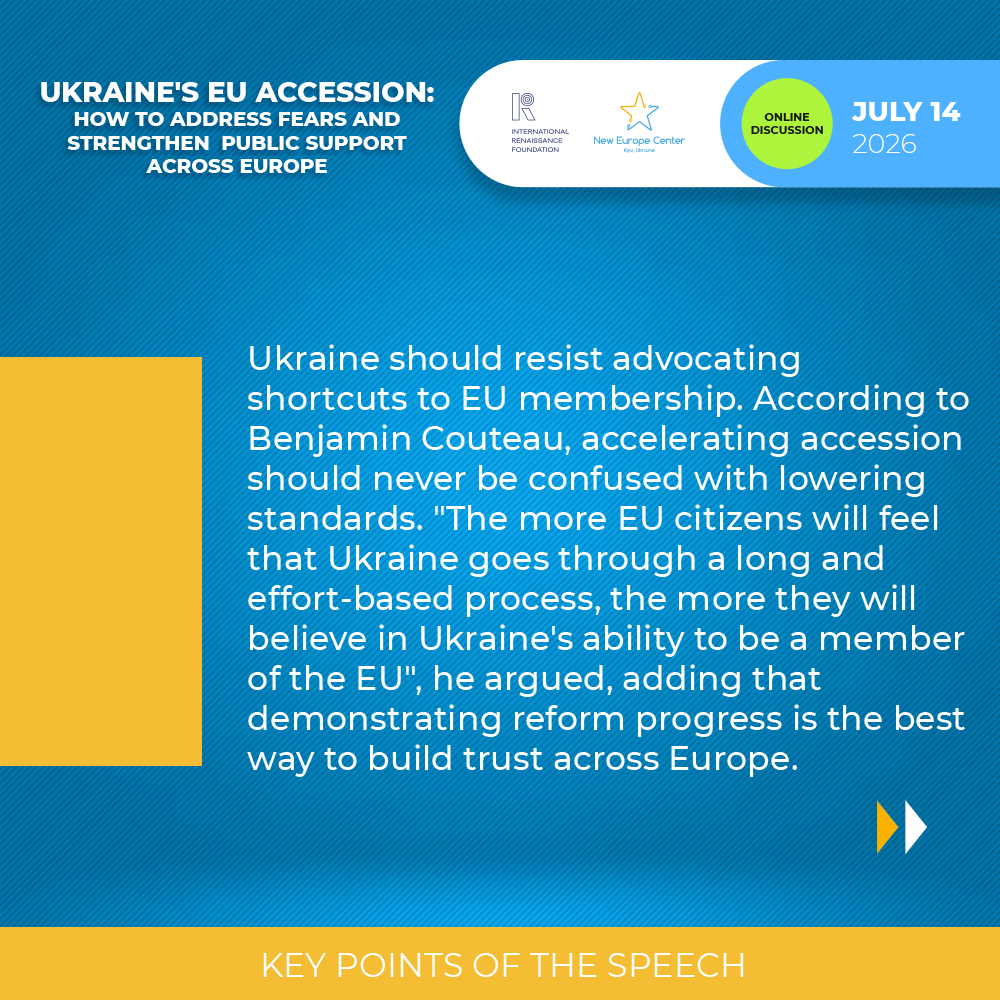
- Ukraine should resist advocating shortcuts to EU membership. According to Benjamin Couteau, accelerating accession should never be confused with lowering standards. “The more EU citizens will feel that Ukraine goes through a long and effort-based process, the more they will believe in Ukraine’s ability to be a member of the EU”, he argued, adding that demonstrating reform progress is the best way to build trust across Europe;
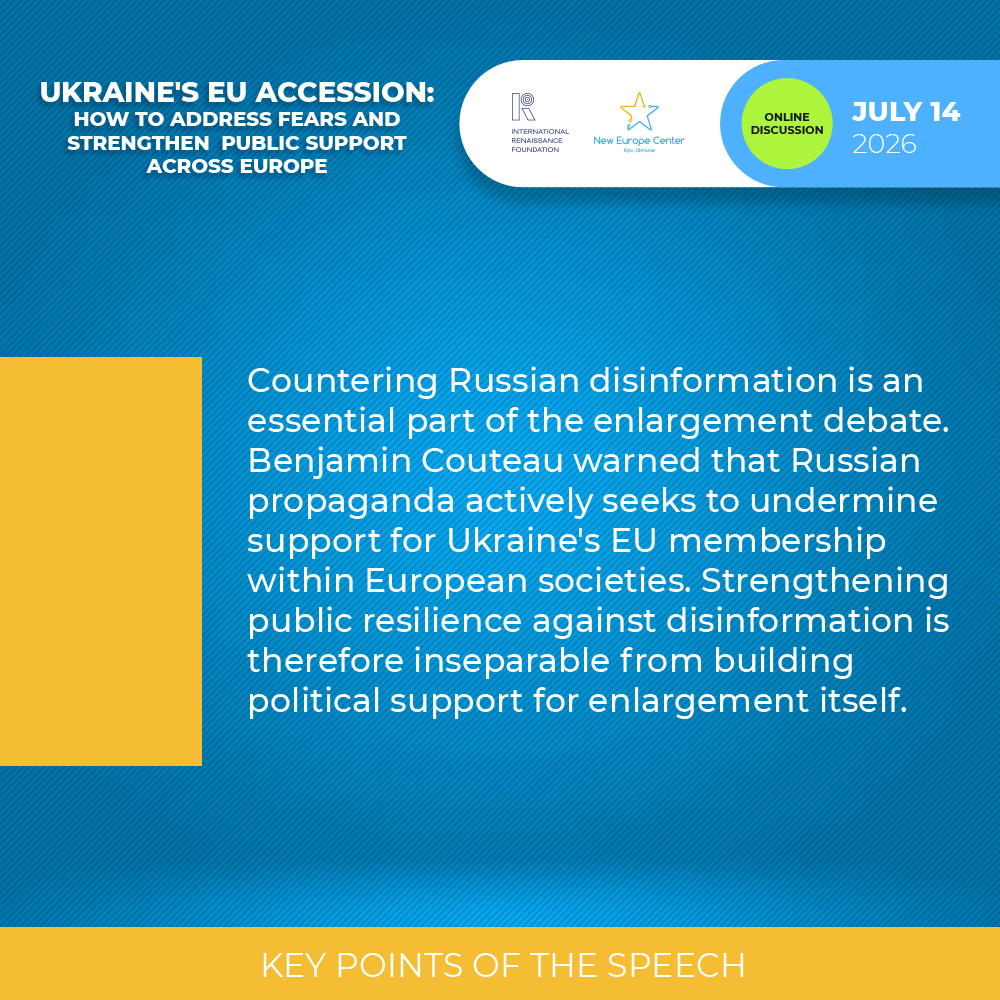
- Countering Russian disinformation is an essential part of the enlargement debate. Benjamin Couteau warned that Russian propaganda actively seeks to undermine support for Ukraine’s EU membership within European societies. Strengthening public resilience against disinformation is therefore inseparable from building political support for enlargement itself.
The event is organized by the New Europe Center with the support of the International Renaissance Foundation. The views and positions expressed during the event are those of the experts and do not necessarily reflect the position of the International Renaissance Foundation.