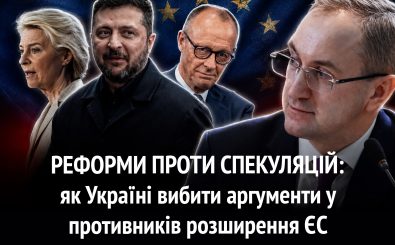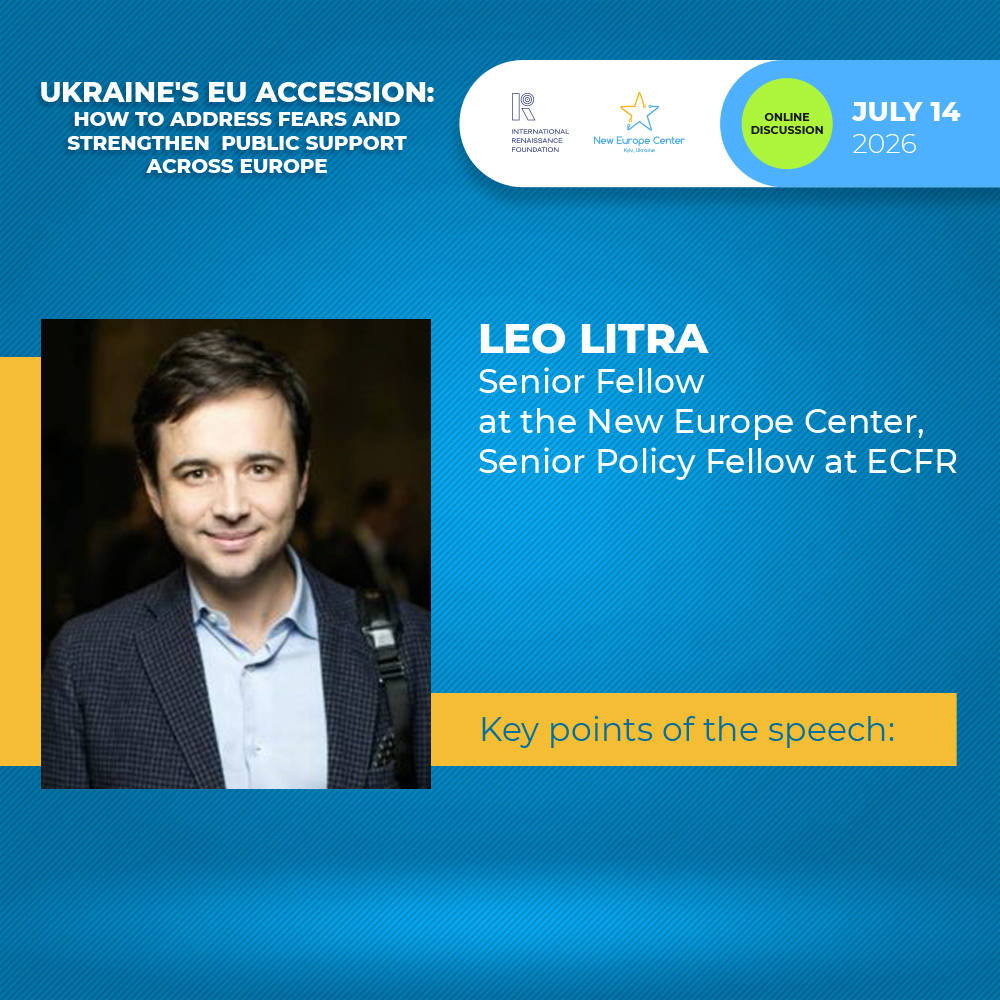
Leo Litra, Senior Fellow at the New Europe Center, Senior Policy Fellow at ECFR, during the online discussion “Getting Ready for the ‘Ukrainian Plumber’ in the EU? Key Narratives of Resistance to EU Enlargement – and How to Counter Them” argued that Ukraine’s EU accession debate is increasingly shaped by misconceptions about previous enlargements, declining trust within the European Union, and artificial political obstacles rather than objective assessments of Ukraine’s progress. He stressed that Ukraine should complement its strong security argument with a clear commitment to European values and reforms, while the EU should recognize the strategic costs of delaying enlargement.
Key points of the speech:
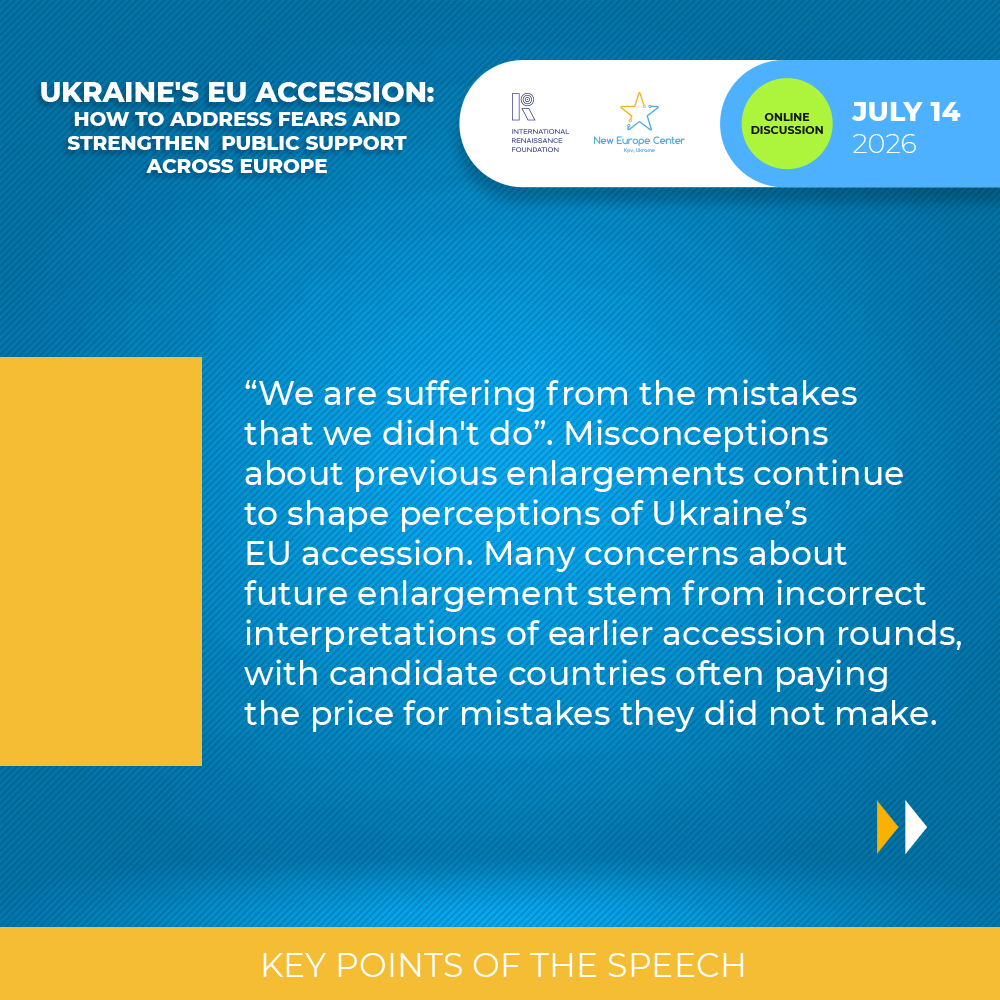
- “We are suffering from the mistakes that we didn’t do”. Misconceptions about previous enlargements continue to shape perceptions of Ukraine’s EU accession and of other candidates. According to Leo Litra, many concerns about future enlargement stem from incorrect interpretations of earlier accession rounds, with candidate countries often paying the price for mistakes they did not make;
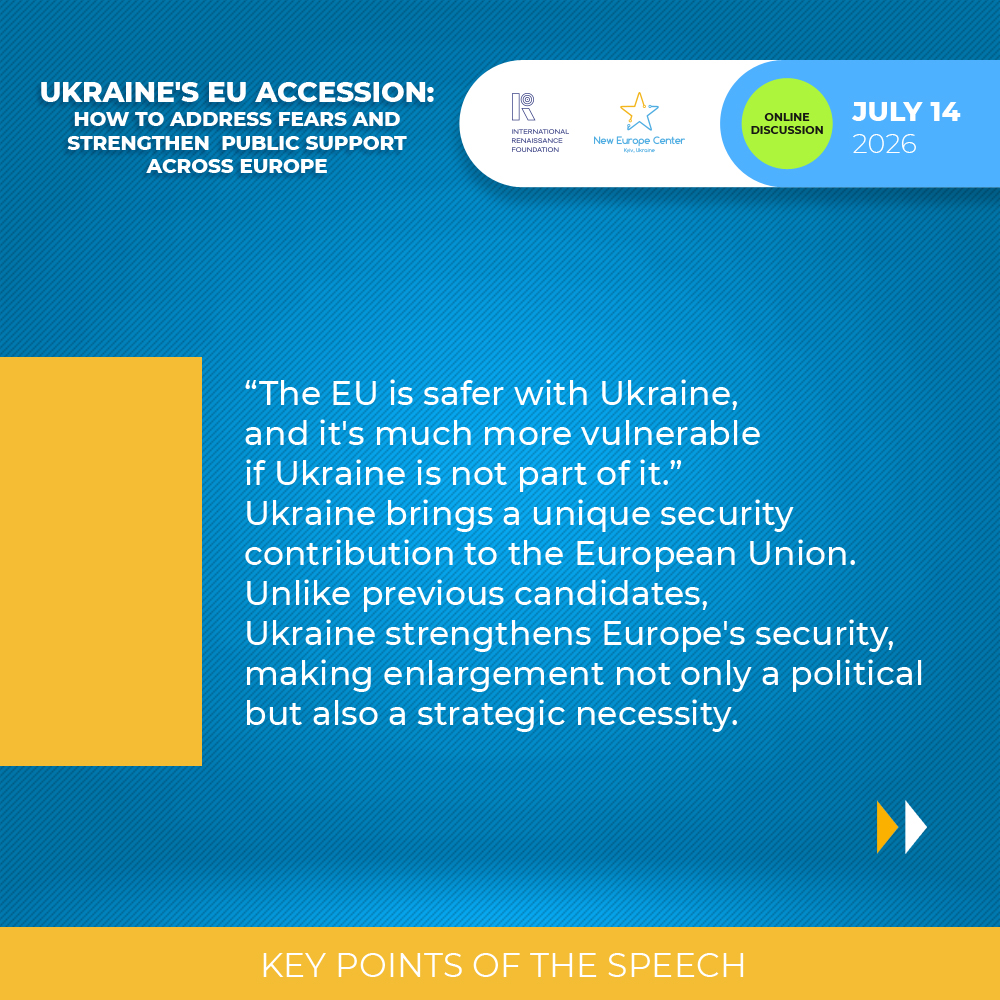
- “The EU is safer with Ukraine, and it’s much more vulnerable if Ukraine is not part of it.” Ukraine brings a unique security contribution to the European Union. Unlike previous candidates, Ukraine strengthens Europe’s security, making enlargement not only a political but also a strategic necessity;
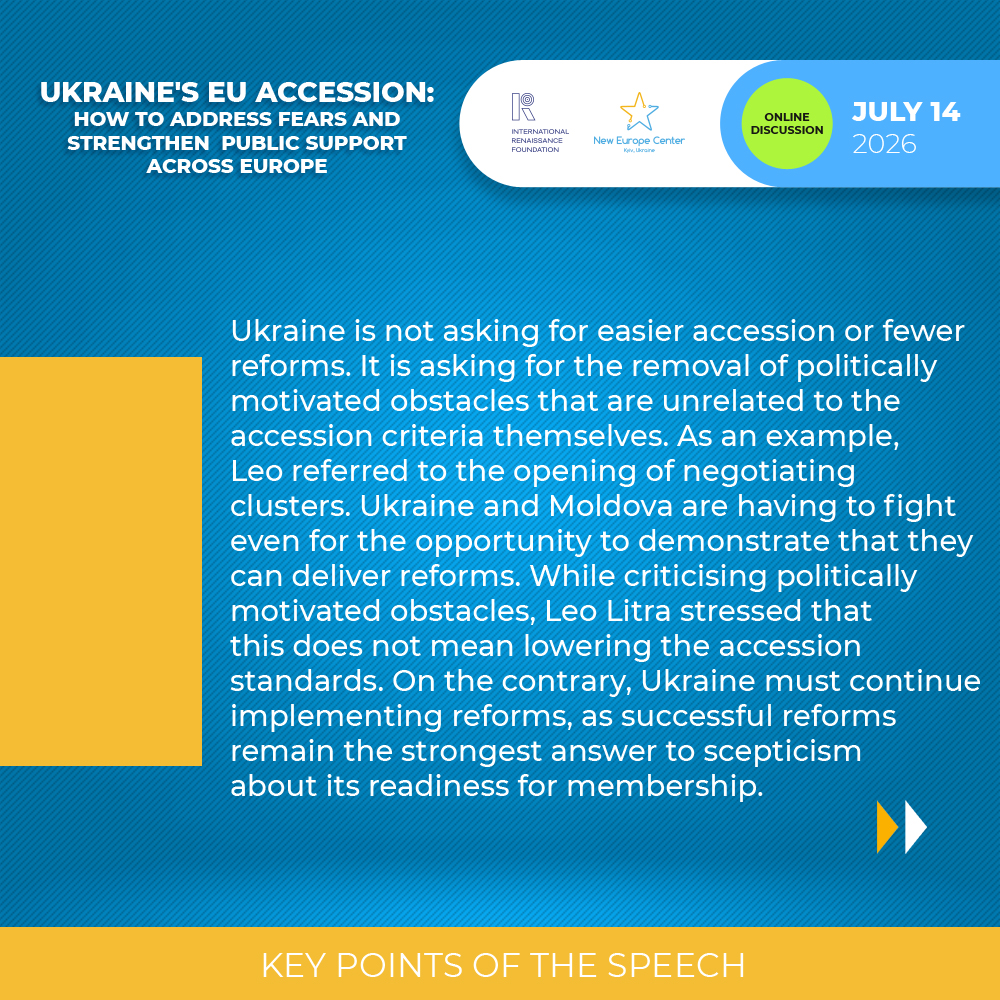
- Ukraine is not asking for easier accession or fewer reforms. It is asking for the removal of politically motivated obstacles that are unrelated to the accession criteria themselves. As an example, Leo referred to the opening of negotiating clusters. Ukraine and Moldova are having to fight even for the opportunity to demonstrate that they can deliver reforms. While criticising politically motivated obstacles, Leo Litra stressed that this does not mean lowering the accession standards. On the contrary, Ukraine must continue implementing reforms, as successful reforms remain the strongest answer to scepticism about its readiness for membership;
- The strategic cost of non-enlargement deserves much greater attention. Drawing parallels with NATO’s 2008 Bucharest Summit, he argued that postponing strategic decisions may ultimately prove far more costly than enlargement itself. “Ukraine didn’t join NATO, and there was a war with Russia precisely because it didn’t join”, Leo Litra pointed out.
- The EU should strengthen safeguards to ensure that enlargement reinforces, rather than weakens, the Union’s values. One of the reasons behind scepticism toward enlargement is the fear that new member states may later depart from the EU’s core principles. Since existing mechanisms, such as Article 7, have proved difficult to activate, he proposed introducing reversibility mechanisms into accession treaties that could suspend certain membership rights if fundamental commitments are breached. At the same time, such safeguards should apply equally to all EU member states, not only future entrants, to ensure fairness.
- Ukraine should emphasize shared European values alongside its security contribution. While Ukraine’s defence capabilities represent a major asset for Europe, successful accession ultimately depends on mutual trust and commitment to the rule of law. “We need to underline more… that we are alike in so many ways of values”, the speaker emphasized.
The event was organized by the New Europe Center with the support of the International Renaissance Foundation. The views and positions expressed during the event are those of the experts and do not necessarily reflect the position of the International Renaissance Foundation.